The following is an excerpt from the Frontier Weekly Newsletter written by Kendall Cotton for the January 8th edition. As we kick off 2026, the Montana Supreme Court and debates about improper judicial activism are once again making headlines. Two important stories I want to highlight for our readers: First is a story about judicial…
The following is an excerpt from the Frontier Weekly Newsletter written by Kendall Cotton for the January 8th edition.
As we kick off 2026, the Montana Supreme Court and debates about improper judicial activism are once again making headlines. Two important stories I want to highlight for our readers:
First is a story about judicial activism. The fallout of a 2023 Montana Supreme Court decision Hinman v. Montana to be specific, which has now prompted major changes to the Montana Sexual Offender Registry.
The court’s ruling in Hinman held that the legislature cannot retroactively apply stricter sex-offender registry rules to past offenders. This has now forced the sex-offendor database to shrink, removing public photos and information on over 1,000 offenders that were previously available.
As a parent myself, I find this deeply disturbing. Montana parents rely on the sex-offender database to stay informed and keep our kids safe.
Not covered well by the media was the court’s 5-2 split on this case. Supporting the majority’s decision were Justices Mckinnon, Shea, Sandefur, Gustofson, and McGrath. Justices Jim Rice and Beth Baker registered firm objections in their dissent.
The split centered around views on the proper role of the court.
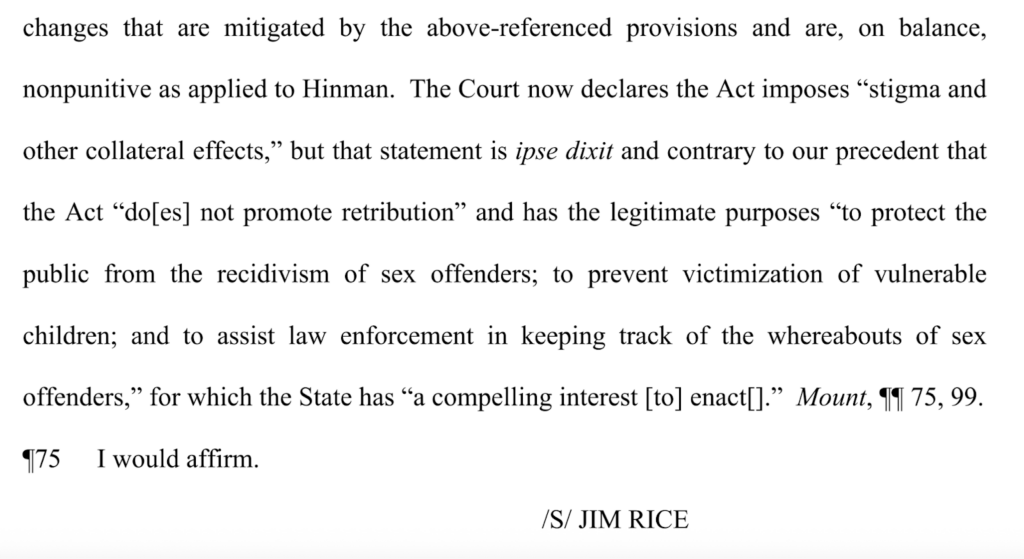
Justice Rice’s excellent dissent emphasized respect for the separation of powers, saying the court should have exercised restraint and left policymaking (like decisions to retroactively apply laws) to the lawmakers. Here’s a snippet below:
So why do court cases like this matter to Montanans? Because when any branch of government oversteps its bounds, it puts our freedoms at risk.
The Separation of Powers is a fundamental limitation on the power of government. As our Senior Fellow Jim Ramlow has observed: “Separation of powers is what protects all of us from tyranny. We need to preserve it.”
The Montana Supreme Court has (rightfully) received criticism over the years for certain activist decisions which undermine the separation of powers.
While media fixates on instances where Montana courts flex their muscles against the legislative and executive branches, they often overlook the respected voices within the judiciary calling for more restraint.
We’ll be doing more in 2026 to highlight those voices and also to help our readers interpret decisions from Montana courts as they happen through the lens of preserving the separation of powers in government. Stay tuned.