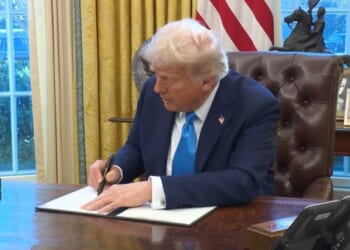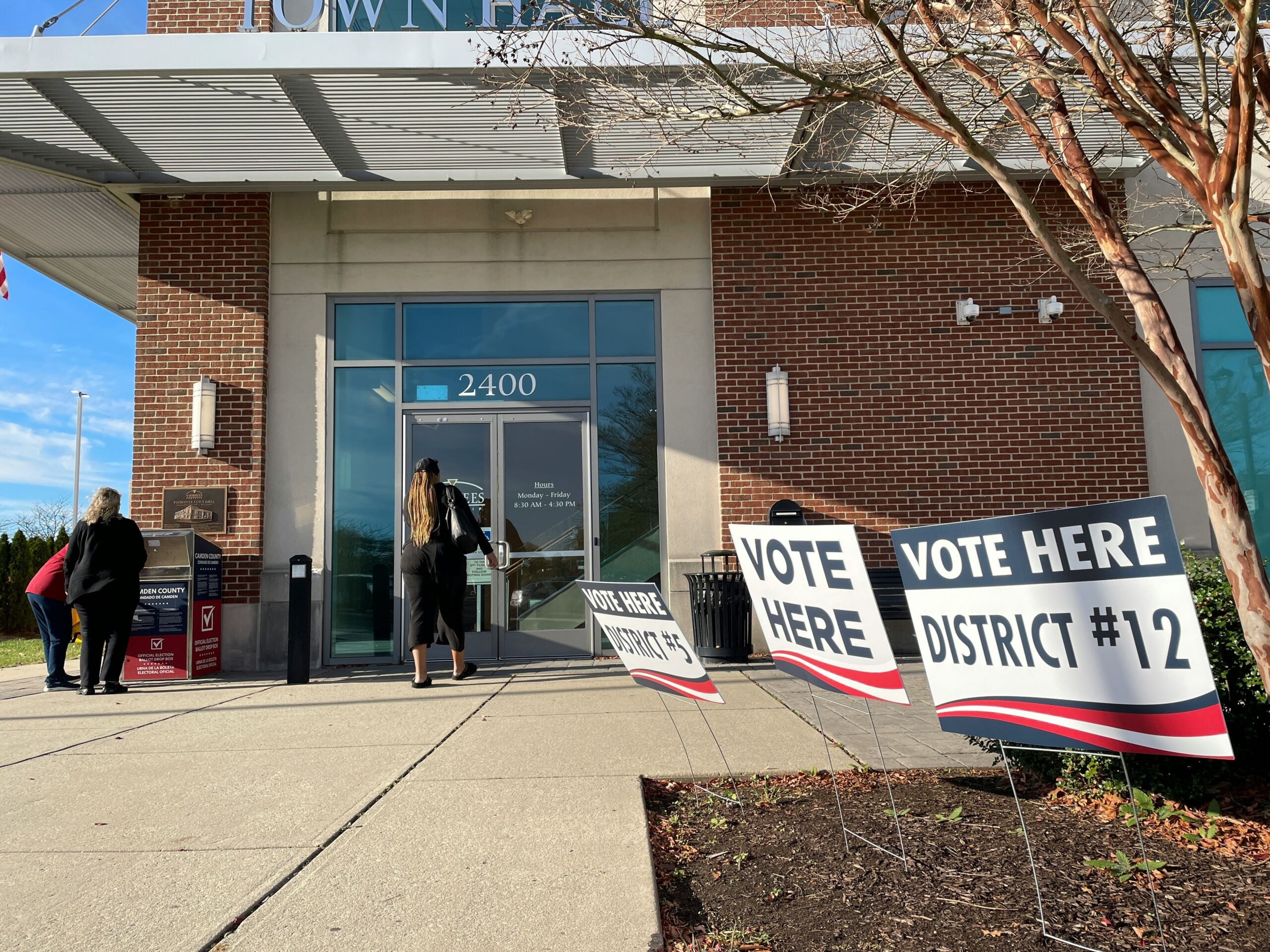
Recently, President Trump applauded Dallas County, Texas for using paper ballots. That praise strikes at the heart of a fundamental truth: When our nation entrusts votes to a permanent, physical record, we safeguard election integrity.
Americans have watched debates in recent years around voting machines, software patches, cyber vulnerabilities, and technological upgrades — but one thing hasn’t changed. A vote is only as trustworthy as the record behind it. When our nation grounds elections in a permanent, physical ballot, we do more than maintain a piece of paper. We strengthen the public’s confidence in the democratic process itself.
People don’t trust what they can’t see — and voters are no different. Paper ballots are effective because they give everyone something tangible to rely on. If questions arise, you can simply bring out the ballots and examine them. You can’t do that with digital data that lives only inside a machine or server. A physical ballot becomes the proof for recounts, audits, and public trust.
A paper ballot is evidence. It captures a voter’s choice in a format that cannot be erased by a power outage, a corrupted software update, faulty touchscreen, or failing memory card. It is the backbone of any valid audit or recount. Without a physical ballot, election administrators can only “recount” the same digital files that raised questions in the first place.
That is why election-security experts describe paper ballots — paired with post-election audits — as the “bedrock of secure elections.”
States that rely on paper ballots are simply better positioned to confirm that what was counted matches what voters intended.
One of the clearest examples is Florida, which relies on paper ballots for all in-person voting, using hand-marked or machine-printed paper ballots that are later counted by optical-scan tabulators. Counties retain the paper ballots — giving Florida that permanent, auditable record voters can trust.
That paper record matters — because Florida law and practice support post-election audits. Election officials in the state have repeatedly emphasized that these audits help ensure each vote is counted correctly, confirming to voters they can have trust in the state’s way of how they handle the election process.
Similarly, Ohio relies on paper ballots statewide and reinforces them with strong post-election audits. Every county uses paper ballots which are read by optical-scan tabulators, creating a uniform, verifiable system across all 88 counties.
What’s more, Ohio requires an audit after every election. State law directs county boards to hand-count a sample of ballots and compare them to machine totals to confirm accuracy — a process Ohio’s Secretary of State says strengthens transparency and voter trust. After the 2024 election, all 88 counties reported audit results, demonstrating statewide compliance and a consistent commitment to verification.
Florida and Ohio are two great models of why paper ballots are not obsolete. They prove that they are a system built on transparency, verification, and accountability. Paper ballots give voters confidence that their vote is a proven record. When audited, they allow election officials, campaigns, and the public to confirm that what was counted truly reflects the will of the voters.
That’s why Dallas County’s decision matters. Using paper ballots brings elections back to a safeguard that promotes clarity and steadiness at every stage of the process. Voters deserve a foundation that is tangible, accessible, and easy to review if needed.
If more counties follow Dallas County’s lead, voters won’t just end up with safer elections — they’ll actually have elections they can feel good trusting. Losing that kind of trust is a risk our democracy cannot afford to take.