Foreign intervention, for many millennials like myself, has the taste of bitter fruit. Just the phrase passing our lips is going to produce turned-up noses followed by talking points about how many of our overseas adventures failed.
I am one of those fist clenchers — at least I thought I was.
Still, coming to “trust the plan” has been a lifetime in the making. The visible crest of forces, and follies, of administrations past has soured us to any notions of power as foreign policy. But with a sober acceptance, a realist ethic comes with much clarity.
The terrorism that entered our nation on Sept. 11, 2001 thrust young people into the maelstrom of politics. Commercial jetliners, hitting the twin World Trade Center towers, killing thousands. It was an event that collapsed our notions of limitations and exposed our contradictions of global order.
And the “forever war” that followed was its own rupture.
Some leaned into the notions of neoconservatism, some joined the “Ron Paul Revolution,” while still others oscillated between moralism and procedural liberalism. I became skeptical of the notions of empire, while remaining confused about what, if anything, should replace it. Podcasters and “independent” thinkers filled the void as they grew in prominence among myself and my colleagues.
We were all simply exhausted by uncertainty.
That is why then-candidate Donald Trump in 2015 had so many of us transfixed.
To begin with, he called the Iraq War “a tremendous disservice to humanity.” Trump even reprimanded Jeb Bush during a presidential primary debate in 2016: “Obviously, the war in Iraq was a big, fat mistake.”
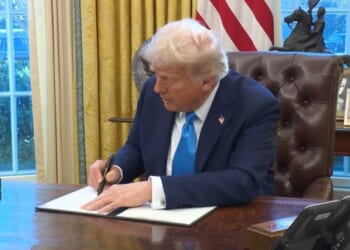
Now, of course, we are more than 10 years into the Trump phenomena. And the president has even begun to enact his own “Don-roe Doctrine.”
The long shadow of the Monroe Doctrine across the Western Hemisphere gave rise to the Roosevelt Corollary. But, now, Trump’s 2025 National Security Strategy is a “a concrete, realistic plan” that explicitly articulates how America needs the reminder about “the character of our nation upon which its power, wealth, and decency were built.”
That so-called “global liberal order” of a post-Cold War world survived through managerial authority and, ultimately, proctored by American covert (and overt) actions. And with the arrival of the internet, we all migrated to that digital sphere where fragmented networks bred counter-narratives animated by viral exposure to cracks in that credibility.
This is where Trump shined. His campaign promises of ending the forever wars, putting a stop to the bloodshed in Ukraine, peace in the Middle East, and reasserting national sovereignty, proved that running for office on these stances was a viable lane to victory.
This common sense approach to foreign policy gave rise to a sort-of intellectual justification for an American-Aristotelian phronēsis (practical wisdom) that would inspire us to fuse prudence with power.
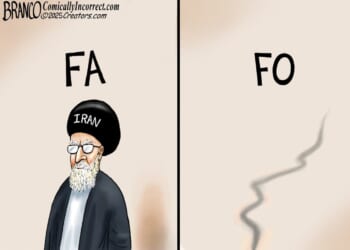
However, after the bombing of the Iran nuclear facilities, the loudest voices on the right, including Tucker Carlson, Steve Bannon, and U.S. Rep. Marjorie Taylor Greene became some of its biggest detractors.
I will admit that I was one of these skeptics. Many of us had worries about the old vocabulary of “liberation” and “shock and awe” — and I began to flirt with the idea of taking the “clear pill.”
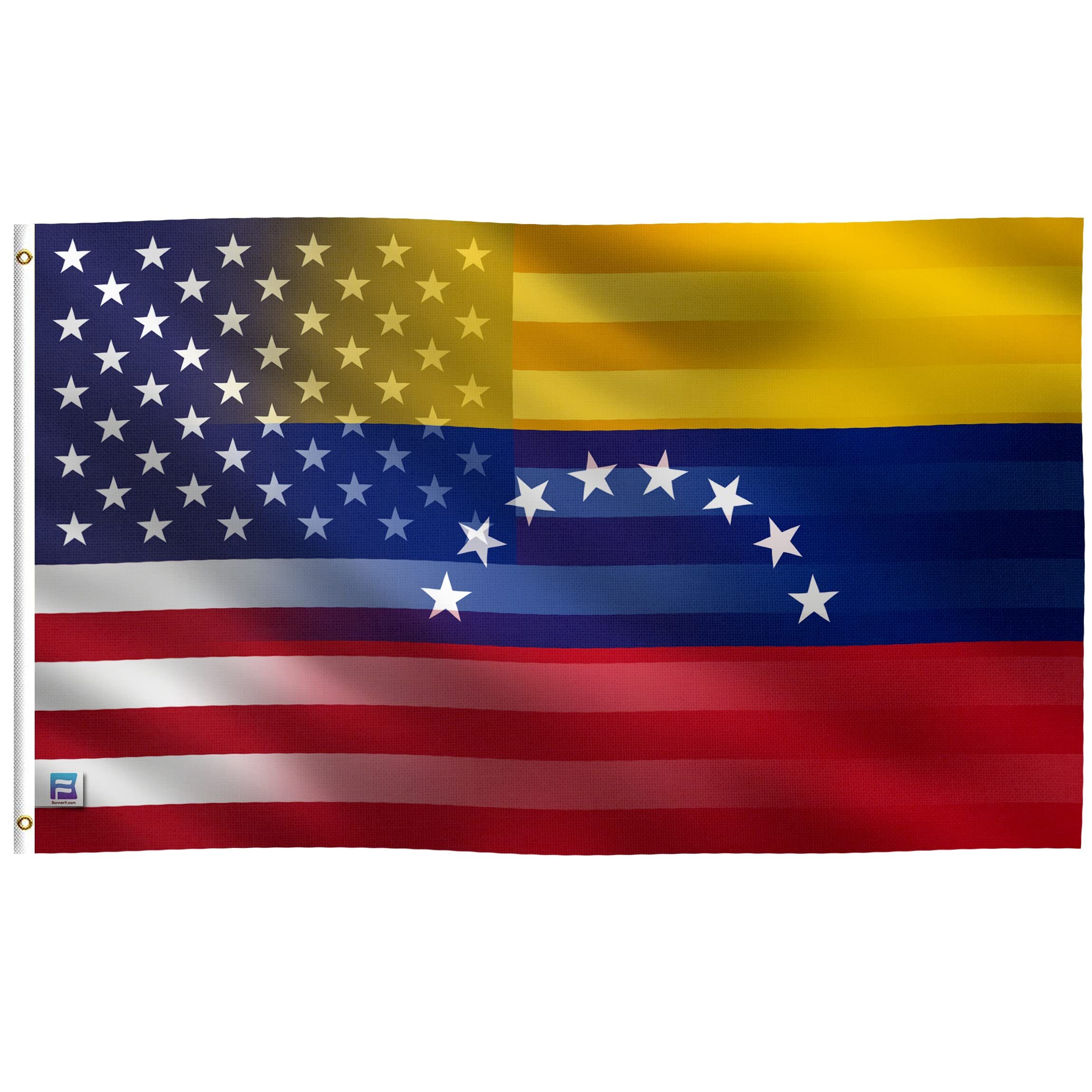
Now it’s “Operation Absolute Resolve.” The covert action on Jan. 3 that resulted in Venezuelan President Nicolás Maduro’s extraction to the U.S.
The New York Times called it “warmongering” while the Washington Post labeled it “an unquestionable tactical success.” And National Review laid out five lessons we could learn from the events: “America, in the Americas, is back.”
But online, where most of us get our news (and opinions) nowadays, the nation remains fractured. In some sense, what emerged through the haze of provisional judgments is an uncertainty over what restraint or resolve ought to mean in practice.
America has a long history of friends and enemies, with many of them swapping allegiances when the situation called for it. And despite the now-cliché warnings about “blowback” or “slippery slopes,” U.S. power under Trump has upheld its end of the bargain, rather than cascading us into the chain reactions so confidently predicted.
Trump breached my previous prejudices regarding what is realizable in a world of uncertainty. America’s dance with the world powers and the entire constellation of other nations caught in the gravitational pull, some might say, has no coherent vision outside the maintenance of momentum.
But “trusting the plan” now takes on a new form. It abandons the congratulations of moral sentiment and the theatrics of universal obligation, clearing the ground to see what endures beneath the posturing: America’s power, America’s interest, and America’s character as the permanent fixtures of political life.
Now I, and many of us intervention skeptics, must begin to accept foreign policy within the proper order. It is a willingness to understand that hierarchy, limits, and risk are inescapable features of governance.
With Trump, America has another bite at the apple of political maturity.