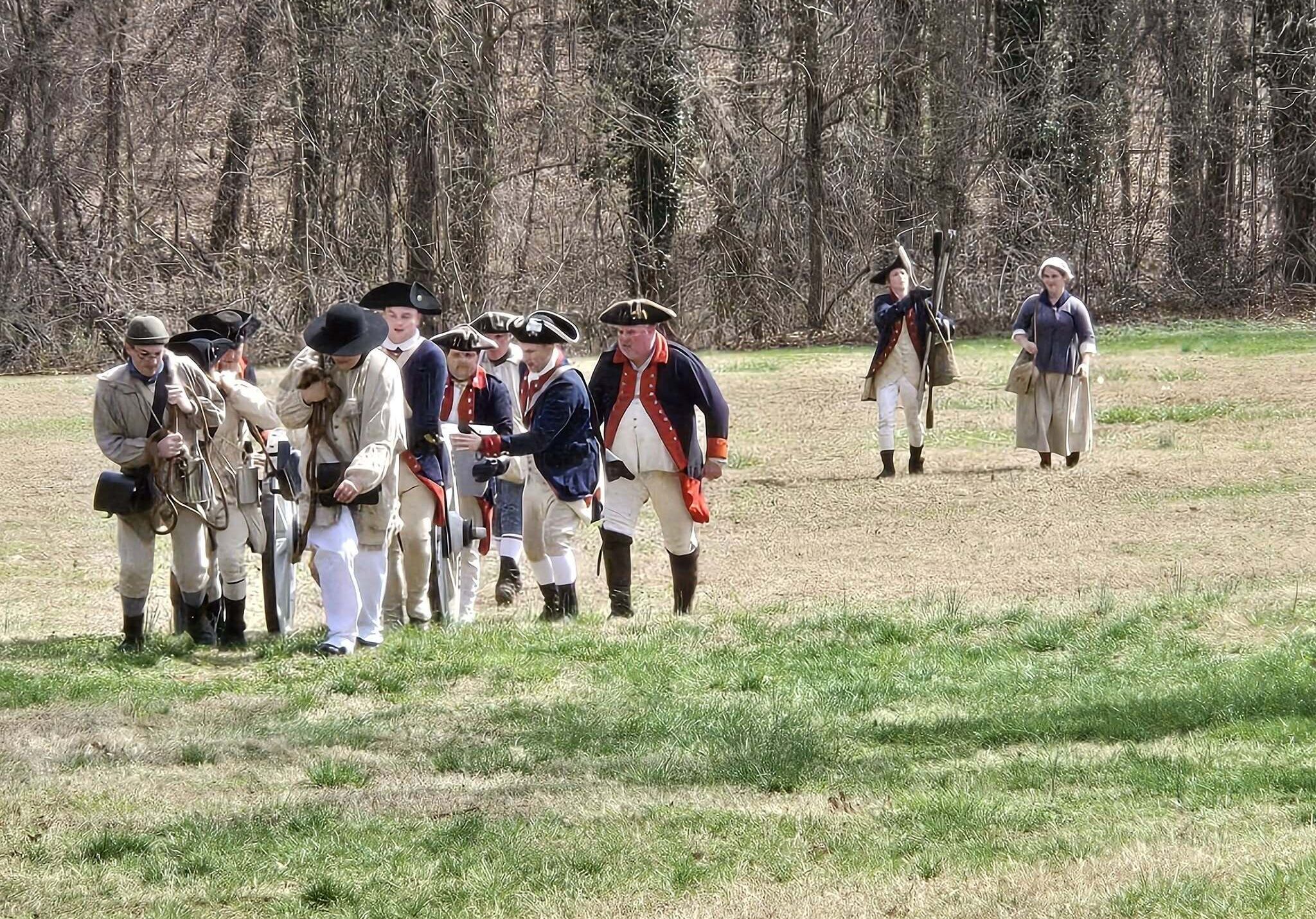
What a delight it was to venture out Saturday to the reenactment commemorating the 245th anniversary of the Battle of Guilford Courthouse in north Greensboro. It was so encouraging to be part of what must have been a crowd of thousands over the two-day, historic celebration that included a huge encampment, living history programs, artillery and musket demonstrations, and colonial music for spectators to enjoy.
I have always loved Revolutionary history. I took the maps I had perused to the reenactment, where stories of the battlefield tactics and strategy took my understanding to a whole new level. During the battle on March 15, 1781, around 2,000 British soldiers fought under the King’s flag for Gen. Charles Cornwallis, while around 4,500 Patriot soldiers fought for Gen. Nathanael Greene. The reenactors did an excellent job giving a sense of what it was really like to be in a 18th-century battlefield environment.
To see everything in person — the thick smoke arising from each volley of musket fire and the even larger clouds of smoke coming from the cannons amid their huge booms — opened my eyes to the realities of the “fog of war” in its truest sense.
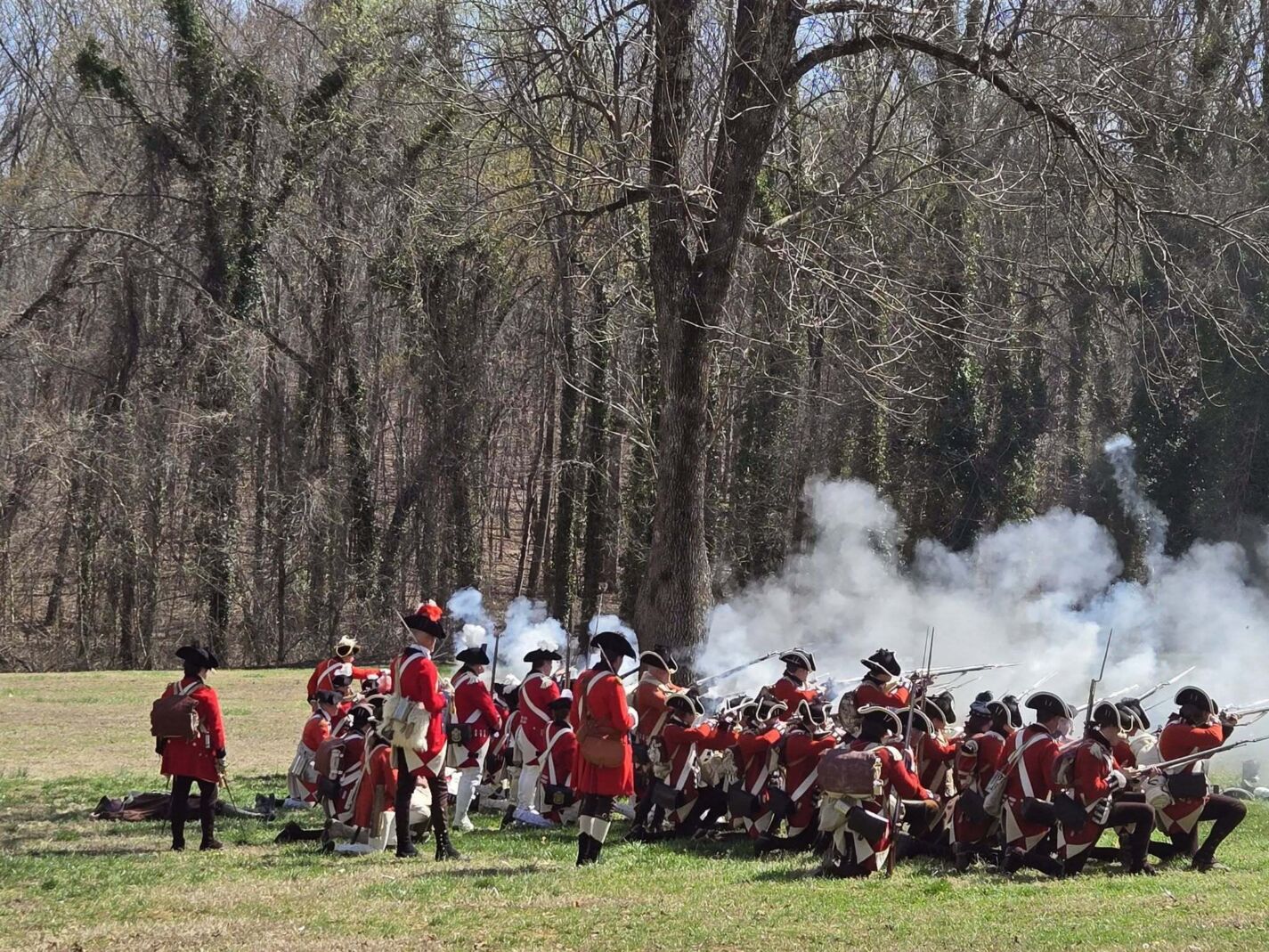
The reenactment featured a narrator who gave a precise description for each movement that was going on before and during the battle. He told spectators that the drums beating throughout the battlefield actually helped give direction from each army’s leadership to the soldiers.
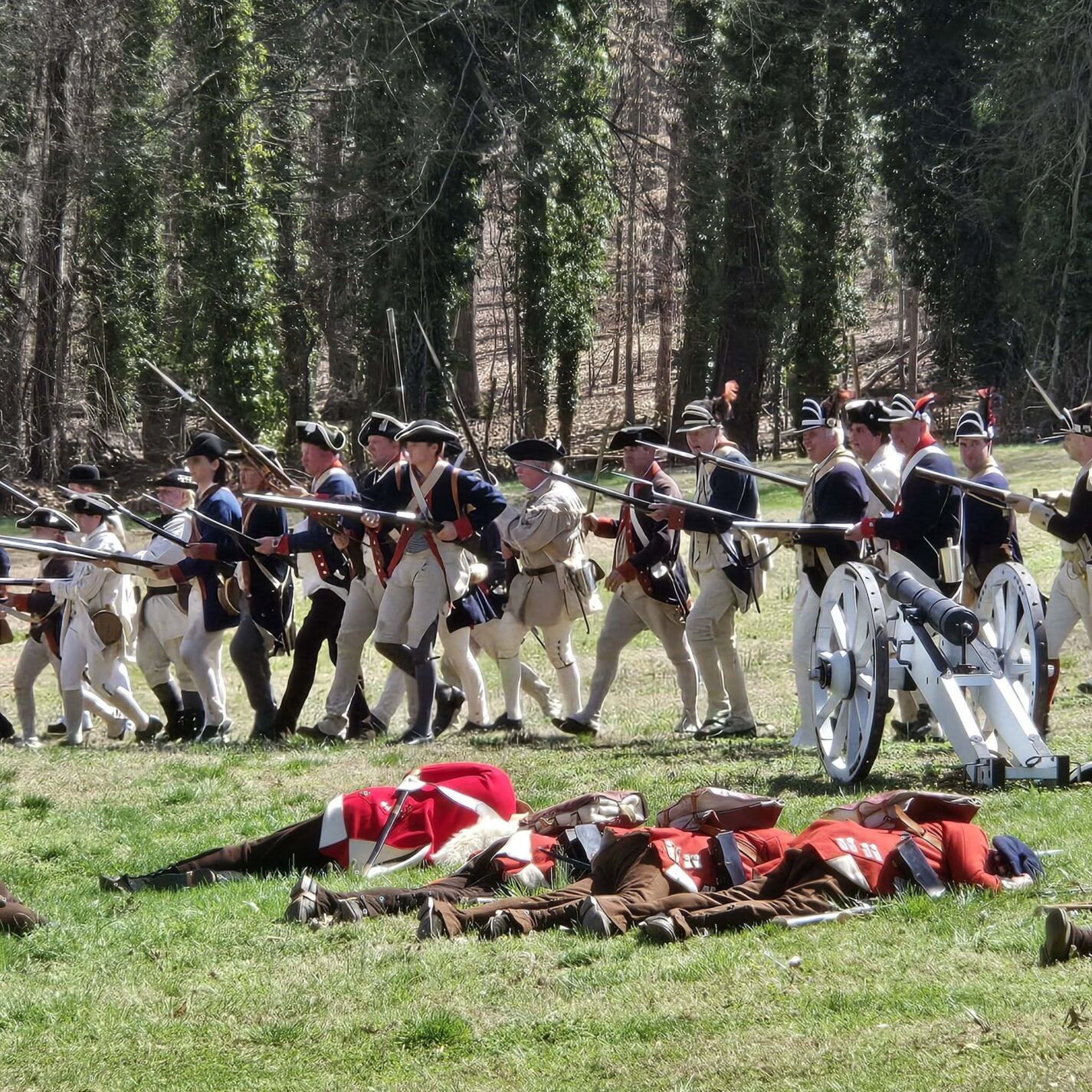
I felt extremely thankful for the brave men who risked their lives and fortunes to join with their fellow soldiers — whether they were regular army Continentals in blue coats or militiamen wearing hunting shirts — to fight for our freedom. At certain points in the reenactment, it became clear how easily the British could have somehow surrounded Greene’s troops and forced them to surrender.
The reenactment showed how Cornwallis, despite losing about a quarter of his force in casualties, won the field that day and was therefore crowned the “victor.” It was also easy to see how strategic and astute Greene was to surrender the field, keep his force intact, and live to fight another day instead of allowing his troops to be surrounded.
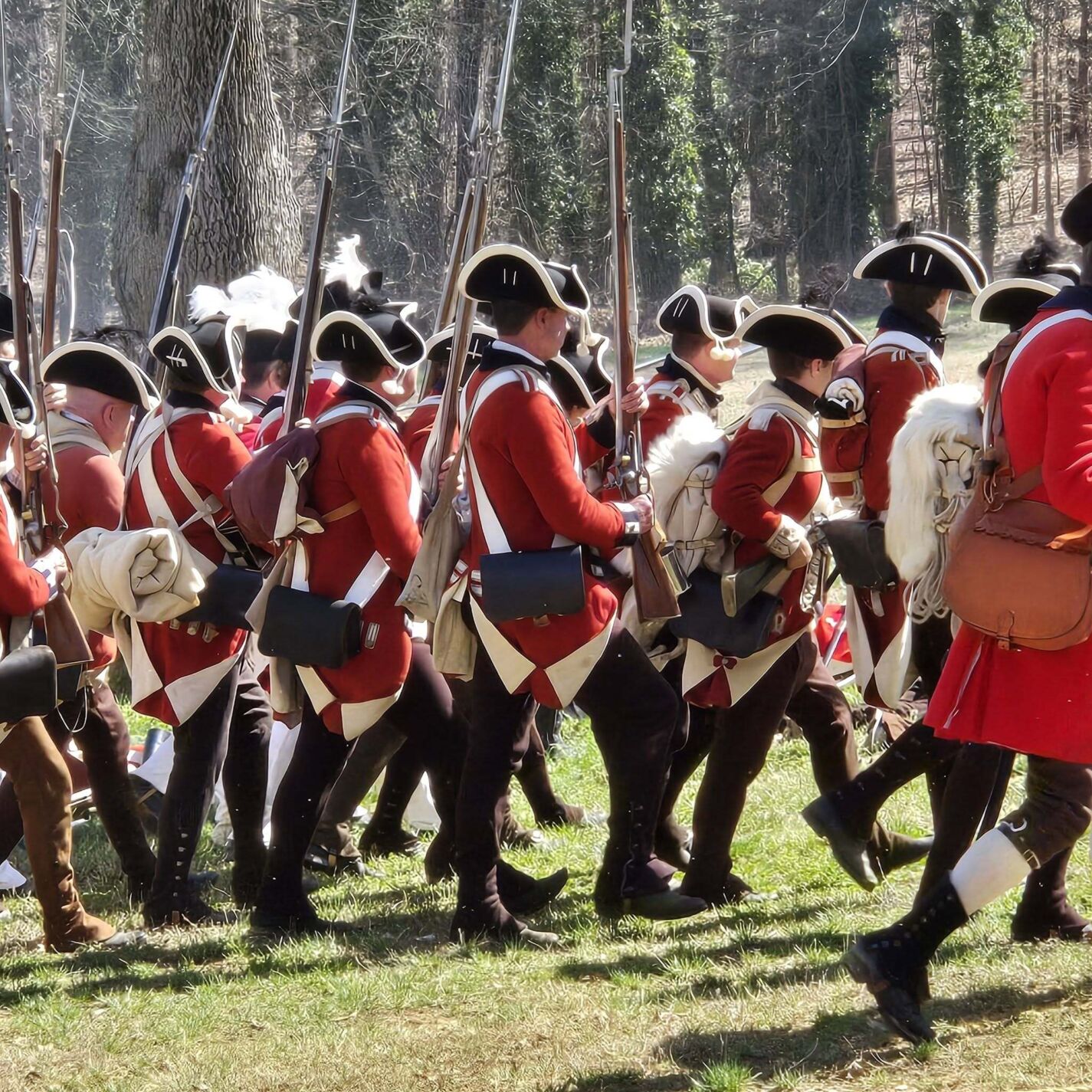
As I explained last week, the battle was an important one, but what happened next mattered even more for our country than that day. Cornwallis’s “victory” was ultimately an empty one. Because he had already lost so many men — especially officers — and depleted much of his supplies in his “Race to the Dan,” trying in vain to corner Greene’s forces and bring them to battle, Cornwallis ended up slinking down the Cape Fear River to Wilmington to rejuvenate and resupply his army. He gave up on North Carolina, and after his rest period in Wilmington, he headed north along a route that follows closely by what is today I-95 and U.S. Highway 301 through Halifax into Virginia. There, he ended up losing to Gen. George Washington and his French allies at the Battle of Yorktown.
I also want to acknowledge the importance of the reenactors — both male and female — who gave their time, money, and energy to learn the roles of the soldiers and other colonial people they portray in events like this one. Bringing history to life is an excellent way to make it real for our citizens who learn little about this period in school. It was so encouraging to see all the children and young families who were involved in the day and watched the reenacted battle. Many thanks to all those who were involved in bringing the Battle of Guilford Courthouse to life 245 years later.