Michael Strain of the American Enterprise Institute longs for the return of core conservative principles.
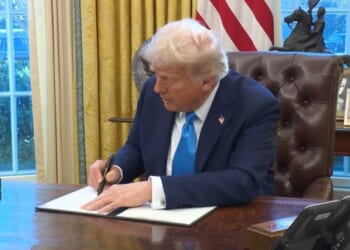
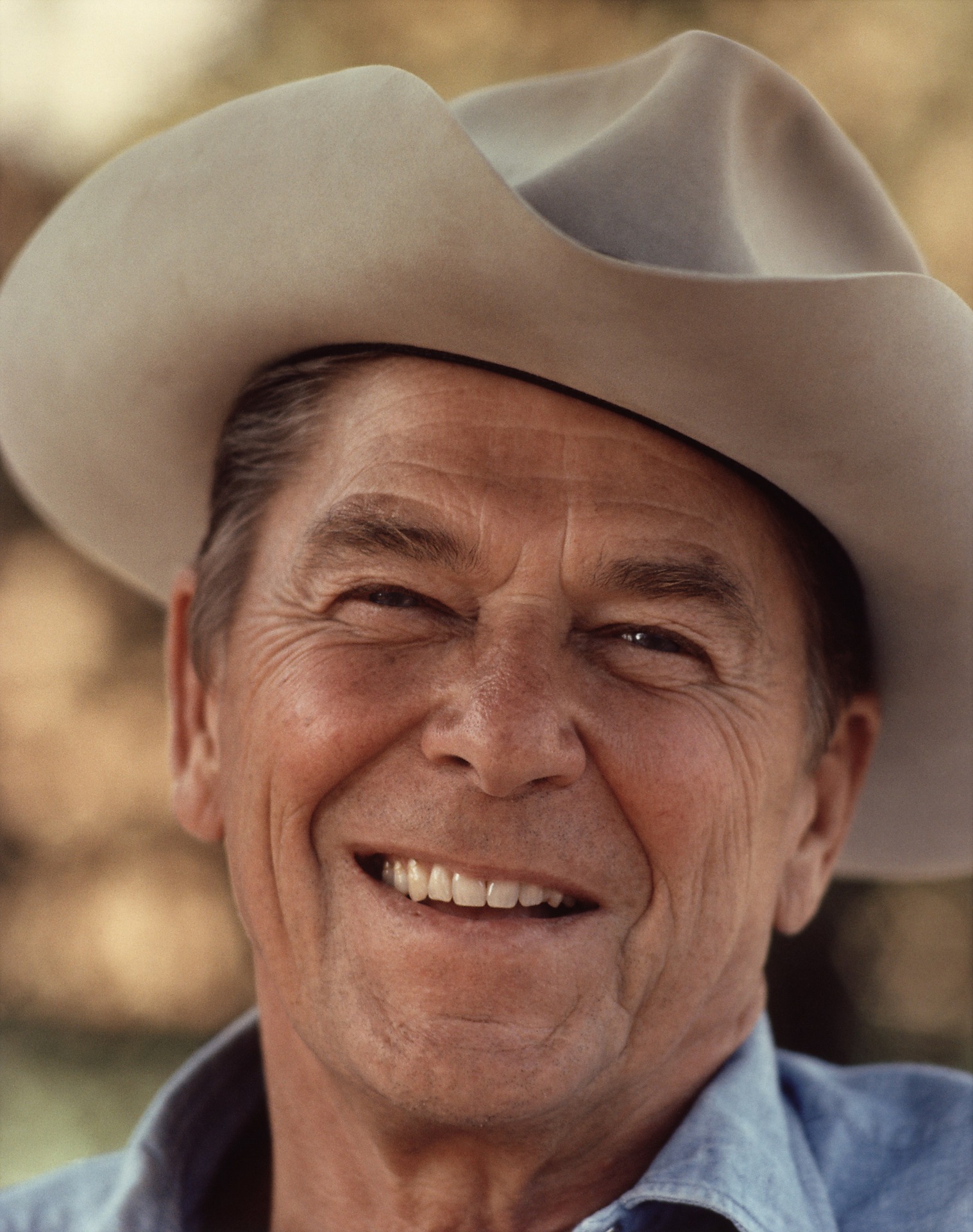
Consider, for example, US President Donald Trump’s suggestion that the government should send households $2,000 tariff rebate checks to address concerns about high prices. Thatcher and Reagan would have been appalled (as they would have been by the tariffs themselves). They also would strongly oppose the Trump administration’s decisions to take equity stakes in private companies and to commandeer others’ revenue streams, as well as its attacks on immigration. Whereas Thatcher and Reagan stood up to the Soviet Union, much of today’s Republican Party is isolationist, and some on the political right are in thrall to the dictator in the Kremlin.
But the differences go deeper than policy disagreements. Trump has long thought of the American people as victims who are helpless in the face of economic change imposed by hostile elites. In accepting the 2016 Republican Party’s nomination for president, he proclaimed: “I have joined the political arena so that the powerful can no longer beat up on people that cannot defend themselves.” The Republican establishment and conservative movement have lined up behind him and his politics of grievance.
By contrast, Thatcher championed individual ability and agency. As she explained in a 1975 speech: “We must build a society in which each citizen can develop his full potential, both for his own benefit and for the community as a whole, a society in which originality, skill, energy, and thrift are rewarded, in which we encourage rather than restrict the variety and richness of human nature.”
She also consistently conducted herself with dignity and decorum, as did Reagan, who was so diligent in upholding the dignity of his office that he insisted on walking himself into the emergency room after being shot, falling to the floor only once he was inside the hospital and out of public view.