Introduction
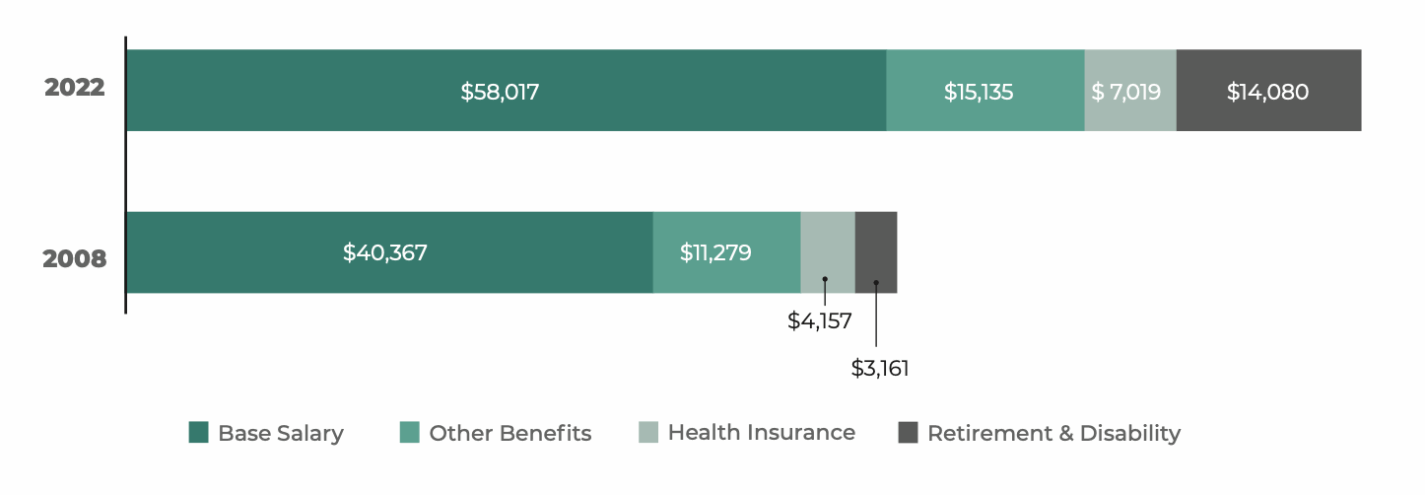
State government is the largest employer in North Carolina, with more than 320,000 full-time-equivalent positions. State employees have been working for the state for an average of 12 years. Attracting and keeping employees is a constant challenge, however. Benefits beyond salary have traditionally been a factor in the desirability of government jobs. In 2022, state employees received benefits worth $36,369 in addition to their average salary of $58,017. This means that, on average, each state government employee costs taxpayers more than $94,000 per year.
The 2022 total compensation figure marked a 60% increase over 2008 and a 13% increase in just the past two years.
The fastest-growing component of employee compensation is the state payment for pensions and health benefits. The cost to taxpayers of providing these two benefits increased by a whopping 188% from 2008 to 2022, nearly tripling from $7,318 to $21,099.
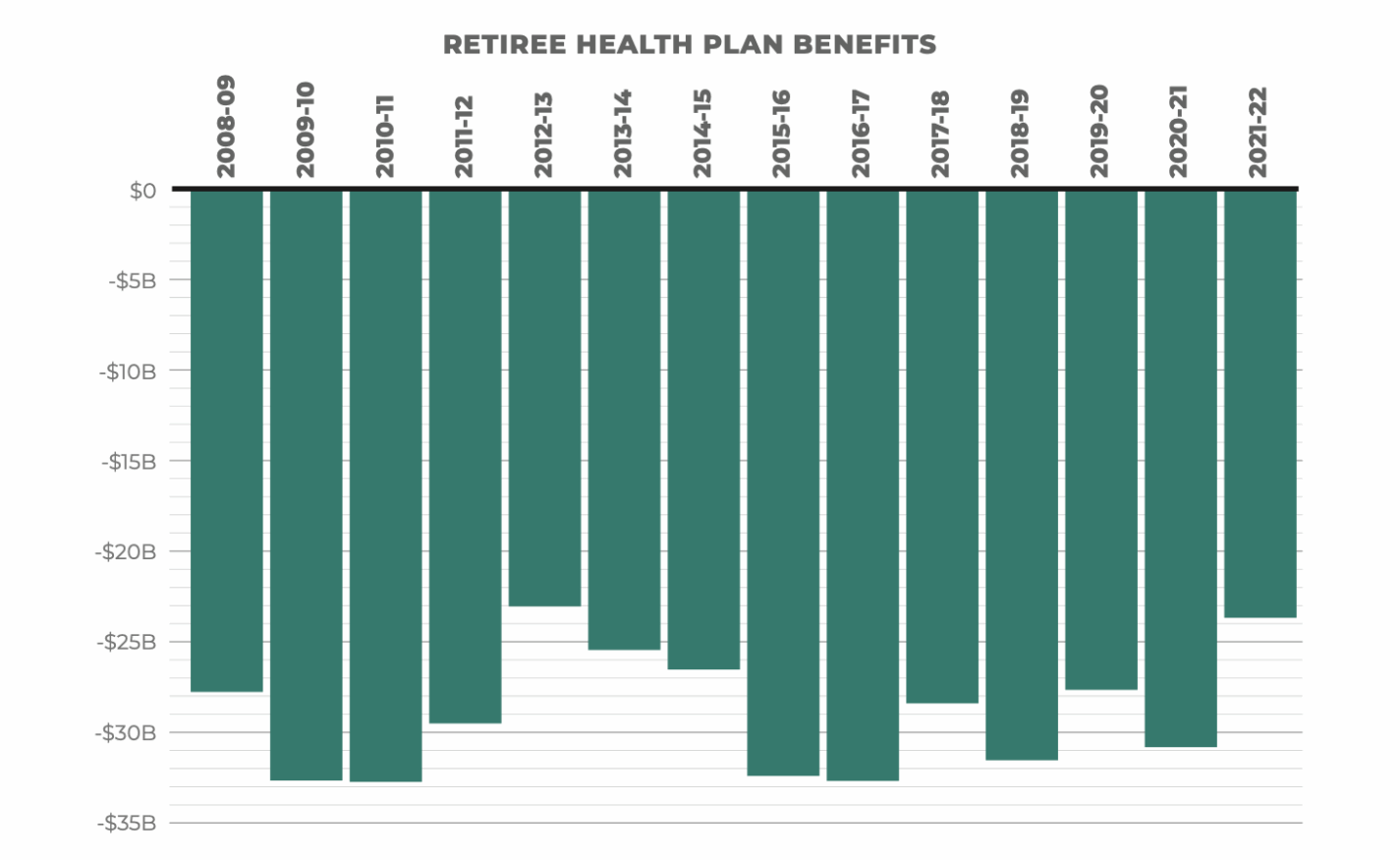
Retired state employees receive generous health insurance at no cost, and they have the option of upgrading to even more generous coverage for a small monthly premium. In 2022, the unfunded liability for retiree health-plan benefits totaled $23.7 billion. North Carolina state employees who start work after Dec. 31, 2020, however, will not be eligible to participate in the State Health Plan after retirement, a move that will remedy the retiree health-care cost liability well into the future. Still, the daunting liability of the next several decades must be addressed.
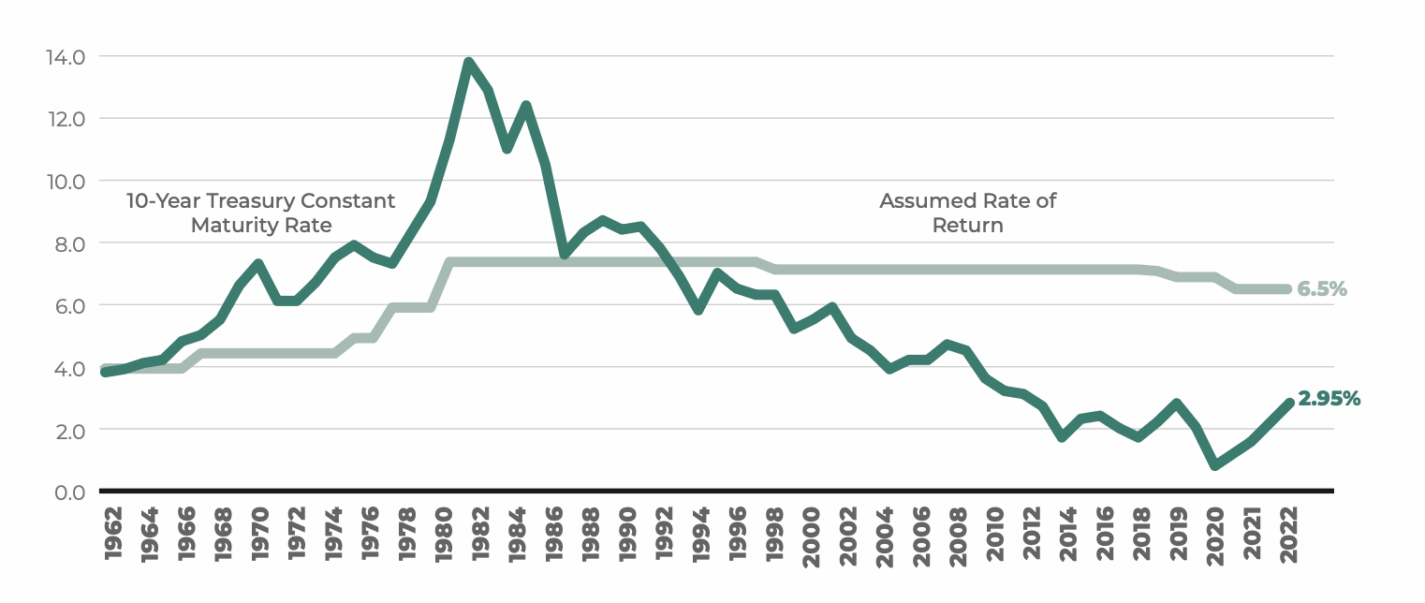
Retirees also receive pension payments based on their length of service and their last three years of salary. The largest pension system, the Teachers’ and State Employees’ Retirement system (TSERS), has assets valued at almost $79 billion yet owes current and future retired teachers and state employees $94 billion, thereby creating an unfunded pension liability of nearly $15 billion. Investments have fallen short of the assumed rate of return, even though former state treasurers took advantage of greater latitude to invest in hedge funds and other nontraditional assets. Significant market downturns during the 2020 COVID lockdowns and the 2022 inflation scare have put the pension fund further behind pace.
Current State Treasurer Dale Folwell has saved more than $350 million in investment management fees from January 2017 to the end of 2020 and has pared back the assumed rate of return for pension assets from 7.25% to 6.5%.
North Carolina’s pension system guarantees a defined level of monthly payments to retired state employees for life. If there were not enough money available to cover these payments, the state would need either to raise taxes or to cut spending in other areas. The risk to employees is that the liability, left unaddressed, would be so great that the state would need to reduce the monthly pension payments. As municipal bankruptcies around the country have demonstrated, unfunded liabilities can lead governments to raise taxes or to cut or eliminate benefits without warning.
To reduce the risks to both taxpayers and retirees, in 2017, Michigan switched from traditional defined-benefit pensions to defined-contribution retirement plans, which create individual accounts for employees to manage with funds that they and the state government contribute during their careers. There is no guaranteed payout and no hidden risk to taxpayers with defined-contribution plans.
Key Facts
- Employer contributions for state pension and health benefits totaled more than $21,000 per employee in 2022, an increase of 125% from 2010. A higher cost for required benefits means less money for salaries
- Unfunded liabilities for state pensions and retiree health benefits total nearly $40 billion.
- The state eliminated benefits for new employees who begin their employment after Dec. 31, 2020.
- State pension investments have not met the assumed rate of return over the past 20 years, even with the recently reduced rate of 6.5%. Treasurer Dale Folwell has adjusted the portfolio, cut fees, and reduced the expected rate of return, but even a lower expected return would still require more appropriations to the pension system.
Recommendations
- Contribute the actuarially required amount to meet future state health-plan obligations.
Unfunded liabilities could harm future retirees, taxpayers, and the state’s AAA bond rating. An annual appropriation needs to be established for both the pension and health plans until each is at least 95% funded. - Continue reducing investment return expectations for pensions.
Setting a lower bar for investment returns will allow pension managers to stop chasing riskier investments in the hope of meeting overly ambitious targets. It will also produce more realistic liability figures. - Take Additional Steps to Reduce Current Healthplan Costs and Long-Term Liability.
Several services help people save money on health costs. Making them available to employees covered by the State Health Plan can improve the plan’s finances. The treasurer is right to continue pushing for clear pricing from hospitals. - Transition to Defined-Contribution Pension Alternatives for Both New and Current Employees.
New teachers, corrections officers, and other state employees often do not reach the five years of service needed to vest in the pension system. They should have better choices, and those choices should be open to longer-service employees as well. Employees enrolled in 401(k)-style defined-contribution plans immediately have control over their retirement contributions, instead of having to wait to be vested in their pension. Moreover, defined-contribution plans remove the risk to taxpayers of having to pay for massive – and growing – pension liabilities. - Increase Transparency of the Pension Plan and Other Employee Benefit Plans.
Financial statements for these accounts need to be available for review in a convenient place, preferably an easily accessible website. Finances should be considered a priority when evaluating the state’s fiscal situation. State employees should be able to see the value of their benefits and the likelihood of receiving those benefits.
Growth in State Employee Benefits
Source: Office of State Human Resources
Pension Fund Assumed Rate of Return and 10-Year Treasury Rate
Source: Department of the State Treasurer, Board of Governors of the Federal Reserve System.
Unfunded Liabilities of North Carolina State Government
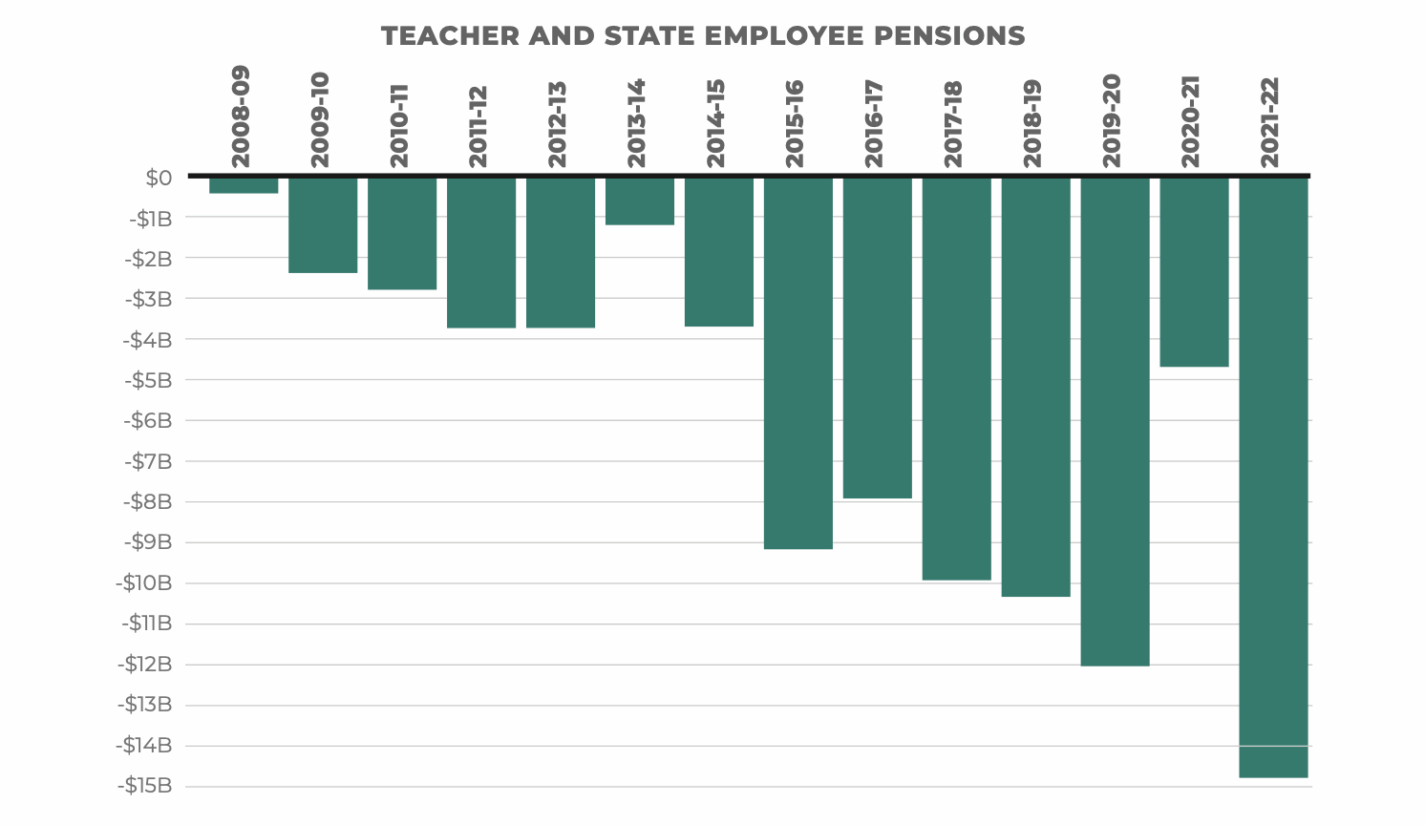
Source: Office of the State Controller, Comprehensive Annual Financial Reports.