By John A. Charles Jr.
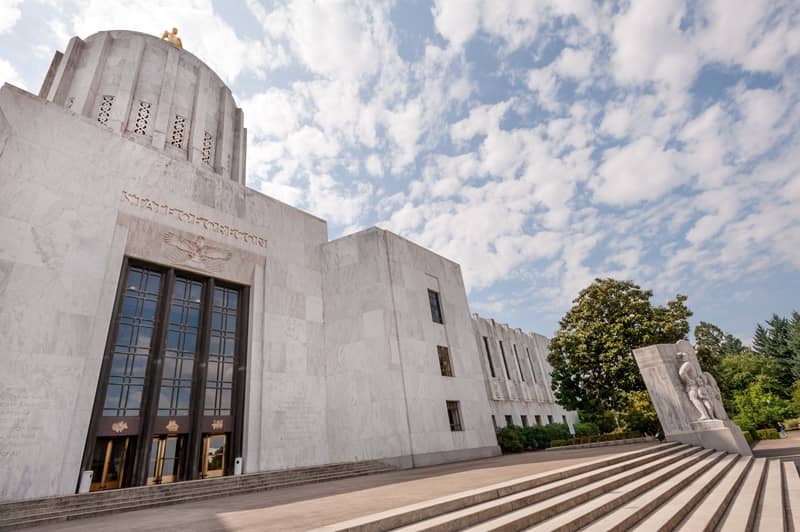
PORTLAND, OR – John Charles, President and CEO of Cascade Policy Institute, submitted written Testimony on Wednesday to the Oregon Senate Energy and Environment Committee (EE Committee) regarding a little noticed Senate Bill 1526 on the opening day of short session. Cascade’s government affairs representative, Tom Holt, also testified at the hearing. If passed, SB1526 would create a new nonprofit entity at taxpayer expense for the purpose of tapping into the $700 million Monsanto-created environmental slush fund to capitalize net zero focused projects.
“My main question is why. Why does this even belong in a short session? There is no need for a new state-sponsored nonprofit that can go after new revenue streams using tax-financed debt through bonding authority,” Charles remarked.
“The EE committee should conduct due diligence before creating another state-sponsored organization in this mature and crowded field. This duplicates the work of entities like Energy Trust of Oregon, who have been in that sector for decades. I suggest you carry this bill to the 2027 session,” he concluded.
Charles’ Testimony lays out three primary concerns, including the concern that nonprofits should finance their work through philanthropy, not taxation. The newly created nonprofit entity would be formed for the purpose of financing “clean energy and resilience” projects under the direction of the Oregon Department of Energy (ODOE). The entity would draw from funds in the Environmental Restoration Council (a Monsanto-created environmental slush fund) to set up a nonprofit that would bestow grant money to projects that facilitate ending the use of fossil fuels in Oregon, a chief goal of the net zero agenda in the Oregon Energy Strategy. The entity would be able to receive capital from public and private sources and have authority to pursue increased funding from public bonds at taxpayer expense.
Cascade Policy Institute analyzes tax and budget policies to advance freedom, accountability and economic growth. Cascade empowers Oregon’s people and policy leaders with informed testimony grounded in free market principles.
Read John Charles’ Testimony Re: SB 1526.
– – – – –
Testimony of John A. Charles, Jr.
Before the Senate Energy and Environment Committee Regarding SB 1526
February 4, 2020
Members of the Committee, my name is John Charles, and I am President of Cascade Policy Institute, a nonprofit policy research organization. I am writing with some concerns about SB 1526.
The first has to do with the mission of the nonprofit anticipated by this bill, identified on page 2, lines 16-22. There are probably hundreds of for-profit and nonprofit organizations addressing energy efficiency and greenhouse gas reductions. What is the value proposition of one more entity?
A second concern lies with the potential of the new organization to secure funding via OBDD’s bonding authority. The defining feature of an NGO is that it is NOT a government entity. As a tax-exempt charity it should be supported by philanthropic gifts, not tax funding.
A final concern is the difficulty of shutting down state-sponsored entities after their mission has been fulfilled or become obsolete. Exhibit A in this regard is the Energy Trust of Oregon (ETO).
The Energy Trust is the product of SB 1149, passed by the legislature in 1999. ETO was created to administer 74% of the funding provided through the Public Purpose Charge (PPC), a 3% tax imposed on PGE and PacifiCorp customers (later broadened to include natural gas consumers as well).
The PPC was supposed to sunset at the end of 2012. But in 2007 the legislature extended the PPC through 2026, and then extended it again in 2021. In essence, the PPC is now a permanent tax on utility ratepayers.
As a result, total funding for ETO went from $11 million in 2002 to $191 million in 2018. The current budget is $350 million and growing.
Unfortunately, as the revenue has gone up, the cost-effectiveness of ETO programs has declined, because all the easy projects were finished decades ago.
SB 1526 requires further due diligence. I suggest you carry this bill over to the 2027 session.