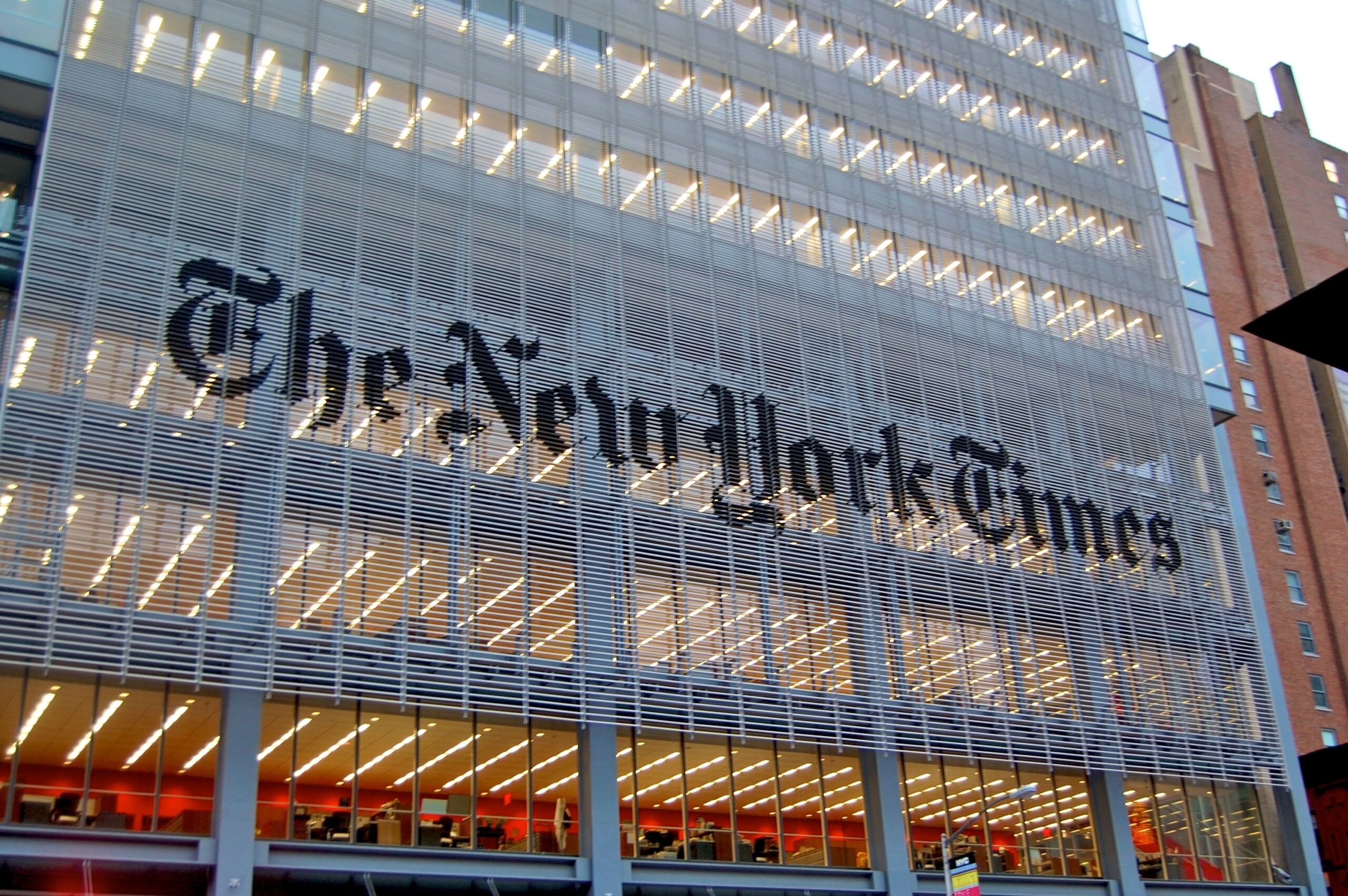
Andrew Stiles writes for the Washington Free Beacon about a major legacy media outlet’s failures.
The New York Times is enjoying a rarefied hot streak in the field of prestige journalism. Since late February, the so-called paper of record has published numerous articles and op-eds that neatly capture the elite liberal worldview in all its cloistered absurdity.
We’re not even mad. It’s amazing.
Children Are Bad for the Environment (February 27)
The Times published an article explaining why the conservative “political class” was wrong to be worried about declining U.S. birthrates because a handful of so-called experts said it was a “good thing.” The Times subsequently published several letters to the editor responding to the article. Readers emphatically agreed that Americans should have fewer children—or none at all—because “climate change” and “rapacious capitalism” are making the planet uninhabitable.
Mamdani’s Wife Supports the ‘Palestinian Cause’ (March 6)
A Times report on New York City mayor Zohran Mamdani’s (D.) wife’s history of liking social media posts celebrating the Oct. 7, 2023, terrorist attacks by Hamas described the posts as reflecting support for “the Palestinian cause.” The article included a supportive quote from Jews for Racial & Economic Justice, a Soros-funded activist group.
Sympathy for a Terrorist (March 14)
The print edition of a Times report on the “quiet restaurant worker” who rammed his truck into a Jewish preschool in Michigan carried the following headline: “Synagogue Attacker Lost Family Members in Lebanon Airstrike.” The Times did not mention in the print version that, according to the Israeli government, at least one of the “family members” was a Hezbollah terrorist. …
… Beloved Space Romp Panned for Lack of Climate Doom (March 19)
Project Hail Mary is one of the most successful movies in recent memory. Roughly 95 percent of critics and viewers loved it, according to Rotten Tomatoes. The Times did not. Chief film critic Manohla Dargis, a five-time Pulitzer finalist with a Ph.D. in cinema studies, dismissed the film as a “bummer.” Not because the movie itself was too sad, but because it was too whimsical and optimistic in light of the “human-generated environmental catastrophe we’re facing.”