
In late January, the State Board of Education will begin the process of reversing decades of declining literacy by considering a preliminary list of required readings for Texas public schools. This charge was delivered to the SBOE by the Legislature in response to disappointing state and national assessment results and university educators sounding the alarm that students no longer arrive at college prepared to engage with full-length texts.
As the Board considers what texts to include on this reading list, you might expect that it would turn to national and state organizations dedicated to books, reading, and English, such as the American Library Association, the National Council of Teachers of English (NCTE), and the Coalition of Reading and English Supervisors of Texas (CREST), for guidance. Unfortunately, like many other intellectual institutions, they have abandoned their core purpose to promote left-wing ideology.
ALA materials are almost a parody of leftist programming, even if you look past the time its former president tweeted out that she was a “Marxist lesbian.” The ALA’s 2025 Conference program includes a land acknowledgement as well a guide to Black, Latino, Women, and Queer-owned businesses in Philadelphia. The conference dedicated 30 sessions, almost 1/3 more than any other topic, to “Upholding Intellectual Freedom and Information Access,” a euphemism for making sure all the porn books stay in school and public libraries. Personally, my favorite session title is “Homosaurus Unleashed.” This and other sessions trained librarians on how to resist attempts to curate unsuitable books out of libraries, regardless of what parents, schools, or the courts say.
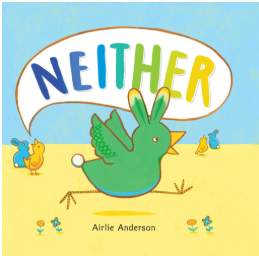
The ALA has also been at the forefront of the fight to ensure that obscenity remains in Texas libraries. Texas is at the top of an ALA list meant to denigrate states that allow for obscene books to be considered for removal, with the ALA framing the removals as motivated by racial or homophobic bigotry. The ALA’s “book resumes” resource promotes the usual fare of obscenity and sexual content, but it also features blatantly propagandistic books like Neither that explains the gender nonbinary to children. The ALA recently protested the Supreme Court’s declining to examine a lower court’s decision that Llano County could remove books it deemed unsuitable from its public library. The ALA has never met a book it could not defend being made available to children.
It is also clear that the ALA has embraced the Left’s obsession with race, gender, and sexuality. Long before Black Lives Matter, the ALA was infiltrating library preparation programs as a way to push “social justice and societal change.” In the article, the professor explained that she was inspired by Marxist educator Paulo Freire to push multiculturalism as a way to discuss “privilege and power,” i.e. to stoke discord in order to destabilize society. These ideas have become mainstream since then and reach every corner of the education world. Racial justice book discussions are a recurring program that the ALA promotes, and the ALA publishes reports on “critical information literacy,” the library sciences version of Critical Race Theory. Racial equity is taught in the ALA’s continuing education resources that reaches teachers across the country.
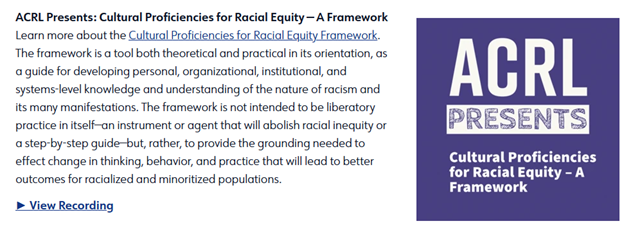
The NCTE similarly promotes critical theory in all its forms: Their conference in May featured two separate discussions about “culturally and historically responsive literacies” that highlighted their policy brief which exhorted teachers to “model and instruct students on how to read through a critical lens across a range of literary theories (e.g. postcolonial criticism, Black feminist criticism, Chicana feminist criticism).” No matter what name it is given, the philosophy is the same: students are taught to analyze literature based on racial, class, and sexual identity, always with the goal of discovering narratives of oppression. At the same time, however, they’ll tell us that Critical Race theory is “just” an academic concept that would never be taught in schools.
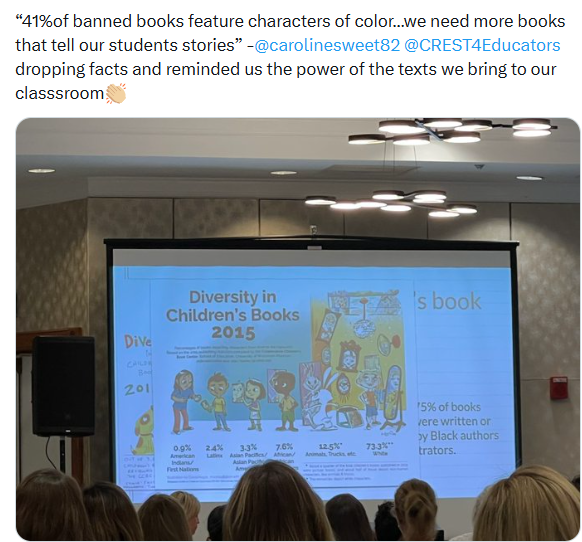
Unfortunately, this propaganda has trickled down and infected even state-based member organizations like CREST. CREST has uncritically swallowed the same obsession with race and gender.
These organizations have proven that, in terms of suitability and the purpose of literature, they do not have the public interest at heart. While social justice and unfettered access to materials regardless of appropriateness may be their main priorities, the State Board of Education has higher priorities, like educating students and safeguarding their well-being.