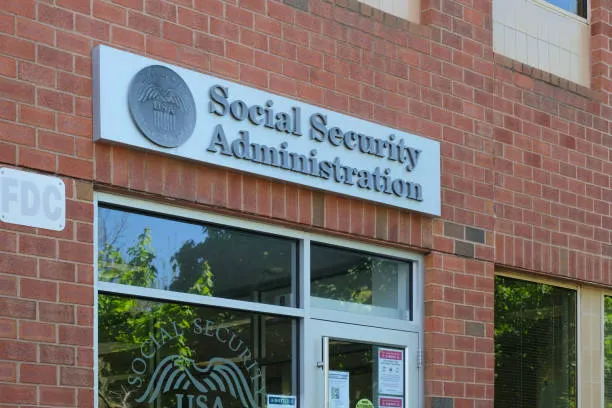
Americans are approaching a mathematical reality that no politician wants to confront, but every taxpayer eventually must: Social Security is on an unsustainable path.
For nearly a century, the system has served as the foundation of retirement security, providing a reliable safety net for workers who spent decades paying into it. But the structure designed in 1935 is now straining under the weight of 21st-century demographics.
The problem is not ideological; it is arithmetic.
Recent projections from the Social Security Administration and independent analysts indicate that the primary retirement trust fund is on track to be depleted as early as 2032. This timeline has accelerated due to an aging population, longer life expectancy, and shifting fiscal pressures. If nothing changes, the result is automatic: an across-the-board benefit reduction of roughly 20% to 25%.
When we strip away the political rhetoric, we are left with only three levers to pull to save the system. None is ideal. But when no good solution exists, we must identify the one that is the “least bad”; the one that preserves the system’s integrity while doing the least amount of damage.
The Three Bitter Pills
- Raise Payroll Taxes
The current payroll tax stands at 12.4%, split evenly between employer and employee, on wages up to the taxable cap.
Increasing this rate would immediately reduce take-home pay for workers and raise labor costs for employers. In practice, it functions as a tax on employment itself. At a time when economic growth depends on job creation and investment, making labor more expensive risks slowing both.
Some propose eliminating the taxable wage cap altogether (currently $184,500). But doing so raises a fundamental fairness issue: Social Security benefits are capped. Taxing income without a corresponding increase in benefits transforms the system from social insurance into redistribution, an important distinction with significant economic implications.
2. Cut Benefits
Reducing benefits, especially for current retirees or those nearing retirement, is both politically untenable and ethically questionable.
Millions of Americans have structured their retirement around expected Social Security income. For many, it is not supplemental; it is essential. Cutting benefits at this stage would impose immediate hardship on individuals who have little or no ability to adjust.
This option effectively breaks a long-standing social contract.
3. Raise the Retirement Age
The third option is to gradually increase the retirement age, potentially to at least 70.
While controversial, this approach addresses the core issue directly: people are living significantly longer than when the system was created.
The Least Bad Path: Adjusting for Longevity
To understand why raising the retirement age is the soundest option, consider the original design of Social Security.
In 1935, the retirement age was set at 65, while average life expectancy hovered around 67. The system functioned primarily as longevity insurance, a safeguard against outliving one’s savings for the few remaining years.
Today, that reality has fundamentally changed.
Americans routinely live well into their 80s and beyond. Retirement is no longer a short bridge; it can span two or three decades or more. The system has effectively shifted from funding a few years of support to financing a multi-decade entitlement.
No insurance model can sustain a more than tenfold increase in payout duration without adjusting its terms.
Modernizing the Social Contract
Gradually raising the retirement age to at least 70, especially for younger workers with time to plan, is the least disruptive way to restore balance.
It aligns Social Security with modern life expectancy, preserves promised benefits for current retirees, and avoids imposing significant tax increases that could weaken economic growth.
Importantly, Americans today are not only living longer, but they are also remaining healthier and more productive later into life. Adjusting the retirement age reflects this new reality.
A Choice That Can’t Be Avoided
Social Security remains a cornerstone of American economic security. But today, that cornerstone rests on a fiscal imbalance.
We can continue to delay action until automatic cuts arrive, or we can make measured, rational adjustments now.
There are no painless solutions. But there are smarter ones.
Raising the retirement age is not perfect. It is not politically easy. But it is the option that preserves the system’s integrity while minimizing damage to workers, retirees, and the broader economy.
At some point, the numbers must add up. The sooner we accept that reality, the better the outcome will be for everyone.
Agree/Disagree with the author(s)? Let them know in the comments below and be heard by 10’s of thousands of CDN readers each day!