Texas adopted Hoover’s blueprint a century ago. Today, the bill is due in higher prices and lost liberty.
Progressive-era policy rears its head in Texas housing. A century after Herbet Hoover put housing under government management, innovation has faltered, consumer choice has dwindled, and costs have exploded.
Popular sentiment casts Herbert Hoover as a do-nothing, laissez-faire President. History says otherwise. Before the White House, Hoover built his reputation not as a champion of free markets, but as a progressive Secretary of Commerce, and “undersecretary of everything else,” as his contemporaries quipped. He cheered on wage mandates, extolled progressive taxation, and increased the death tax. His role as government master planner didn’t end with the stock market crash. It lives on today, even in Texas, in the ways we are allowed or forbidden to use our own land.
Hoover told us plainly what he wanted: “When I came to the [Commerce] Department, I was convinced that a great contribution to reconstruction and a large expansion in employment could be achieved by supplying the greatest social need of the country—more and better housing.” Few could quarrel with the goal. The problem was the method. As Nobel laureate Milton Friedman warned, “one of the great mistakes is to judge policies and programs by their intentions rather than their results.” Under Hoover, the Commerce Department drafted the Standard State Zoning Enabling Act, a model law inviting states to let city halls divide every square inch into bureaucratic boxes.
The ambitions were sweeping. Zoning, Hoover argued, would solve “moral and social issues” and cure the “enormous losses in human happiness” caused by unplanned cities. Centralized municipal planning, he believed, could replace the supposed chaos of markets, and Texas took the bait. In 1927, our Legislature enacted an enabling law that, for the first time, gave city governments the power to dictate, on a block-by-block basis, who may build what, where, and when. Over the following decades, one city after another marched into the zoning era: Dallas in 1929, Austin in 1931, San Antonio in 1938, Fort Worth and College Station in 1940.
Not all were convinced of the American city planning experiment. General P. L. Mitchel of Cincinnati warned at the time, “Zoning laws are an advanced form of communism,” a confiscation of property rights masquerading as prudent planning. When the government takes the power to decide how you may use your own property, it takes a slice of your liberty—and sooner or later, it takes a bite out of your prosperity.
Nearly a century later, the results speak for themselves. Zoning did not simply draw sensible lines between a refinery and a nursery school. It metastasized into an elaborate web of mandates: minimum lot sizes that outlaw starter homes, single-family districts that criminalize duplexes, height caps that smother apartments near jobs, and parking quotas that pave over opportunity. Layer in historic districts, overlay districts, and neighborhood compatibility vetoes, and the message to builders is unmistakable: the law forbids what the market demands.
Texas has prospered because, relative to other states, we have trusted markets and protected property rights. Yet even here, housing supply trails job and population growth, not because Texans forgot how to pour concrete, but because we’ve made it too hard to say yes.
Our population now tops 31 million, with over 95% of recent growth packed into only 26 metros. In just five years, median sale prices are up about 30%, straining affordability across the state. Regulation alone can eat a quarter of the cost of a single-family home. This shift is especially visible in the vanishing starter home.
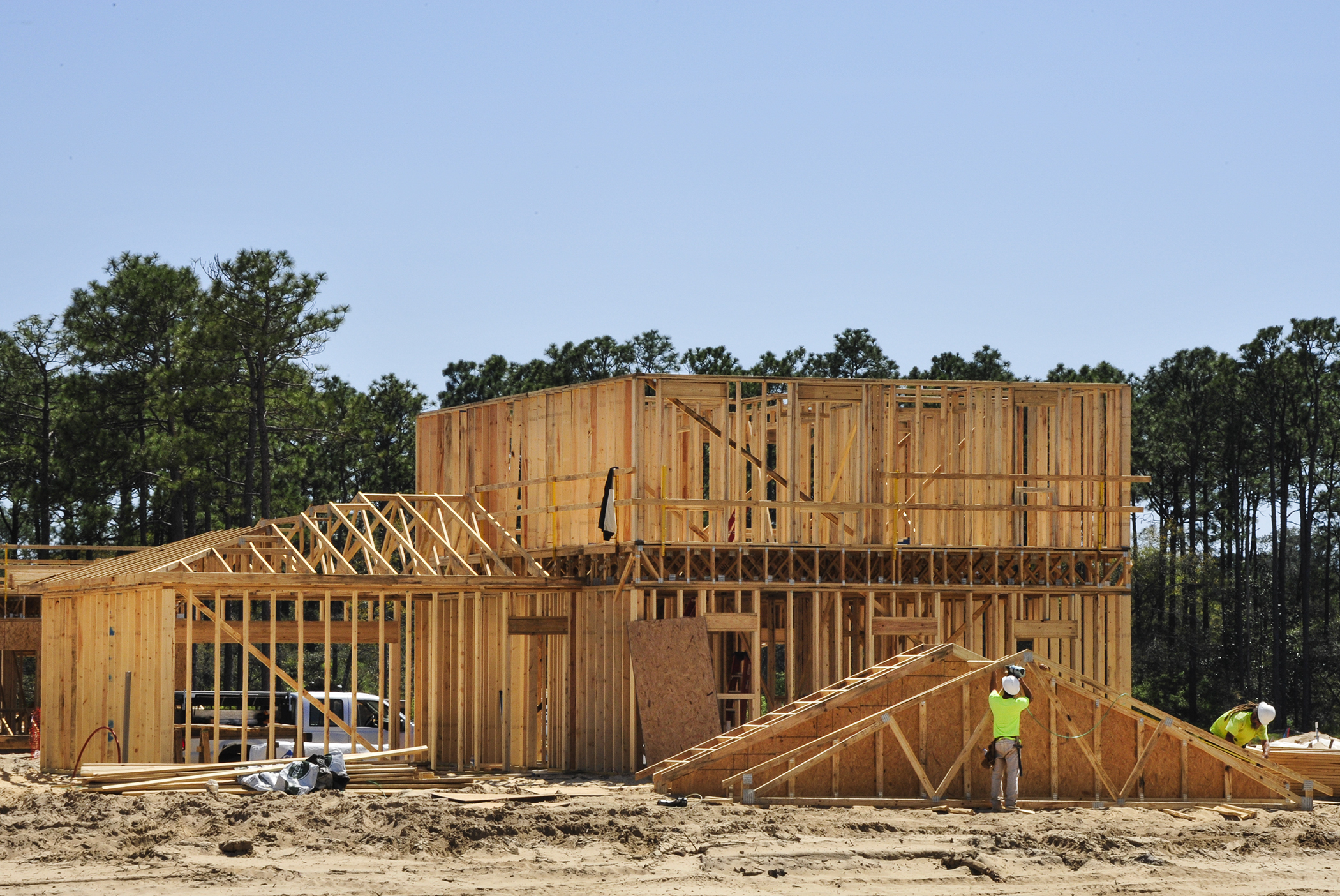
In much of the U.S. and increasingly in Texas, starter homes are simply illegal to build. On 31% of single-family zoned land in Texas, the municipally mandated minimum lot size is greater than 20,000 square feet. This government-induced market distortion manifests in bigger lots, bigger homes, and bigger price tags.
During the 1940s, nearly 70% of single-family homes were 1,400 square feet or less; today, fewer than 8% are. Over the same period, household size has decreased dramatically, from 3.7 to 2.5 persons per household. As households have shrunk, lots and houses have grown, driving up costs. In inflation adjusted dollars, home prices have risen in Texas from $33,113 in 1940 to $339,000 in 2024. Unsurprisingly, starter homes under $200,000 have fallen from half of all homes for sale in 2010 to less than 1.7 percent of the Texas market today.
If Texas means to fit more citizens into less space, the answer isn’t more red tape — it’s less. The great irony of the Progressive Era is that its faith in expert control, born of good intentions, too often produced scarcity and privilege. In housing, it locked out newcomers, priced out the young, and turned city hall into a gatekeeper who says “no” by default.
Herbert Hoover hoped zoning would deliver “more and better housing.” It delivered less and dearer housing. A century on, we can honor the goal by abandoning the means. We cannot undo a century of accreted restrictions overnight. But we can admit a simple truth: the housing we did not allow yesterday is the affordability we do not have today.
Legalize the homes Texans need. Trust people with their own property. And let the free market work.