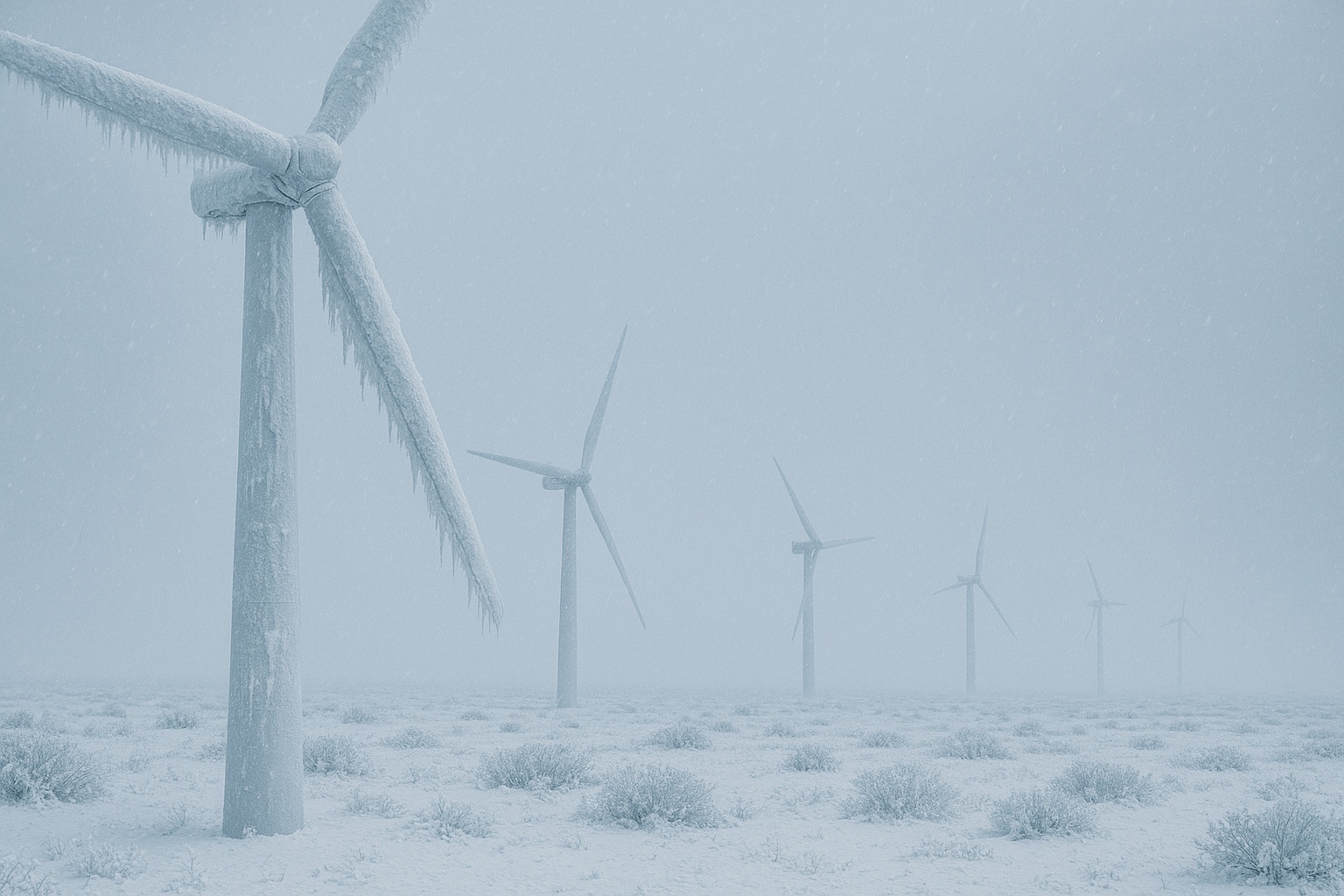
As the five-year anniversary of Winter Storm Uri approaches, this analysis by Dr. Brent Bennett examines whether the ERCOT grid is truly prepared for the next major winter storm. Despite widespread perception that the grid has become more resilient, the data tells a different story: the actual risk of winter outages is rising, not falling. While news reports cite lowered outage risks in ERCOT’s models, these improvements stem primarily from the grid operator dramatically reducing the demand profiles used in simulations rather than from meaningful capacity improvements.
The core problem is that Texas’s winter planning reserve margin has dropped from 17.5% in 2021 to just 10.1% in 2026, falling well short of the 15% standard most utilities target. Although total installed capacity has grown substantially, the increases have come almost entirely from solar, wind, and battery storage. The combined amount of dispatchable generation from gas, coal, and nuclear sources remains roughly the same as before Uri, even as peak winter demand has increased by 20%. Between 2021 and 2025, ERCOT added over 25 GW of solar and 16 GW of batteries but only 2.3 GW of natural gas capacity. The solar doesn’t contribute to winter peak demand periods that occur before sunrise and after sunset, while batteries can only discharge for a couple of hours before depleting during prolonged winter storms.
The report argues that legislative responses following Uri—including SB 3’s winter resiliency standards for power plants—addressed operational symptoms but missed the root cause: market design failures that drive investment toward intermittent generation rather than reliable, dispatchable capacity. The pattern of investing nearly $50 billion in solar and storage since 2021 while neglecting winter reliability needs mirrors the approach Texas took between 2011 and 2021, which ultimately led to the Uri disaster. Under modeling of a 1-in-10 year winter storm (far less severe than Uri), the analysis projects that outages exceeding 12 hours are likely unless wind generation happens to align perfectly with demand. Without market reforms that require all generators to meet reliability standards and better value dispatchable generation, Texas risks being “fooled twice” by another catastrophic winter storm.
To protect Texas from the next major winter storm, policymakers should reform market design to drive investment toward reliable capacity rather than intermittent generation. All wind and solar generators should be required to meet reliability standards, and the market must better value dispatchable generation that can provide power during extended winter emergencies. Without these reforms, Texas is repeating the investment pattern that led to Uri—meeting summer demand while neglecting winter reliability needs.