Americans will celebrate the 250th anniversary of our nation’s founding this July, and rightly so. But March marks another significant event from 1776 that demands our attention.
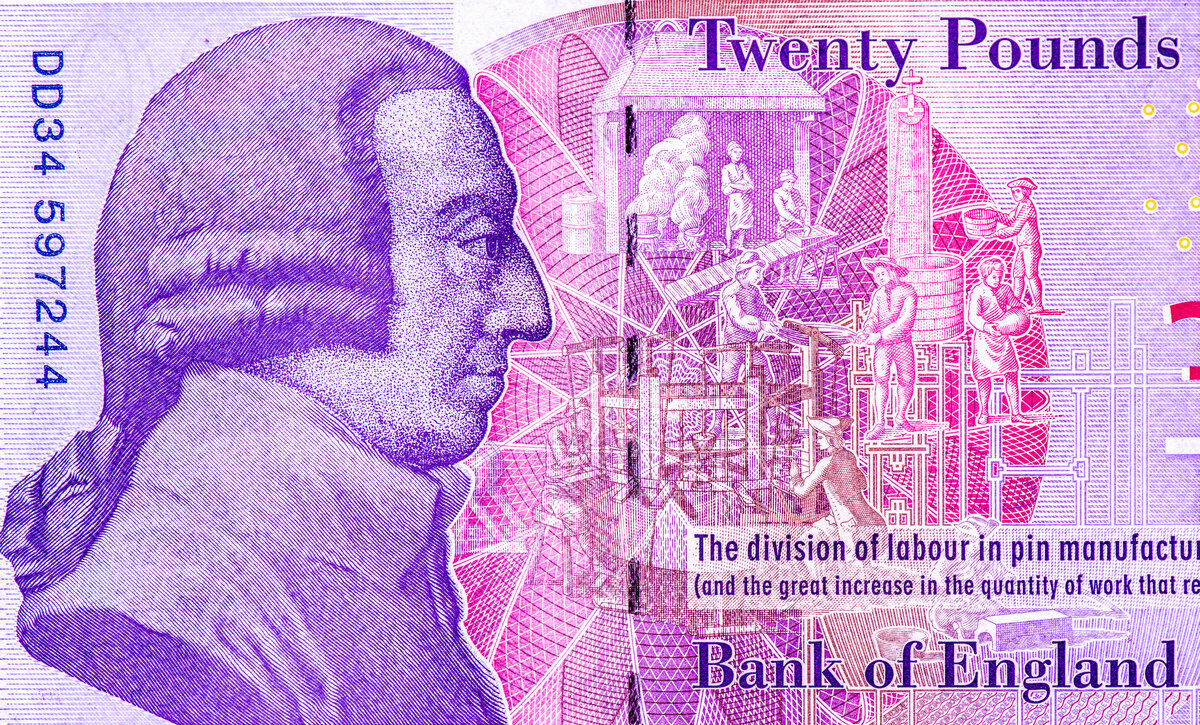
A few months before the American founders approved the Declaration of Independence, the Scottish philosopher and economist Adam Smith published “An Inquiry into the Nature and Causes of the Wealth of Nations,” widely known by its shorthand title, The Wealth of Nations.
To understand the American founding fully, we should pair the words of the Declaration of Independence — and its political philosophy of freedom — with Adam Smith’s economic treatise. As Nobel laureate Milton Friedman argued, economic freedom is a necessary precursor to political freedom.
The economic spirit that took hold in America was steeped in voluntary exchange, specialization, openness to trade and immigration, and skepticism of mercantilism — all subjects that appear in The Wealth of Nations. The book has been called a “blueprint for the American economy,” and it remains a classic for its original insights. Smith’s claims about market capitalism, mercantilism, collusion and free trade are still relevant.
This book influenced the young nation. Presidents John Adams and Thomas Jefferson sometimes mentioned it in their letters. Adams recommended the book to his son, John Quincy Adams, who also became president. Jefferson owned several copies of the book and described it as “the best book extant” on political economy. United States Treasury Secretary Alexander Hamilton, one of the most important founders not to become president, cited it in a report to Congress.
Smith’s insights helped provide intellectual foundations for America’s market capitalism and opposition to mercantilism, a dominant approach to political economy at the time. But he also made a mark for two other ideas: the division of labor and self-interest.
The division of labor. This is an engine of economic growth. It allows people and firms to specialize, raising productivity and increasing employment. Smith used a pin factory as an example; today it could be an auto assembly line. Producers can build far more — at lower cost and higher quality — when each of them works on a specific task that contributes to a finished product.
Self-interest. “It is not from the benevolence of the butcher, the brewer, or the baker that we expect our dinner, but from their regard to their own interest,” Smith observed. Ordinary self-interest — channeled through voluntary exchange — helps provide incentives for efficiently producing an abundant supply of goods.
Smith also left modern scholars with testable claims about factors that contribute to human flourishing. One of the best-known efforts to quantify these factors is a long-running “economic freedom” index.
The Canada-based Fraser Institute has a dataset that measures economic freedom across many countries, going back to 1970. It includes dozens of components across five major categories, including property rights, freedom to trade internationally, and the burden of regulation.
Nations that allow more Smithian freedom to produce and exchange goods voluntarily receive higher scores in the index. Countries with scores near 10 are considered the most economically free. In the Fraser Institute’s 2025 report, the United States ranks 5th, behind Hong Kong, Singapore, New Zealand, and Switzerland.
A nation’s place on the index matters to its people’s well-being. Nations in the top 25% of economic freedom scores earn more than six times on average than those in the least free quarter, and measurable poverty in the least free quarter is far higher than in the freest quarter. Economic freedom is also positively correlated with “personal freedom, with life satisfaction, with non-corrupt government and with a cleaner environment,” according to the Fraser Institute’s 2025 Economic Freedom of the World report.
Fraser reports that more than 700 peer-reviewed studies explore various aspects of economic freedom and the human condition. The overwhelming majority “find a link between high orincreasing levels of economic freedom with gains in prosperity and other measures of well-being.”
Smith’s fame is tied inextricably to The Wealth of Nations. But it should be considered along with Smith’s earlier book, “The Theory of Moral Sentiments.” This work on ethics gives additional perspectives on Smith’s thinking. It explained that mutual sympathy bound society together as an “impartial spectator,” which Smith argued demanded a basic level of self-control and justice. Economic prosperity, in other words, requires trust and regard for others.
As we mark America’s founding, we should also mark books that helped explain how a free people can become a prosperous one, and why that prosperity is fragile. We should not forget the founding any more than we should forget the founding of economic science and what Smith taught about markets: the division of labor, rules of exchange, competition, and open trade, among other ideas.