Last summer, I argued that North Carolina’s growing dependence on federal funding posed a long-term fiscal risk to the state — one that would only become clearer as Washington continued its debt spiral. Unfortunately, that warning is already materializing.
The national debt recently surpassed $39 trillion and is on pace to eclipse $40 trillion this fall. Moreover, relative to gross domestic product, the national debt is at its second-highest level of all time, only trailing the end of World War II.
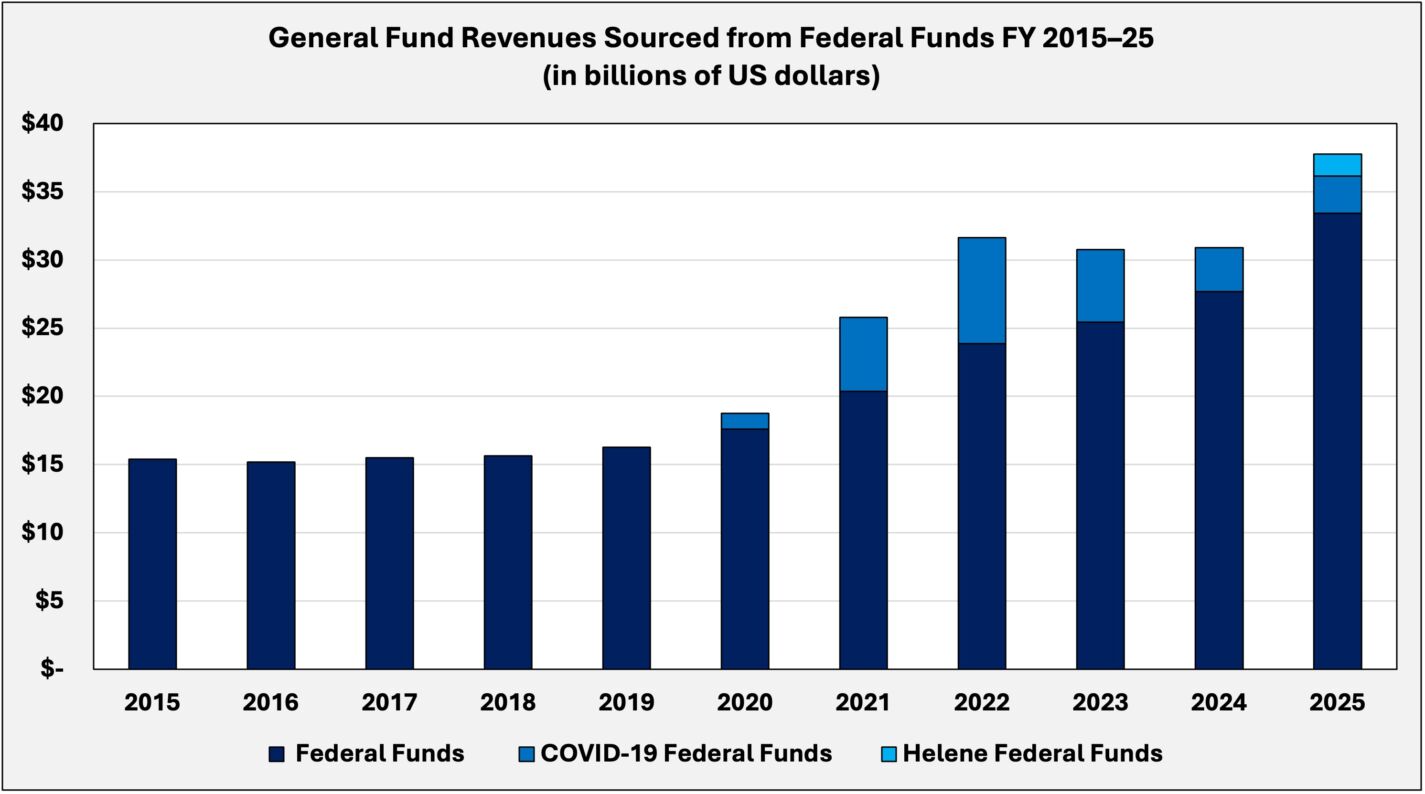
Meanwhile, North Carolina has continued to accelerate its dependence on federal funds. From fiscal year (FY) 2024 to FY 2025, federal fund receipts within the state’s General Fund skyrocketed from roughly $30.9 billion to $37.8 billion, or a startling 22 percent increase. On top of that, FY 2025 was the first year that more than half of the state’s General Fund revenues were provided by the federal government.
Much of this growing dependence is tied to Medicaid — both the state’s decision to expand the program and its reliance on a funding model designed to maximize the dollars the state can extract from the federal government. However, the One Big Beautiful Bill (OBBB) puts this financing model directly at risk beginning in 2028.
The growing dependence
According to North Carolina’s Annual Comprehensive Financial Reports, federal funds flowing into the state’s General Fund have more than doubled over the past decade. From FY 2015 to FY 2025, federal funds increased from $15.4 billion to $37.8 billion — a jarring 145 percent increase.
At first glance, the recent surge in federal funds appears to be driven largely by temporary events — namely, COVID-19 and Hurricane Helene, but that explanation does not hold up under closer scrutiny.
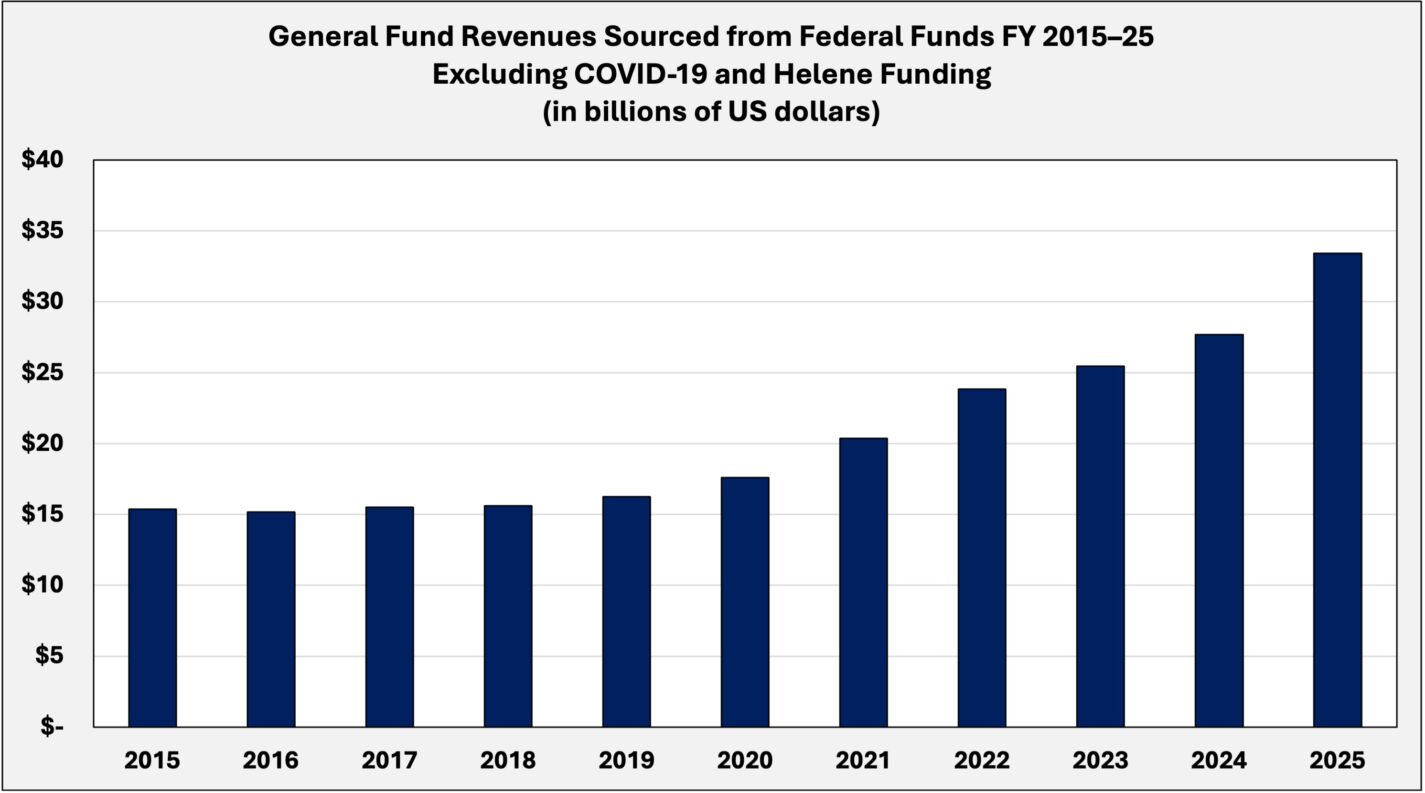
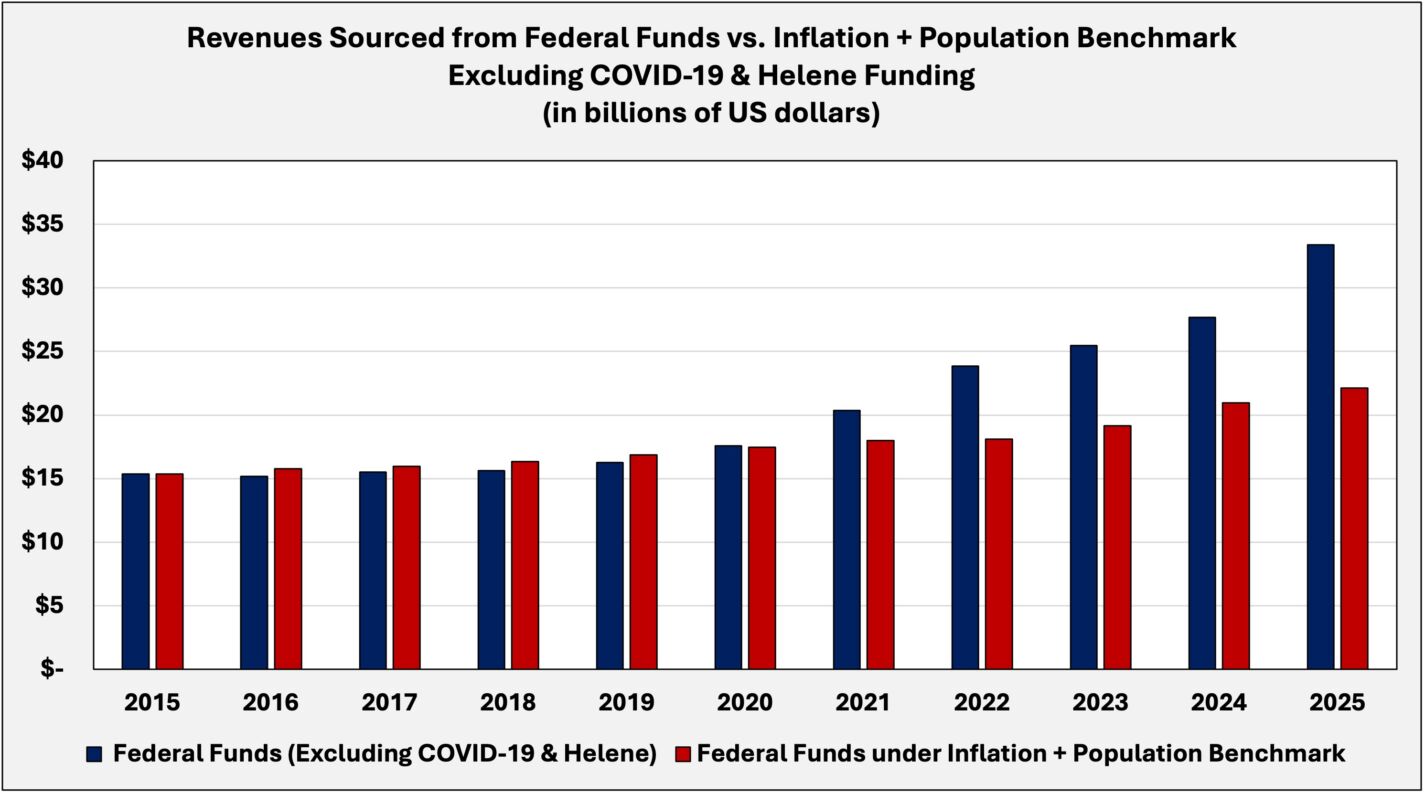
Even after removing COVID-19 and Helene-related funding, federal dollars flowing into North Carolina’s General Fund have continued to rise steadily over time. In other words, the state’s growing reliance on federal funds is not simply the result of one-time events but rather reflects a sustained trend.
After stripping out COVID-19 relief and Helene funding, federal dollars flowing into North Carolina’s General Fund still increased by 117 percent over the period.
Nor can this growth be explained by basic economic pressures.
When compared to a standard benchmark of the previous year’s inflation rate plus population growth, federal funding still far outpaced what would have been required to maintain service levels.
Even after excluding temporary aid, federal dollars have grown well beyond this 44 percent baseline — evidence that the state is expanding its reliance on federal funding rather than merely keeping pace with economic and demographic realities.
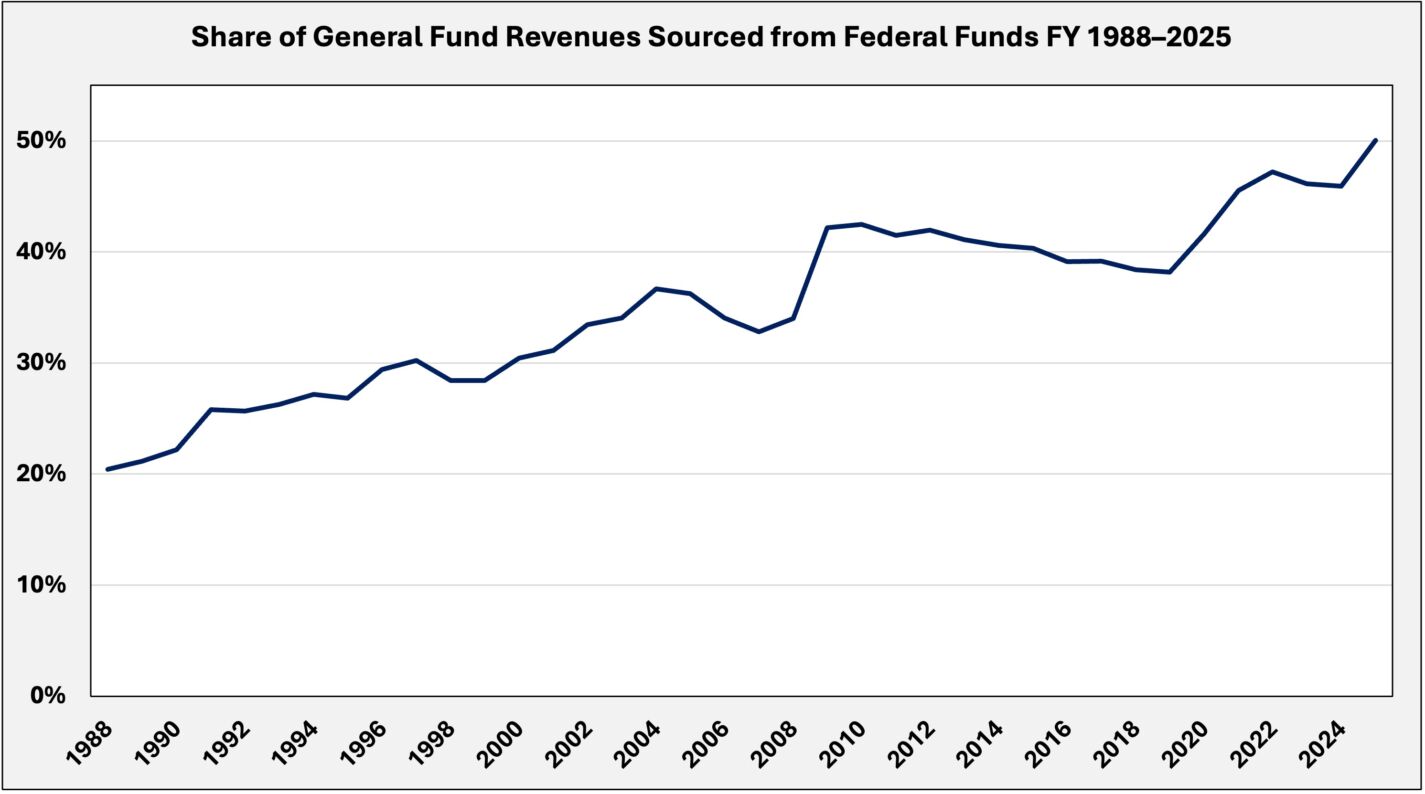
Over the longer term, the share of North Carolina’s General Fund financed by federal dollars has risen dramatically. In FY 1988, federal funds accounted for roughly 20 percent of General Fund revenues; by FY 2025, that figure had climbed to more than 50 percent.
This steady increase shows that what was once a supplemental funding source has become the dominant pillar of the state’s budget.
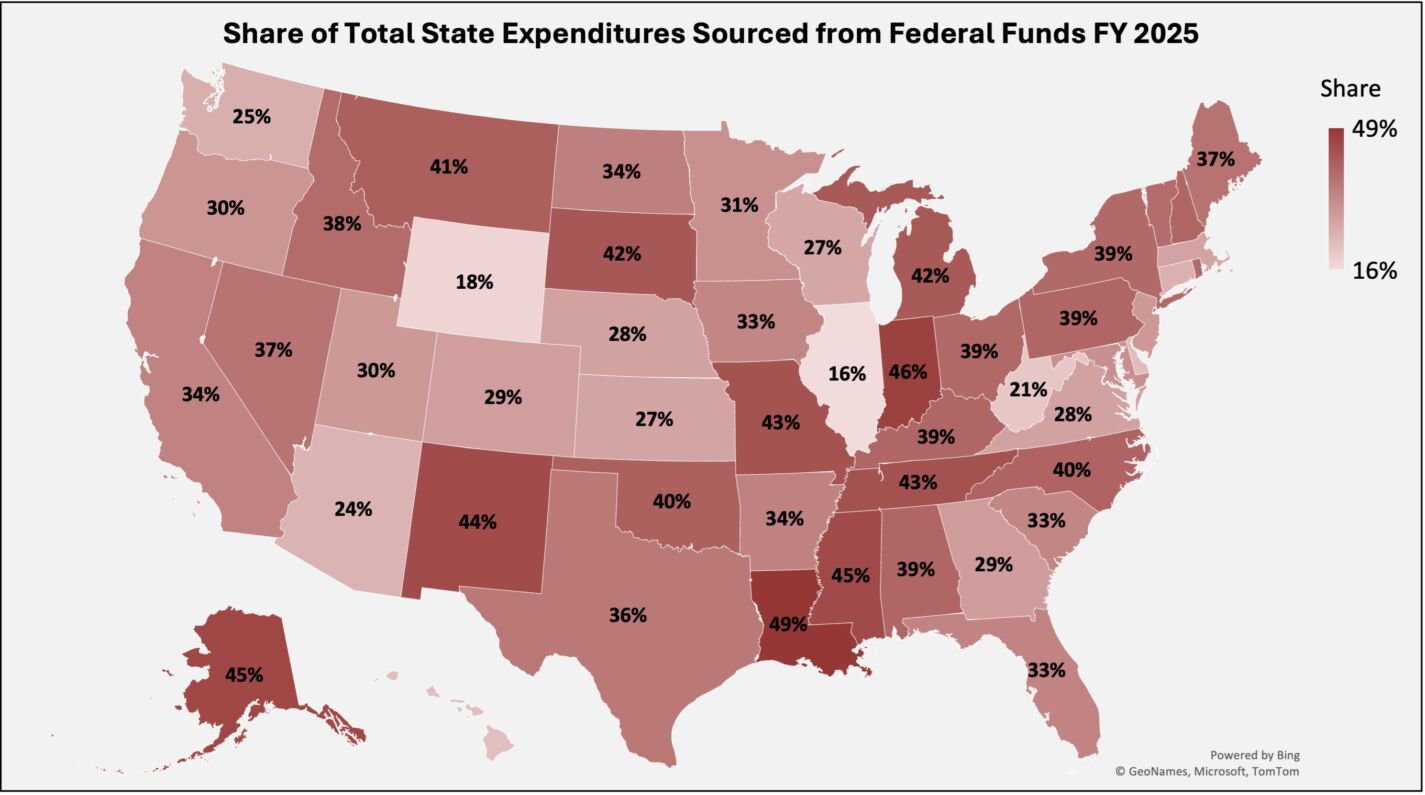
According to the National Association of State Budget Officers, North Carolina is among the most reliant states on federal funding.
In FY 2025, the state ranked 12th highest in its share of total expenditures financed by federal dollars — a measure that encompasses all state spending, including transportation, not just the General Fund. Even under this broader definition, federal funds account for roughly 40 percent of the state’s total expenditures, compared to the national average of about 34 percent.
Going forward
North Carolina’s growing reliance on federal funding is a structural vulnerability.
Over time, the state has built a fiscal model increasingly dependent on decisions made in Washington, particularly in programs like Medicaid. However, beginning in 2028, the OBBB will scale back key Medicaid financing mechanisms, including provider taxes and state directed payments — tools North Carolina relies on to draw down enhanced federal funding.
These changes will directly reduce the flow of federal dollars into the state, exposing how much current spending depends on policies beyond the state’s control. This is the core risk of federal dependence. When a growing share of a state’s budget is tied to federal policy, state lawmakers lose control over their own fiscal future.
The question going forward is not whether this dependence exists, but whether policymakers have the discipline to reduce it before those federal dollars begin to disappear.