Michigan lawmakers had $9 billion in expected surplus funds at their disposal in January 2023. Many people today wonder what happened to that money. The short answer is that is lawmakers spent it. The better question is whether the spending was worth it.
Lawmakers balance the state’s budget, so the budget is never more than what the state collects in revenue plus anything lawmakers may have saved in the past. There was so much surplus in 2023 because the Republican-majority Legislature could not agree on budget priorities with the Democratic governor in 2022.
Revenue flowing into the treasury during the pandemic was also substantial. The state’s various taxes collected $31.5 billion in fiscal year 2018-19, before COVID, and they collected $40.1 billion in fiscal year 2021-22. So it wasn’t just disagreement that led to more money available in 2024; tax levies collected more revenue for legislators to spend.
Schools were the biggest beneficiaries of Michigan’s surplus. The school aid budget increased from $13.0 billion before the pandemic to $18.9 billion in the current budget, a $5.8 billion gain. Would that the extra money have improved school performance.
The increase equals 40% of what the state collects from the income tax. Between state, local and federal sources of money, schools receive an average of $23,665 per student.
Medicaid received the next biggest increase in annual spending. The federal government decided not to enforce eligibility rules during the pandemic, and the number of recipients in Michigan increased from 2.5 million to 3.2 million. Enrollment has since returned to 2.5 million people.
How much was spent is a more complicated story. There is no direct single line item for Medicaid, nor even a simple accounting for how much of its spending comes from the state rather than the federal government. But there is a budget line for the Department of Health and Human Services, of which Medicaid is the largest and most expensive program. Total spending at the department increased from $26.5 billion in 2018-19 to $39.3 billion today. The federal government pays the bulk of Medicaid costs, and total state spending on the department increased from $7.5 billion to $11.4 billion, a $3.8 billion increase.
Roads were the next biggest priority, and the transportation budget increased from $3.5 billion in 2018-19 to $5.4 billion in the current budget. Part of the extra spending comes from a marijuana tax hike, but 80% of the money came without tax hikes. Road funding is at historic levels and should be sufficient to repair roads faster than they deteriorate.
Other areas of the budget increased, but by a smaller amount. The state spends $788 million more on higher education, mostly on new scholarship programs, $220 million more on the state police, and $215 million more on the Department of Environment, Great Lakes and Energy.
Lawmakers have also spent on various expensive but nonrecurring priorities. Lawmakers authorized $6.8 billion in selective business subsidies since 2020 and $4.4 billion on pork projects.
When Democrats took majorities in both chambers of the Legislature in 2023, corporate welfare was their top priority. They authorized $4.7 billion in selective subsidies over their two years of control. Authorizations included money for electric vehicle plants that got shifted into other things and site preparation for a semiconductor plant that was never built. Lawmakers may have learned from their mistakes and authorized no new business subsidies in 2025.
Legislators are now spending less on pork projects, or “legislatively directed spending,” as some call it. This type of spending ballooned to $1.8 billion in fiscal year 2023-24, but it has since come down to $360 million in the current fiscal year. It is not below pre-lockdown levels, and $360 million is roughly what it takes to operate a fifth of the state’s community colleges for a year.
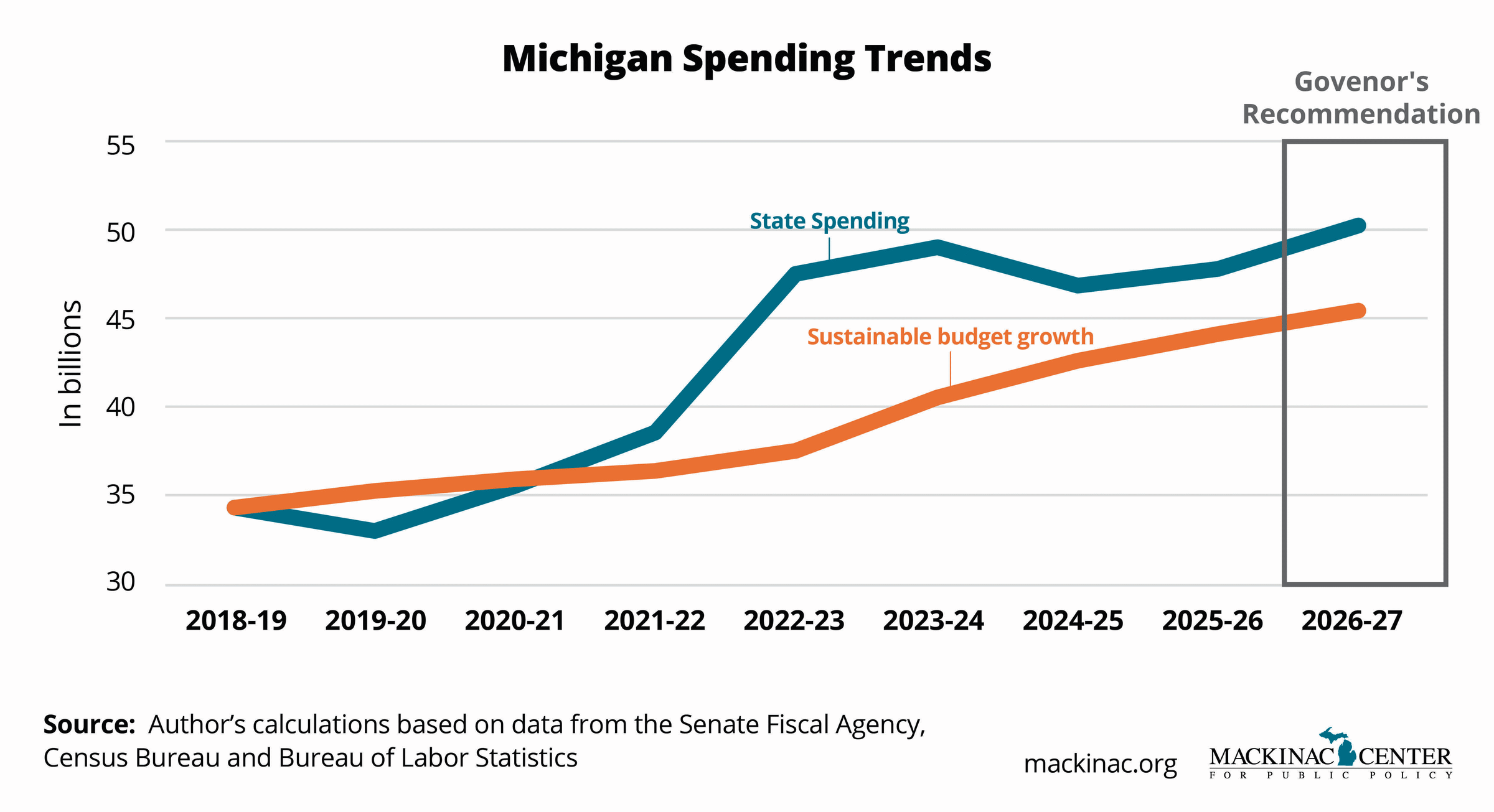
Motorists may see long-term improvements in road quality after all the increases in spending on repairs. Other priorities don’t seem to have paid off. Lawmakers spend more on education but the quality of public education here falls behind that of other states. The state also spends much more on Medicaid to chase federal matching funds. Expensive business subsidies have not paid off. And there’s been an explosion of pork spending that is being reassessed.
It’s a paltry return in public services for spending so much more money.