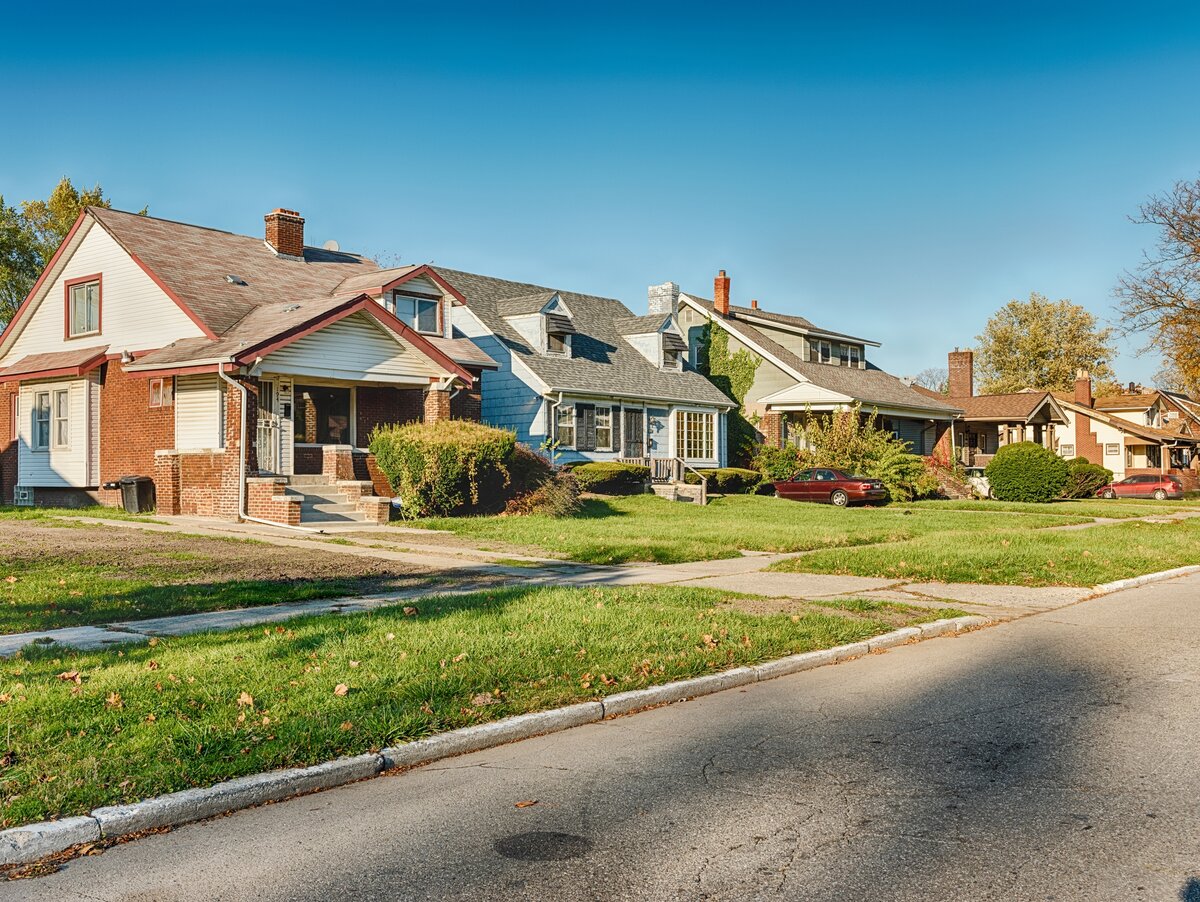
Homes in Detroit now sell for prices seen elsewhere in the state, a big change from where property values were during the Great Recession of 2007-09. That’s a sign of the city’s recovery. But a law meant to protect taxpayers has unintentionally penalized people who move to the city, and it treats some property owners unfairly. This can be an issue throughout Michigan. But with the recent trend in Detroit’s property values and tax rates that are the highest in the nation, it’s more of a problem in Detroit.
The taxable value of person’s home cannot, under the state constitution, increase at a rate higher than inflation, or 5%, whichever is lower. When home values increase more than inflation over a series of years, there can be a large difference between the market value of a home and its taxable value.
The taxable value of a property resets to the market level base when it is sold. This means that a new owner of a home can be liable for a larger tax bill than the previous one.
This is a big issue in Detroit, where market values have increased by much more than taxable values. Properties in the city were inexpensive during the Great Recession, when the average home there sold for $12,500. Prices have increased well beyond bargain basement prices since then. The city assessor’s estimate for all property values increased by 94% since 2014. The taxable value of properties in Detroit increased by only 22% over the period, however.
This discrepancy between taxable value and market value is higher in Detroit than in the typical city. Taxable values in Detroit are at just 52% of the values of assessed property — much lower than the 71% state average. The city’s taxable value ratio is also lower than the levels in all the other cities in Michigan with more than 100,000 residents: Grand Rapids, Warren, Sterling Heights, Ann Arbor and Lansing.
This discrepancy matters even more when Detroit has the highest property tax rates in the country. The Lincoln Land Institute says the median homeowner in the city pays 3.02% of his or her home’s value in property taxes. This is the highest rate among the largest 50 cities in the country, and it’s also higher than the rate of the largest city in each state.
What this means is that holding on to property is cheap while moving into the city is costly.
A home on Rosa Parks Boulevard reportedly had a taxable value of $6,600 and its owner paid an estimated $300 a year in taxes before its March 2026 sale, according to the real estate company Zillow. With the final sales price, the homeowner’s taxes would increase to around $10,000 a year, even with a homestead exemption.
Situations such as this discourage people from buying existing homes. They also discourage builders from putting up new homes. New construction on vacant land also resets property values. Lots can be worth next to nothing, but new homes sell for a premium.
And it is a fairness issue. A LaSalle Gardens home was recently purchased, and the new owners will likely pay $11,725 in property taxes. Their neighbors next door will likely pay a tenth of that.
(Note that the numbers are demonstrative and the Zillow records used in these examples may not be accurate.)
To summarize: Detroit has a large gap between taxable values and market values, along with high tax rates. This combination means there is a low cost for holding on to land and vacant properties but high costs for buying or building new homes. It also means that similarly situated homes can face drastically different tax levels.
The taxpayer protection in the Michigan Constitution has ensured that Grandma doesn’t get taxed out of her home when she lives in a fast-growing community. But it also has created some fairness problems, preferring legacy homeowners to newer ones. This has economic effects, too, as it penalizes purchasers, renovators and builders.
A land value tax as proposed by Mayor Mike Duggan and others would lower the development penalty, as updating or building new homes would not trigger higher taxes. Taxpayers, local governments and others ought to revisit the assessment cap to improve fairness and uniformity while ensuring taxpayers are protected from overassessment and receive rate reductions when values increase. With the rise of property values in Michigan’s largest city, as well as its high tax rates, this issue matters to Detroit more than elsewhere.