Editors at National Review Online assess the impact of one of this week’s high-profile elections.
It turns out that trying to appeal to the audience of left-wing podcaster Cenk Uygur is not the way to win a Republican primary.
Representative Thomas Massie made a last-minute appearance with Uygur for a friendly interview before losing a bitterly fought reelection battle widely considered a referendum on the future direction of the GOP. While it’s always dangerous to overinterpret the result of a single primary, Massie’s defeat certainly cuts against the idea that there is a large, real-world market for his brand of conspiratorial right-wing populism and isolationism.
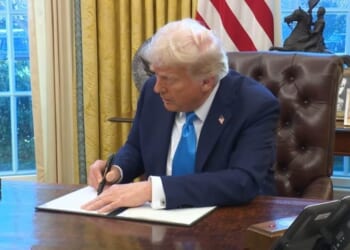
Obviously, the most important determinant of the race was President Trump’s unremitting opposition. The Kentucky Republican had crossed Trump enough times for the president to make defeating him a priority. On some issues, such as his opposition to tariffs and the One Big Beautiful Bill, Massie’s stances could be defended on principled libertarian grounds regarding free trade and fiscal restraint. But he also became a thorn in the side of Trump by pushing unfounded conspiracy theories revolving around Jeffrey Epstein. He led a push to force the Department of Justice to foolishly release files from its investigation of the deceased child sex offender, which unfairly tarnished people merely mentioned in the files, while revealing nothing to support the representative’s lurid theories. Massie took it further by affirmatively smearing innocent people. This disgraceful escapade alone meant he deserved to lose.
Yet the simplest way to view the race is that Massie has joined a long list of Republicans who got on Trump’s bad side over the past decade and no longer have jobs in Republican politics. Put in the context of the recent defeats of Indiana state senators targeted by Trump and Louisiana Senator Bill Cassidy, who voted for the second Trump impeachment, Massie’s demise is the norm, rather than an exceptional event.