Washington state still boasts one of the strongest credit profiles in the nation, but the warning lights are flashing. Moody’s recently affirmed the state’s triple A (AAA) rating while slapping it with a Negative Outlook indicating the organizations lack of faith in the Olympia leadership to right the ship. Fitch rates the state AA+ (a good but lower rating) with a Negative Outlook, and S&P holds it at AA+ with a Stable Outlook. In plain English – the golden AAA status that has kept Washington’s borrowing costs low is now at risk.
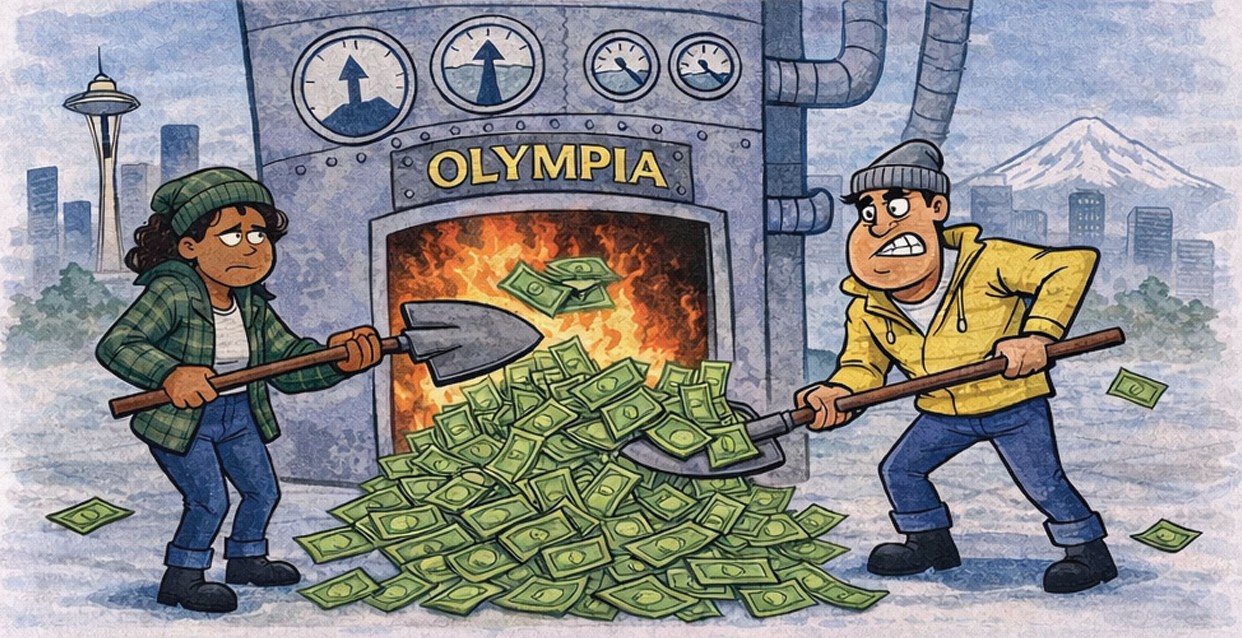
This isn’t a surprise to those who have watched Olympia’s spending addiction for years. Under continuous one-party control of the Legislature and Governor’s office, Washington has shifted from prudent management to structural imbalance. Recurring expenditures now routinely outpace recurring revenues. Lawmakers paper over the gap with one-time transfers, sweeping reserves, and optimistic revenue forecasts that too often fall short.
This year the legislature attempted to raid $2.5B from the retirement fund of the fire fighters and cops (LEOFF1) to make ends meet.
The state’s Budget Stabilization Account (rainy day fund), meant to protect against downturns, has been treated like a piggy bank. Recent budgets have drawn down hundreds of millions to balance the books, pushing reserve levels perilously low. Moody’s and Fitch specifically cited this reliance on non-recurring fixes and the failure to restore structural balance. When reserves are depleted during good times, there’s nothing left for the inevitable bad times.
This fiscal recklessness carries a real price tag. A one-notch downgrade from AAA to AA1 could increase borrowing costs by roughly 0.1%. On Washington’s annual bond issuances of roughly $4 billion, that adds tens of millions in extra interest every year, money that comes straight from taxpayers. Over a decade, the cumulative cost could reach hundreds of millions, crowding out funding for roads, schools, and public safety.
The policy choices driving this risk are familiar- exploding government spending on new social programs, expansive regulations that slow economic growth, and repeated attempts to raise taxes on high earners and businesses. These measures erode the broad-based prosperity and fiscal discipline that underpin a top-tier credit rating. Strong economies and prudent budgeting built Washington’s AAA status. Political spending sprees are now putting it in jeopardy.
Long-term, the stakes are even higher. Losing the AAA rating would signal to markets, businesses, and residents that Washington is becoming a higher-risk environment. Companies evaluating expansion or relocation notice these things. Families see it in higher taxes and reduced services when interest payments consume a larger share of the budget.
Credit ratings are not abstract scores, they are a verdict on governance.
Washington still benefits from a dynamic economy, innovative industries, and a historically strong balance sheet. But those advantages are not permanent. They were built through fiscal restraint and companies in a friendly business environment. Reversing course requires lawmakers to prioritize structural balance, rebuild reserves to at least 10% of general fund revenues, and resist the urge to spend every new dollar that comes in during economic expansions.
The negative outlooks from Moody’s and Fitch are an early warning before the damage becomes permanent. Policymakers in Olympia should heed it. Taxpayers cannot afford the alternative, a permanently higher cost of government and a diminished fiscal reputation that will burden generations to come.