Written by
Originally published by Utah Policy.
A recent U.S. Supreme Court decision on campaign finance is a reminder that states are not likely to have a say on the topic without a constitutional amendment. Utah, among other states, has called for such an amendment. Congress should take these calls seriously.
The decision, in National Republican Senatorial Committee v. Federal Election Commission, struck down a Federal Election Commission limit on spending by political parties made in coordination with candidates. The court majority held that existing limits on party contributions to candidates, rules against “earmarking” (contributions made to a party with the understanding they will go to a specific candidate to circumvent those limits), and disclosure requirements for contributions adequately serve to protect against corruption or the appearance of corruption.
Thus, the limit on practices such as spending “money to produce and place a television advertisement in support of a candidate after consulting with the candidate’s campaign about the content, timing, or placement of the advertisement” constitutes an unjustified burden on free speech.
The court’s decision is consistent with prior cases. It is difficult to argue with the observation that donating to political campaigns is a form of expression. The specific regulation the court addressed, however, is not as significant as the question of who ought to decide these types of issues.
There is a strong argument that states should play a more significant role in making decisions about election financing and have more leeway in those decisions.
As the law now stands, however, states are limited in what they can do because the Supreme Court has established that nearly all limits on campaign spending conflict with the right to free speech.
A constitutional amendment that clarifies the states’ authority to make policies on campaign finance regulations is likely to result in different policies, but state variation is a feature, not a bug, in our constitutional system.
Federalism, the constitutional delegation of various responsibilities to either the state or national governments by “We the People,” has powerful advantages. State governments are closer to the people affected by their actions, ensuring greater responsiveness. This also means that these governments tend to be more accountable to voters, among whom representatives actually live. Given these two advantages, state and local decisions are typically better tailored to the specific circumstances of an area. Finally, states can experiment with different public policies without committing all other states. Thus, what works in one state can be adopted by others and state policies that fail can be avoided.
In the campaign finance context, this would mean that state policies could be made by elected representatives who have a strong incentive to respond to concerns about local conditions, such as the influence of contributions in smaller states made by wealthy donors in other states.
Currently, state or national laws addressing campaign finance are made by legislators but are inevitably challenged in court and resolved after a time by judges. Whatever one thinks about the specific resolutions, our nation needs a robust debate about whether that is the best approach. Perhaps elected officials, particularly at the state level, should have more say.
Half the states have adopted resolutions calling on Congress to begin the process of proposing an amendment that could make this happen. The resolution of another campaign finance dispute in court is a reminder of how timely this issue is.
More Insights
Read More
Sutherland Institute announces Todd Weiler as new President and CEO
Sutherland Institute announced today that following the completion of a national search, the board of directors has selected Utah state Senator Todd Weiler to be its new president and CEO.

Audit shows lawmakers leading out on Utah Fits All Scholarship policy reforms
Despite the attention some of the audit expenses have received, the real news is that many of these concerns have already been addressed and rooted out.
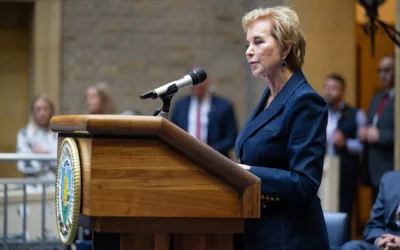
Education policy needs less symbolic action, more real impact
The gritty work of education policy, which has real impacts on students, comes from states or from federal policies that expand the work that states are trying to accomplish. That’s why attempts by the current administration to reduce federal bureaucracy in favor of state policies that affect real students are worthy of our support and attempts to file symbolic articles of impeachment are not.
Connect with Sutherland Institute
Join Our Donor Network
Follow Us
The post The Supreme Court’s campaign finance ruling shows why states need a voice appeared first on Sutherland Institute.