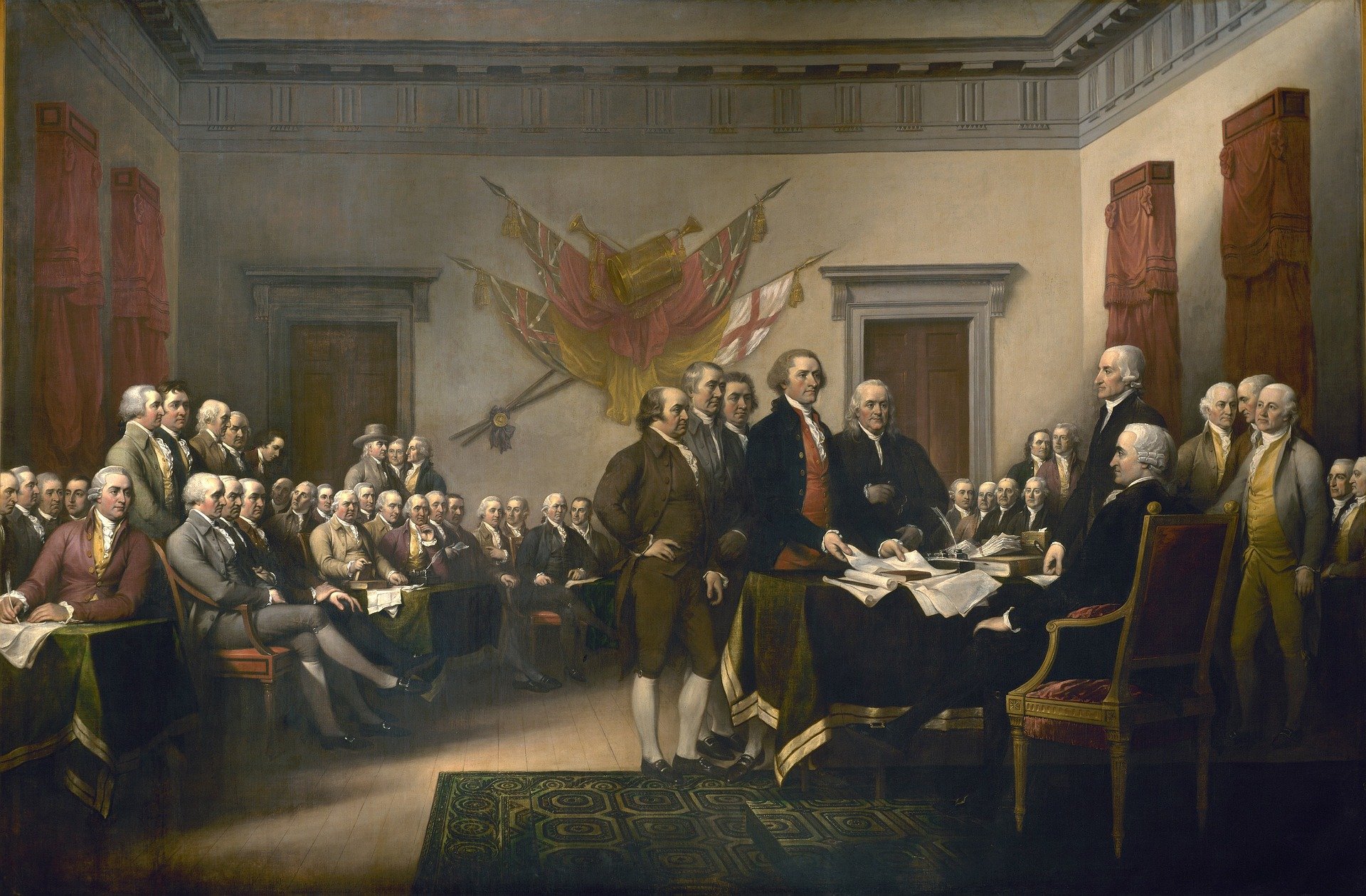
The latest issue of Hillsdale College’s Imprimis features Christopher Flannery’s take on the American Revolution’s significance.
How should we think about the American Revolution on the 250th anniversary of the Declaration of Independence? The American revolutionaries can help us answer this question.
John Adams, one of the chief revolutionaries, looking back more than four decades after the Declaration of Independence, recorded a memorable judgment on the Revolution in which he played such a central part. Adams lived through all the great events of the Revolution beginning well before and continuing long after July 4, 1776: the Boston Tea Party, the convening of the First Continental Congress, Paul Revere’s Ride, the Battles of Lexington and Concord, Washington’s crossing of the Delaware, the winter at Valley Forge, and the Battle of Yorktown. He understood that all the colorful circumstances, the risky and fateful choices, the acts of daring and heroism would be long remembered and would deserve and need serious study.
But Adams also thought that we couldn’t understand the heroic deeds of the American Revolution—we couldn’t recognize their most essential lesson for us—without understanding the reason they were undertaken. As he wrote to Hezekiah Niles on February 13, 1818, the American Revolution took place “in the Minds and Hearts of the People”—a “radical Change in the Principles, Opinions Sentiments and Affection of the People,” he wrote, “was the real American Revolution.”
The record of this revolution in Americans’ hearts and minds is one of our great national treasures. It provides precious knowledge of the American Revolution to all future times and all peoples everywhere, but especially to what America’s Founders called “ourselves and our Posterity.” It is the eloquent record of the conception and articulation of the American idea of political freedom in pamphlets, petitions, state papers, letters, sermons, constitutions, resolves, bills and declarations of rights, memoirs, diaries, journals, treaties, and speeches—mostly in a compressed period in the 1760s and 1770s—in which a revolutionary generation learned to think and act like the Americans they were becoming.