The Communist Chinese government rebuked a U.S. Army general for using the words “dagger” and “shield” to respectively describe regional allies South Korea and Japan.
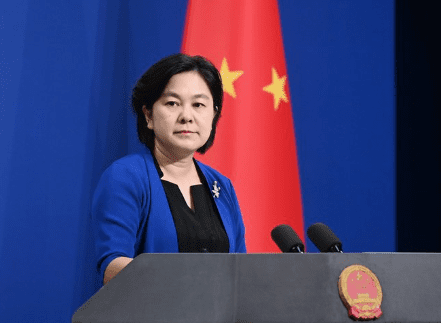
Four-star Gen. Xavier Brunson, the commander of the United States Forces Korea (USFK) and United Nations Command, made the analogy during a May 22 podcast interview conducted by the United States Army War College, the South China Morning Post (SCMP) first reported. Nearly a week later, the Chinese embassy in South Korea responded by issuing what it called a “solemn warn[ing]” to the general, claiming his use of figurative language to characterize the U.S.’s East Asian allies amounted to hostility against the communist power.
“Are your hostile and aggressive remarks about China authorised by Washington, or are you trying to challenge the consensus reached at the Beijing meeting between the Chinese and US leaders?” the embassy asked Brunson, according to the SCMP.
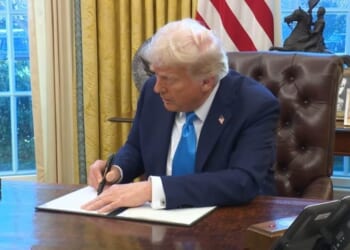
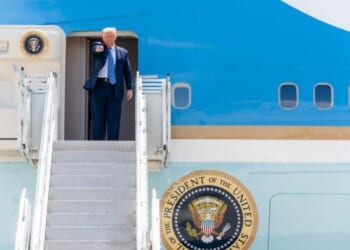
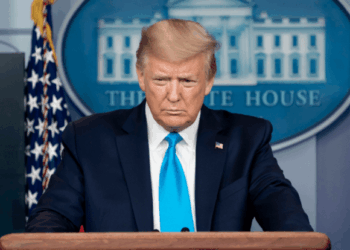
President Donald Trump traveled to Beijing to meet with Chinese President Xi Jinping in mid-May. Several members of Trump’s administration, including Secretary of State Marco Rubio and Secretary of War Pete Hegseth, also went on the trip.
“You refer to the host country as an ‘aircraft carrier’ or a ‘dagger,’” the embassy’s response to the general continued, according to the SCMP. “Does this demonstrate your belligerence, or do you intend to use other countries as pawns?”
Brunson likened South Korea to a “fixed aircraft carrier” situated between Japan and China in May 2025, Korea JoongAng Daily reported.
Then, after Hegseth’s speech at the International Institute for Strategic Studies’s (IISS) Shangri-La Dialogue in Singapore on Saturday, Chinese academic Dong Wang asked about Brunson’s intention in making the “dagger” and “shield” analogy.
“General Xavier Brunson made a striking remark in a public interview stating that South Korea is ‘a dagger’ in the heart of Asia aimed at China. This comment stands in a stark contradiction to the spirit of a constructive China-U.S. relationship of strategic stability which our two presidents agreed to build during President Trump’s most recent visit to China,” Wang said.
“My question is simple: does General Brunson’s statement represent the official position of the Trump administration and is his characterization of South Korea’s role as a dagger aimed at China authorized or endorsed by the Pentagon?” the Chinese academic asked.
WATCH:
IISS Director of Defence and Military Analysis Dr. Bastian Giegerich informed Wang that Brunson was in fact in attendance at the conference and would be able to answer his question directly during the upcoming coffee break.
A part of the general’s eventual response was recorded and posted to X by Hudson Institute Asia-Pacific Security Chair Patrick M. Cronin.
Brunson said that an important part of being “strong and quiet” — like Hegseth said during the conference — “is about being able to describe the environment where we’re working.”
He went on to claim 19th century Prussian military philosopher Klemens von Metternich “talked about Korea being a dagger pointed at Japan.”
“The difference is, is we have to change our perspective,” the general continued. “By changing our perspective, we take into account how others might see us in the region. We’ve got to be strong. We’ve got to have the right capabilities within the Republic of Korea, but we have to understand that those things still exist. You have to combat those things every day.”
WATCH:
Must watch moment at #IISS_SLD26: After a well known Chinese academic asked @SecWar about #USFK Commander’s recent comments about TOK as a dagger pointed at China, #General_Xavier_Brunson was invited to respond!!! pic.twitter.com/QeEQpzHSMT
— Patrick M. Cronin (@PMCroninHudson) May 30, 2026
“When I was trying to do in a place of learning was talk to War College students about how we have to change our perspective and think about where we are,” he added, referring to his intentions behind making the analogy during the podcast interview. “Then I can advise not only my service secretary, but then my secretary [Hegseth], my boss in the Department of War, on what things we might do.”
“I’m encouraged by the fact that my president and my secretary went to China. That is tremendous, and that we might have increased relationships where we might talk,” he continued. “The only way there will be philosophers in the future wearing uniforms like myself will be that we enter into the field of ideas and we challenge ideas.”
Brunson also expressed the need to “take remarks contextually” and encouraged that Wang “listen to the entire podcast, as well as the speech that I gave to the War College students, which was pretty good,” prompting a burst of laughter from the audience.
Content created by The Daily Caller News Foundation is available without charge to any eligible news publisher that can provide a large audience. For licensing opportunities of our original content, please contact licensing@dailycallernewsfoundation.org