Lawmakers approved a new state budget that spends $50.3 billion in money from the state’s taxes and fees. This is a 3.8% increase from the budget passed last year and this year’s increase is above sustainable levels.
Roads get the biggest increase in the budget. In 2025, lawmakers swapped sales taxes on fuel — which largely go to schools — for a per-gallon tax that largely goes to road repair. They also raised marijuana taxes and earmarked the state’s corporate income tax to transportation purposes. These changes meant more road funding for the upcoming fiscal year, and the transportation budget spends $593 million more.
Schools will receive a $509 million increase in the new budget. Schools currently receive an average of $23,900 per student from state, local and federal sources, and the new budget will only add to this figure.
While the overall budget will be larger than the current one, it does have some reductions. Lawmakers will spend less on pork projects. In 2023, lawmakers authorized $1.8 billion in spending for these items. This decreased to $1.0 billion in 2024 and $360 million in 2025. Lawmakers’ new budget decreases pork spending to $180 million.
The state will also spend $27 million less on the Department of Environment, Great Lakes and Energy, due in part to expired federal funding and thus less need for state matching funds.
Lawmakers approved budgets at sustainable levels for the last few years, but not because they practiced restraint. They did not have revenue growth sufficient to push the budget higher.
The state budget grew to unsustainable levels in recent years, thanks in part to the pandemic. Lawmakers increased the budget from $34.4 billion before the pandemic to $49.0 billion in fiscal year 2023-24. Strong revenue growth played a part, as did spending down the state’s surplus.
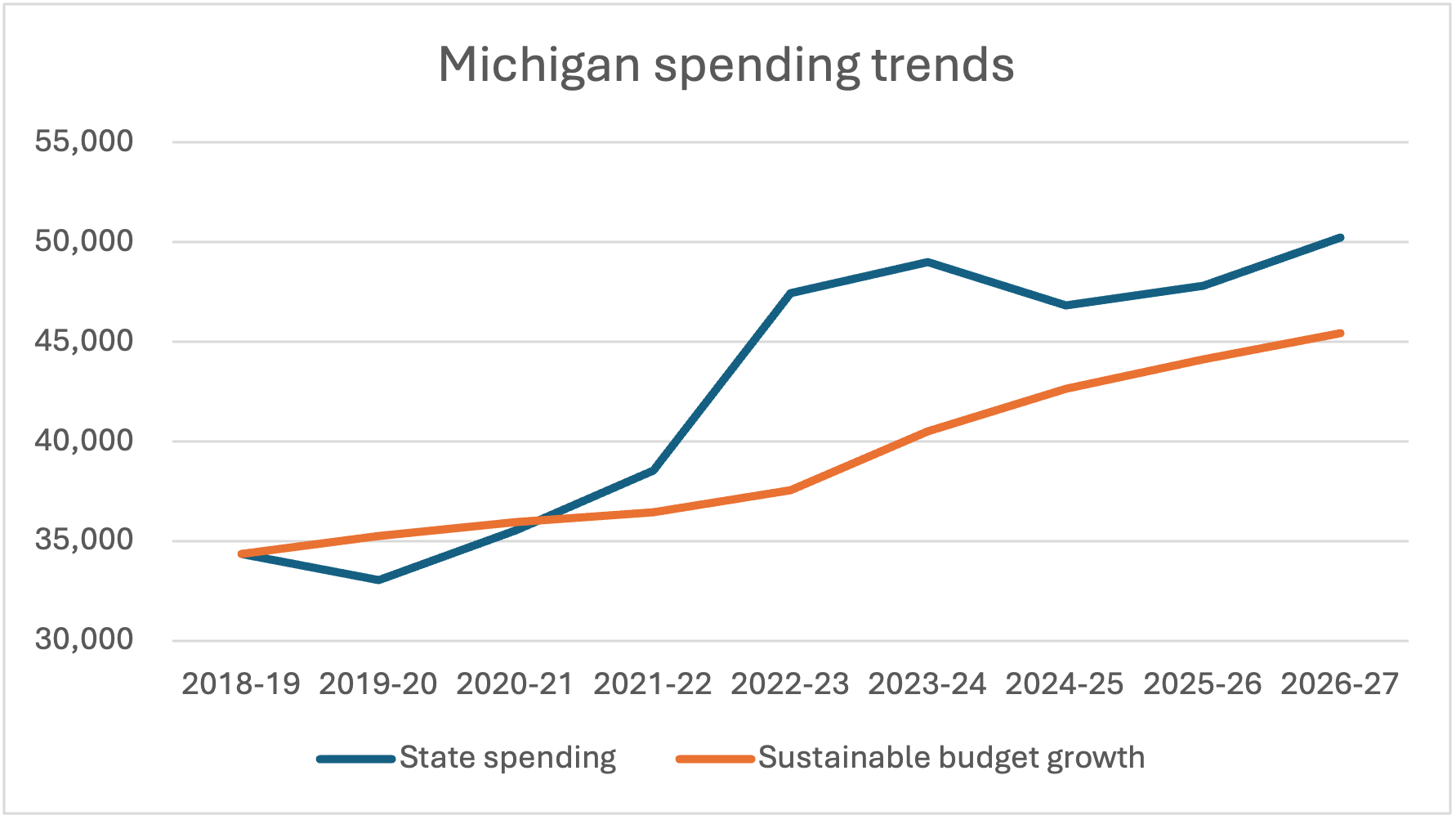
Had lawmakers increased the budget at the combined rate of population growth and inflation over the period, they would spend $4.8 billion less than they authorized this month. That would have been enough to allow the state to cut the income tax by a third.
Practicing restraint would pay dividends and ensure that residents can afford their state government. And while lawmakers did authorize less in some kinds of spending, the gap between authorized spending and sustainable levels increased.