- Shutting down paid-off, baseload power plants and replacing them with unreliable, intermittent resources would cause people to pay more for less reliable power
- Unfortunately, such a doubly adverse outcome is planned for North Carolina under the dictates of the state’s Carbon Plan law
- Legislation to mandate replacing baseload power only with more baseload power would address the issue of reliability as lawmakers mull repeal of the Carbon Plan law
North Carolina’s Carbon Plan law requires retiring certain baseload electricity resources (coal and eventually natural gas). Present plans would attempt to replace them by overbuilding solar facilities. This policy threatens not only the grid’s reliability but also people’s ability to afford electricity.
It is one of the problems highlighted in a new report from the John Locke Foundation, “Energy Poverty in North Carolina: Securing Affordable, Reliable Power.” The report offers several policy recommendations to uphold affordable, reliable electricity, including what to do about replacing baseload power plants.
A previous research brief discussed the Carbon Plan law’s adverse impact on electricity rates in North Carolina. Electricity prices for Duke Energy Carolinas have jumped by 36.3 percent since the law was passed, and prices for Duke Energy Progress have jumped by 29.7 percent. Duke Energy’s latest resource plan helps show why.
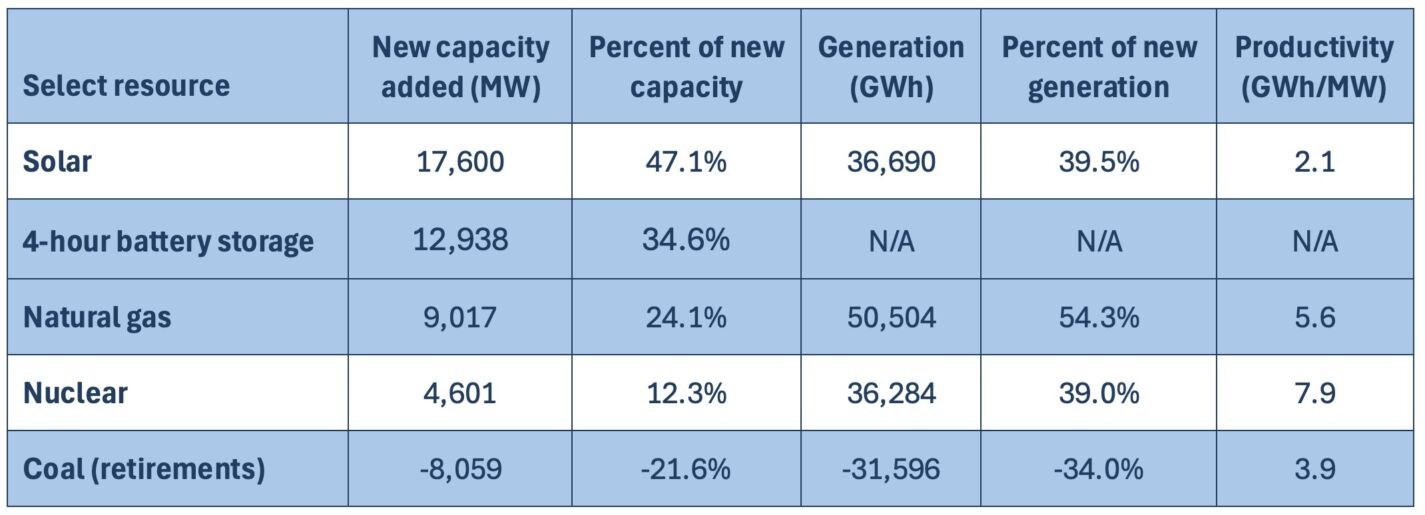
Under Duke’s 2026 Carolinas Resource Plan, nearly half (47 percent) of the new capacity planned by 2041 is solar, 24 percent is natural gas, and only 12 percent is nuclear. But according to Duke’s own numbers, natural gas is two and a half times more productive than solar, and nuclear is four times as productive.
The more productive the power source, the less Duke plans to add
Duke Energy resource planning under the Carbon Plan law, 2026–41
Source: Duke Energy 2025 Carolinas Resource Plan (Figs. 3-10 and 3-11) and 2026 Carolinas Resource Plan (Figs. 3-9 and 3-10), author’s calculations
As explained in Carolina Journal, under North Carolina’s original statutory requirement of reliable, affordable power, Duke’s choices seem baffling. The rationale behind them is the Carbon Plan law.
What is the problem?
A big part of the issue is that the Carbon Plan law requires getting rid of coal power. Coal is a baseload power source, which means it is dependable enough to be relied upon to cover the ever-present amount of electricity demand on the grid, above which demand levels fluctuate. The baseload is the most critical level of demand to meet, but only the most dependable power sources (nuclear, natural gas, and coal) can support it.
If a baseload power source is retired, its replacement needs to be reliable and dependable. It can never be something like solar or wind.
As of now, North Carolina has just over 8 gigawatts (GW) of coal-fired power, but as Duke’s numbers make clear, it is nearly twice as productive as new solar according to how Duke deploys it. Duke plans to add nearly 18 GW of new solar capacity, but in terms of generation, all that new solar capacity would not do much more than cover the generation received from the retired coal capacity — 36,690 gigawatt-hours (GWh) vs. 31,596 GWh.
Even so, the new solar capacity cannot replace coal as a baseload resource.
How does this problem affect electricity rates?
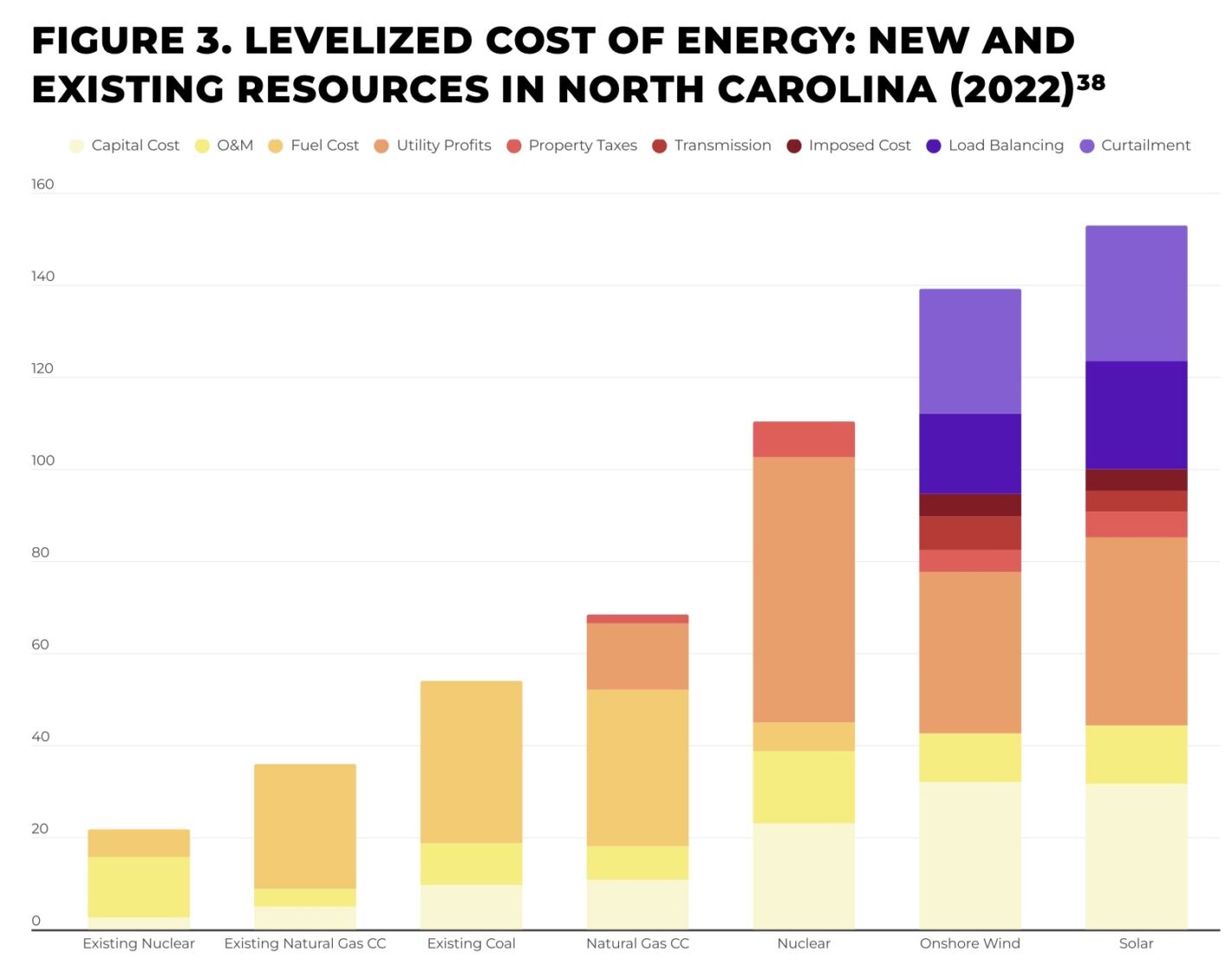
Baseload power plants are not only the foundational sources of power, but as shown in the energy poverty report, they are also the least expensive. The cheapest sources of electricity are existing power plants.
Source: “Energy Poverty in North Carolina: Securing Affordable, Reliable Power”
As the report states,
Replacing any preexisting power plant with any kind of new plant necessarily increases utility costs and power bills. Existing nuclear, gas, and coal plants are also the most reliable sources of electricity. Retaining those plants is therefore critical to providing consumers with the most reliable and affordable electricity achievable.
As seen in this figure from the report, North Carolina’s existing nuclear, natural gas, and coal plants are the cheapest sources of electricity, and the lowest-cost options among new power plants are natural gas and nuclear (costs of new coal plants were not estimated owing to the Carbon Plan law).
New solar is the most expensive option.
What is the solution?
The obvious solution would be to repeal the Carbon Plan law that necessitates shutting down working, paid-off coal facilities — and eventually natural gas power plants, too —and replacing them with new, expensive solar facilities.
In the meantime, however, it’s worth noting that coal and natural gas power plants are capable of supporting the baseload, whereas intermittent sources of electricity, such as solar, are too unpredictable and unreliable to be used as a baseload resource.
As recent emergency events have shown, there is no substitution for reliable, baseload-capable power. Future emergencies under the Carbon Plan law would require a great deal of nuclear power. Otherwise, it would need lots of solar and wind power, immense backup supplies, an enormous expansion of transmission infrastructure, and luck.
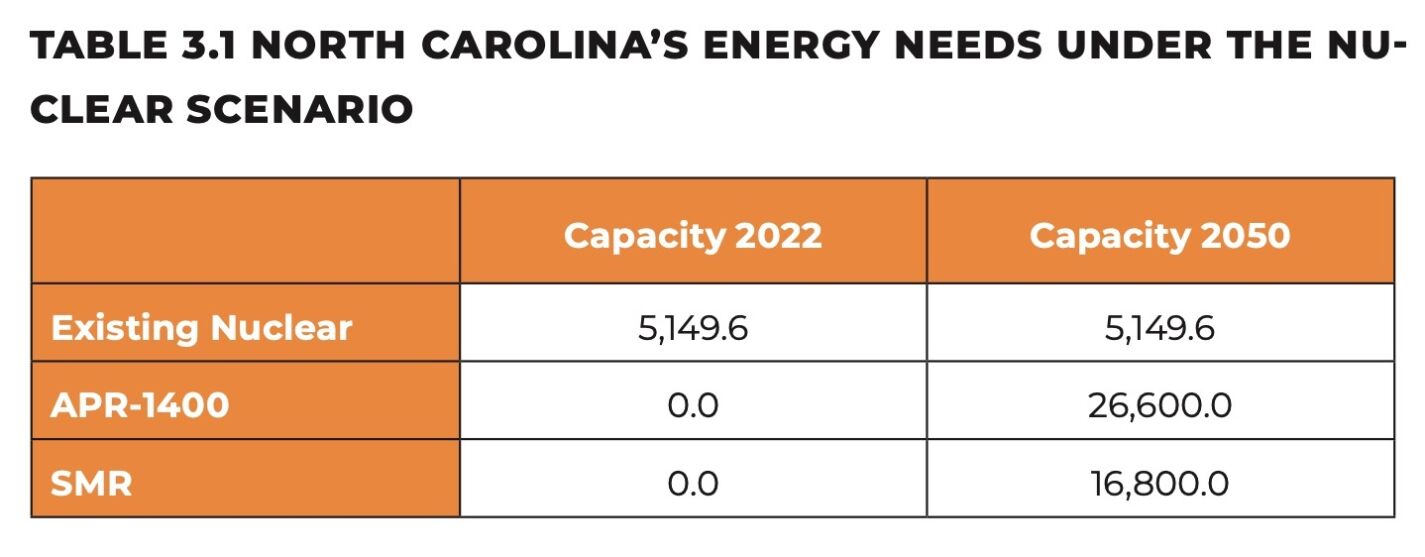
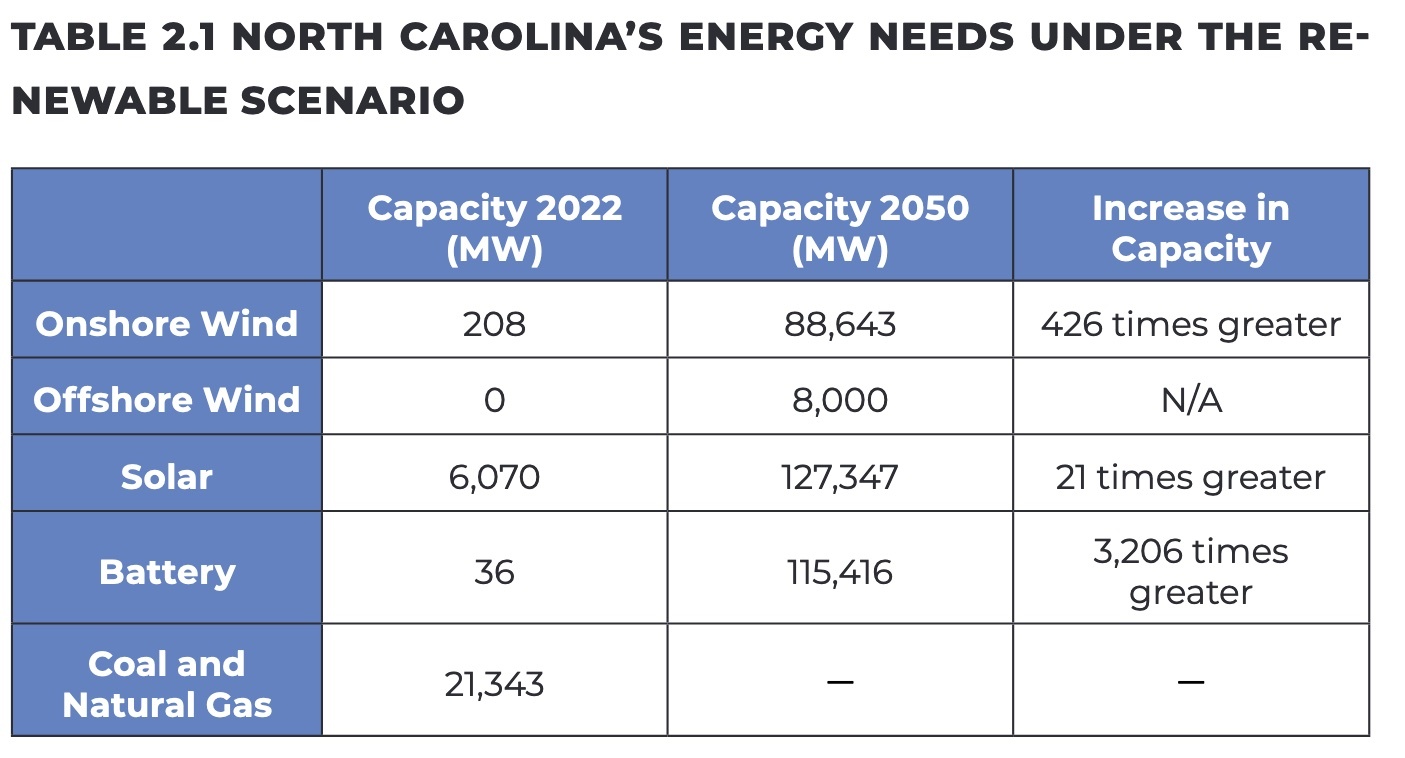
Source: “Lighting the Path: Meeting North Carolina’s Coming Energy Needs”
While going all nuclear would be much less costly than going all renewable, it would still be inordinately expensive.
As the energy poverty report explains,
When baseload power plants are to be retired, their capacity must not be replaced with unreliable capacity. The 2025 Resource Adequacy Report from the U.S. Department of Energy warned of increasing risks of blackouts from “the accelerated retirement of existing generation capacity and the insufficient pace of firm, dispatchable generation additions (partly due to a recent focus on intermittent rather than dispatchable sources of energy).” The report specifically warned that the blackout risk in the Carolinas would be 27 times greater by 2030 under the policy status quo with the expected retirements of baseload electric generating facilities (i.e., coal retirements under the Carbon Plan). [Links added.]
For all those reasons, one of the report’s recommendations is this:
Pass Baseload-for-Baseload Legislation
This legislation would require that no baseload power plant can be closed until it has been replaced by equal or greater baseload capacity. Baseload generation is not only an important asset for keeping power bills low, but it is also especially critical to keeping homes powered during weather emergencies, such as during recent bouts of dangerous heat and deadly cold.
Such legislation would prevent compounding the problem of closing cheaper, working power plants, not make it even worse by forcing ratepayers to pay for overbuilding intermittent, unreliable, and nondispatchable sources of electricity such as solar and wind to replace them. Here is a link for model baseload-for-baseload legislation. View this informative video for more discussion of the idea: