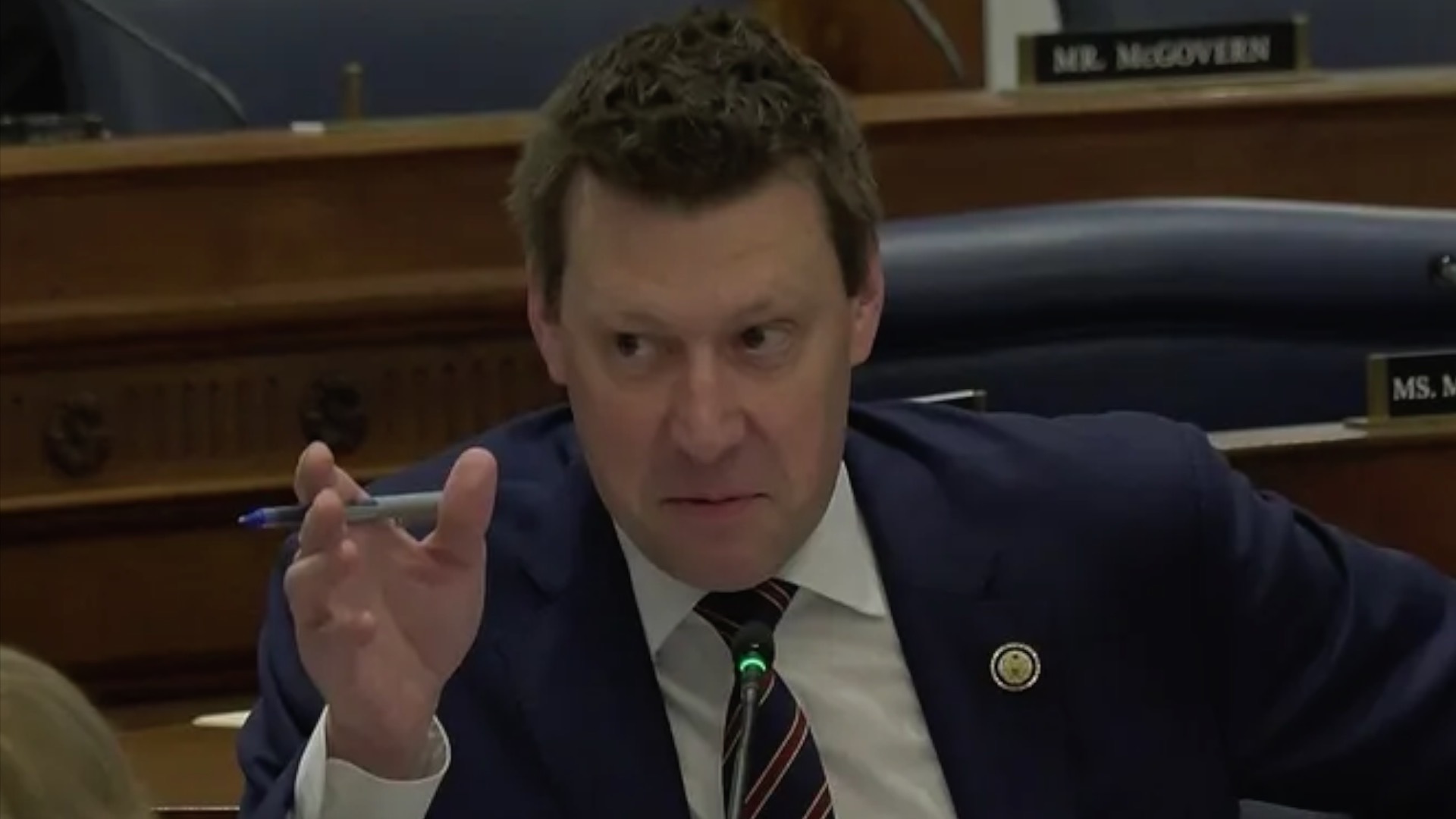
Ethan Barton writes for the Washington Free Beacon about one congressman’s disturbing link to the Chinese communist government.
New York Democratic congressman Josh Riley’s father-in-law cofounded an institute at a Chinese government-controlled university that routinely boosts the Chinese Communist Party’s Belt and Road Initiative, a massive international economic strategy aimed at bringing foreign nations closer to Beijing and further from the United States, a Washington Free Beacon review found. Riley himself attended at least three of the group’s events and later voted against legislation targeting Chinese influence peddling in the United States.
Riley’s father-in-law, Harinder Kohli, is the founding director and chief executive of Emerging Markets Forum, a nonprofit founded in 2005 that hosts an annual “Global Meeting” centered on economic issues facing developing nations. It also has deep ties to the CCP. In 2011, the forum cofunded the Emerging Markets Institute at Beijing Normal University, which is controlled by China’s Ministry of Education and requires its students to “support the leadership of Chinese Communist Party” and “serve the socialist modernization.” The school has regularly sponsored the forum’s annual meetings.
The forum has also partnered with the Chinese People’s Association for Friendship with Foreign Countries, an arm of the CCP’s “United Front” system, which aims to establish Chinese influence abroad, including by partnering with U.S. government officials and organizations. In 2015, the association and the Emerging Markets Forum teamed up to host the 2015 Beijing Forum for Emerging Markets, according to a 2019 Emerging Markets Forum pamphlet touting its work.
The forum’s ties to the CCP may explain why it promotes trade with U.S. adversaries like China and boosts Beijing’s Belt and Road Initiative. Riley’s father-in-law, for example, is the editor of the 2019 book China’s Belt and Road Initiative: Potential Transformation of Central Asia and the South Caucasus, which advises developing countries on how to “realize the promise of the BRI … while avoiding the pitfalls that lie along the way.” China aimed to use the initiative to invest more than $1 trillion in developing countries and bring them into Beijing’s orbit, but many of the projects have fallen apart, prompting backlash.