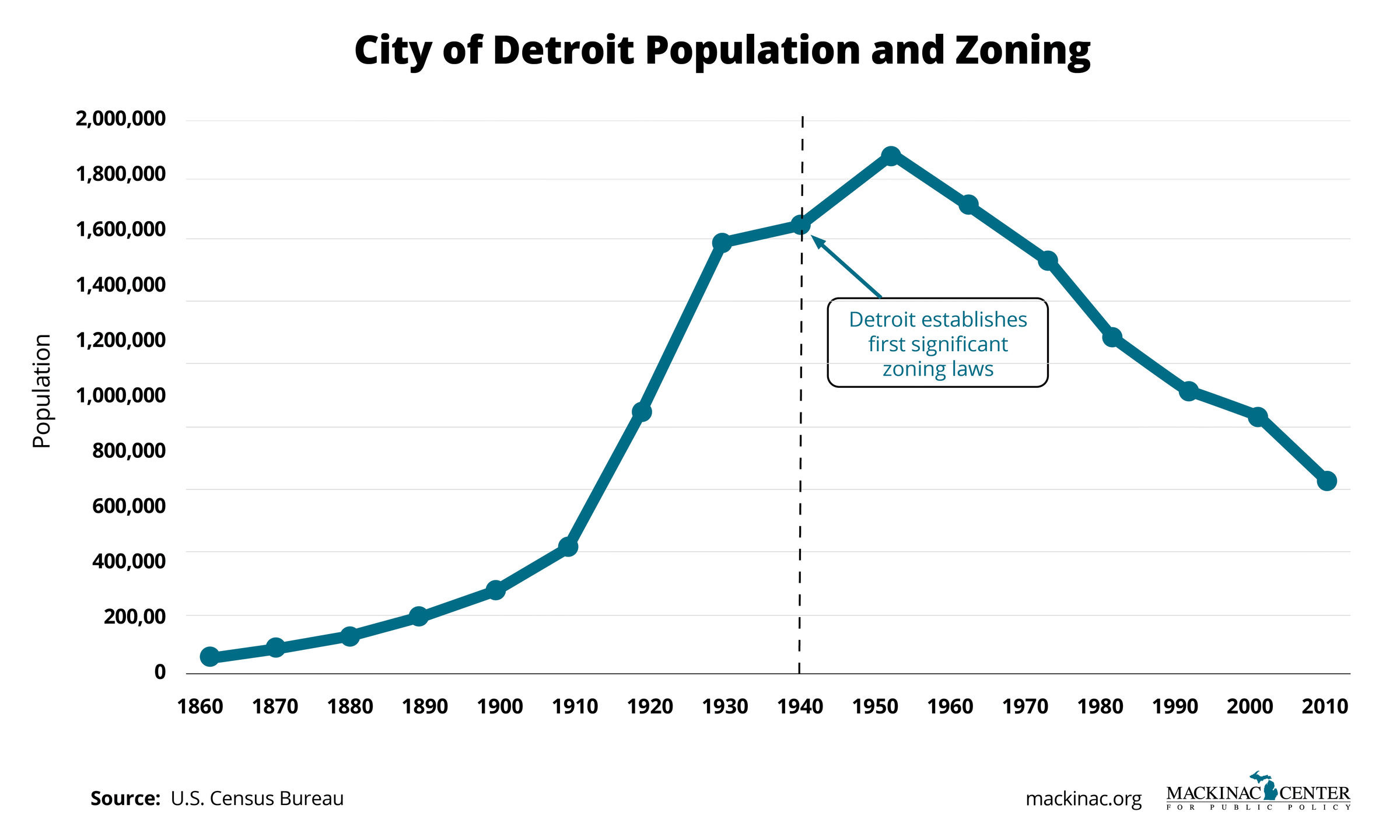
The city of Detroit grew to near its peak population and was one of the wealthiest cities in the world prior to adopting a municipal zoning code. During that time period, many of the city’s historic homes and neighborhoods were also built.
The city was able to add the housing people wanted because it had loose land use policies. After Detroit put in place its first municipal zoning ordinance around 1940, that trend came to a halt and even reversed.
That information, and more, comes from “Rezoning the Rust Belt,” a new paper from the University of Michigan, and from “The Projects: A New History of Public Housing,” a new book by Howard Husock.
To be clear, neither the paper nor the book blames zoning as the principal cause of Detroit’s decline. But both cite land use changes as a factor in the city’s downslide and in its inability to change.
It is notable that the city grew to its economic heights without zoning and collapsed after zoning laws were enacted. With no zoning, the city grew into the one Detroiters loved. Though many residents still love the city, there are far fewer residents today than there were before zoning was established, and Detroit’s post-1950 shrinkage occurred during a time when government was making it increasingly difficult for housing and land use to change based on what people wanted.
In a recent talk at the Detroit Public Library, Husock focused on the Black Bottom neighborhood in Detroit and how liberal intellectuals championed public housing as the key to solving the issue of blight. This focus on public housing ignored the wants and needs of actual people, Husock noted, pointing out that modern zoning laws in the city made it complex to build and encouraged middle class Black families to leave Detroit.
Here is the notable information from the new paper:
-
Detroit had been nearly built out by the time the city adopted zoning standards. The zoning imposed included minimum lot sizes of about 5,000 square feet, a maximum of 35% of the yard being covered, and setback limits. This immediately made much of the housing in the city a nonconforming use (in other words, much of the housing would not have been legal to build going forward).
-
Zoning was sold as a way to keep the black and white populations separated.
-
After the city began losing population, Detroit tried to stem the loss with two new zoning codes. The first created “special industrial corridors” and expanded the use of eminent domain to assemble land for “better uses.” As Husock notes in his book, this meant destroying many black neighborhoods.
-
The second zoning re-write in 1968 came right after the riots and while population was already in severe decline. It primarily retained the 1940s code but made it worse in a few ways: It tightened industrial and commercial development standards and further prohibited where residential housing could be built, even on lots that were empty outside of certain neighborhoods. The authors of the paper don’t say this, but I suspect this exacerbated white and black flight to the suburbs, since it made it more difficult to build and buy in better neighborhoods.
-
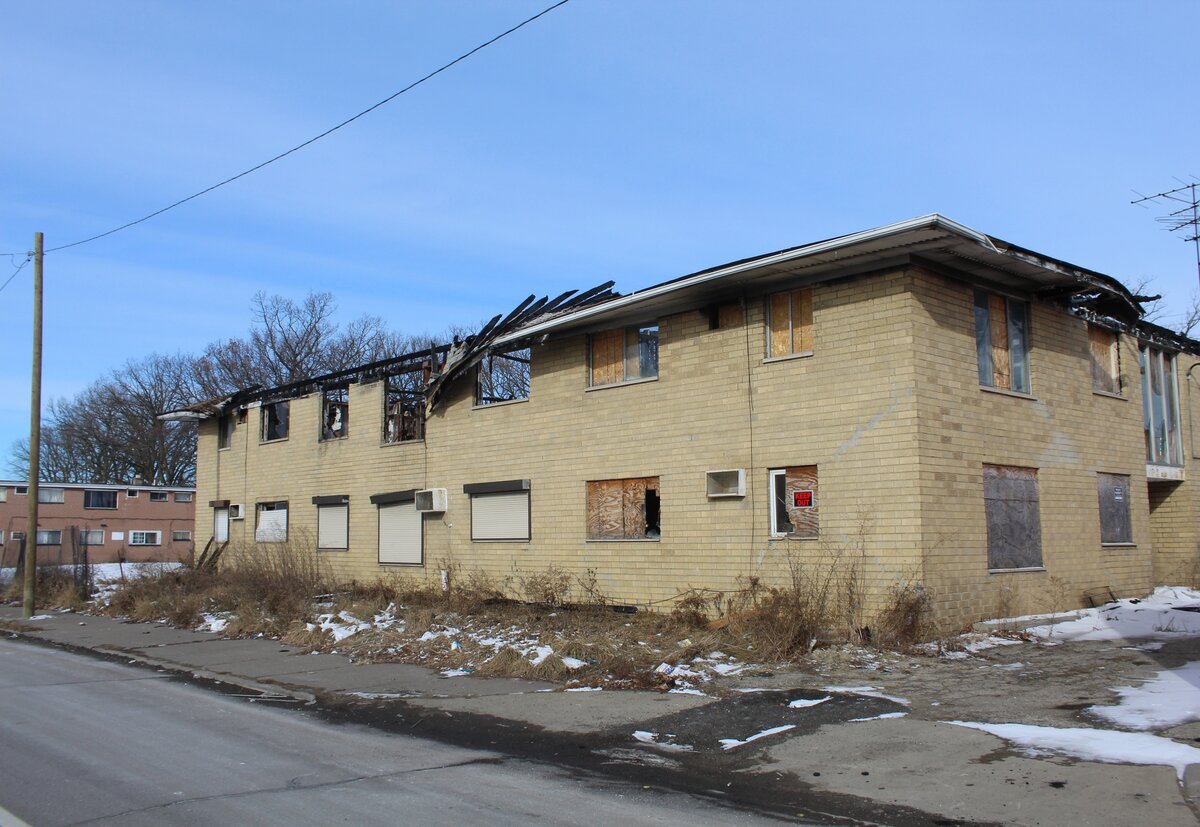
During the depths of the Great Recession, the city of Detroit owned one-quarter of all properties, and of the remaining property owners, only half were actually paying any property taxes.
-
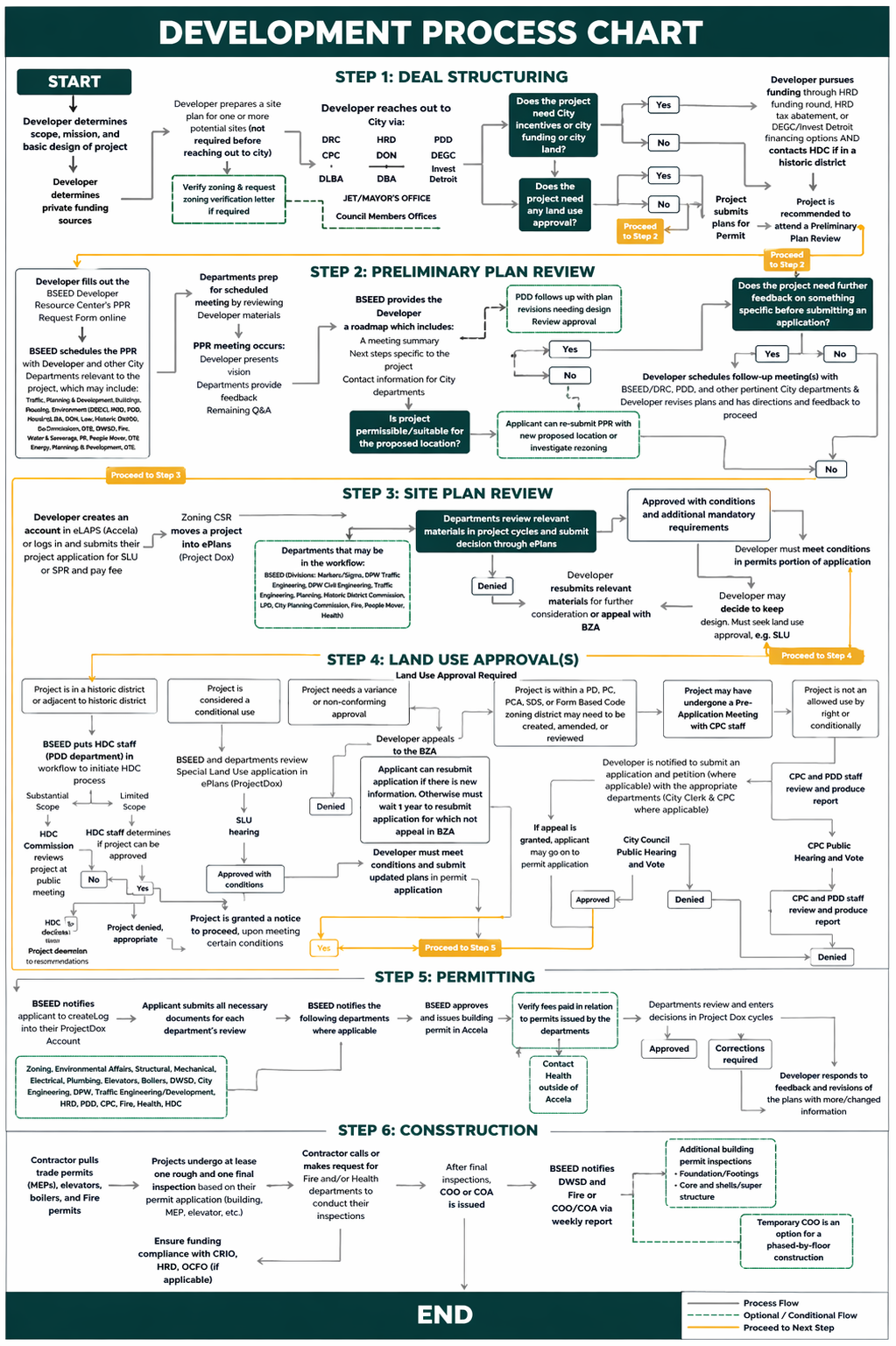
The paper then lays out the complicated regulatory code that continues to exist today: Check out the “development process” a person has to go through to build in the city.
So what are the lessons for today? Strict land use policies are unlikely to build cities, but they can do a lot to harm them. Planners and citizens who hope to micromanage how housing looks in their municipality need to understand that towns grow organically. Local officials should be humble about their ability to “manage” that through local (central) planning.