The Trump administration’s latest salvo against Medicaid fraud takes aim at a different kind of target – two high-ranking New York officials along with a major state contractor.
A civil suit filed Tuesday by the Justice Department accuses the state’s health commissioner, Dr. James McDonald, and its Medicaid director, Amir Bassiri, of not merely tolerating abuse of the $124 billion safety-net health plan, but collaborating in a scheme that potentially would have siphoned away billions of tax dollars.
Prosecutors stopped short of naming Governor Hochul as a defendant, but made clear that McDonald and Bassiri were acting under her office’s guidance.
The charges, if proven, would mean that New York’s fraud problem reaches to the very top of state government.
Anyone inclined to shrug the lawsuit off as a political hit – as Hochul has tried to do – should read the evidence first.
The case focuses on the Consumer Directed Personal Assistance Program, or CDPAP, which provides mostly non-medical home care to some 250,000 elderly or disabled Medicaid recipients. People using this benefit hire, train and manage their own caregivers, who can be friends or family members, and Medicaid pays their wages.
The state previously relied on hundreds of companies known as fiscal intermediaries to handle payroll processing and other administrative tasks. In 2024, Hochul won legislative approval to consolidate management of the $11 billion program under a single contractor – a move she said was necessary to control ballooning costs.
The overhaul faced heated opposition from CDPAP consumers, who raised concerns about disruptions to their care, as well as the existing fiscal intermediaries that were being put out of business.
However, the proposal won support from the influential health-care union 1199 SEIU, which stood to gain thousands of dues-paying members by organizing caregivers employed by the new contractor.
The transition was rocky throughout. Critics charged that the Health Department rigged its selection process in favor of a particular company – Georgia-based Public Partnerships LLC, or PPL; that PPL was unprepared to handle such a large job; that the state’s three-month timeline for the transition was unrealistically short; that the company was overcharging for its services in violation of its contract, and that both the state and PPL consistently hid or misrepresented what was happening.
The federal lawsuit effectively confirms all of those allegations and more, often by quoting directly from internal emails and other documents.
According to the 57-page filing, the Health Department began negotiating a possible deal with PPL in late March 2024, weeks before the Legislature authorized an overhaul as part of last-minute addition to the state budget. Although the department agreed to solicit offers from other companies, officials ran what the filing describes as a “sham bid process” before awarding the $1 billion, five-year contract to the company they preferred all along.
The lawsuit also says PPL falsified its bid, claiming to have software, staffing and financial reserves that didn’t actually exist.
The crux of the case – and its most clear-cut allegation of Medicaid fraud – revolves around the financial terms of the deal.
Under the previous system, fiscal intermediaries made money through spread pricing. As they transferred money from Medicaid managed care plans to caregivers, they would keep a percentage to cover administrative costs and profit.
Under the new contract, the Health Department wanted to pay a fixed administrative per member each month, and have all other money flow to the cost of care – that is, wages and benefits for aides.
In its bid for the contract, PPL had committed to a monthly fee of $68.50 per patient, which was by far the lowest of any company.
According to the federal suit, however, PPL improperly padded the amount it billed to Medicaid managed care plans and kept the extra for itself – a maneuver described in one email as “an hourly rate game.” Although insurers spotted what they believed to be over-billing and complained about it to the Health Department, officials allowed the disputed rates to stand.
Prosecutors say this practice both violated the terms of the contract and defrauded taxpayers.
“Because CDPAP bills approximately 350 million hours of care to New York each year, even taking a few cents per hour as revenue would mean tens of millions of dollars in ill-gotten gains,” the filing says.
Prosecutors do not give a dollar amount for the alleged over-billing, but they point to scenarios in which the total might have reached into the billions over the five-year term of the contract.
McDonald and Bassiri, meanwhile, stand accused of lying. Specifically, the suit says they violated a section of federal law that prohibits making “materially false, fictitious, or fraudulent statements” relating to a health care program such as Medicaid.
As one example, the suit describes how McDonald publicly insisted that PPL was capable of completing the transition in three months – from January to March 2025 – even though that process entailed re-enrolling a quarter-million recipients and 300,000 caregivers.
Privately, the company pushed for an extension to September, which some department officials were ready to approve. But the suit quotes an email saying that the governor’s office was “coming in hard” against any delay: “They really aren’t entertaining options to move off of a path that gets this done by 4/1.”
As the enrollment process fell behind, the suit contends that the department refused to share accurate statistics provided by PPL, but published “misleading” or “fudged numbers” instead. Later, a court ordered the state to extend the enrollment process to Aug. 1 – effectively granting PPL most of the extension it had originally sought.
Part of what’s striking about this case is that most of its allegations were already public knowledge.
As early as April 11, 2024, newspapers reported that the Health Department was considering PPL to take over management of CDPAP. That was eight days before lawmakers authorized the program’s overhaul and two months before the Health Department officially solicited proposals.
Later that year, a lawsuit laid out evidence of bid-rigging and Medicaid managed care plans began raising alarms about improper billing by PPL. Once enrollment began, widespread complaints from CDPAP consumers belied the Health Department’s claims of smooth progress.
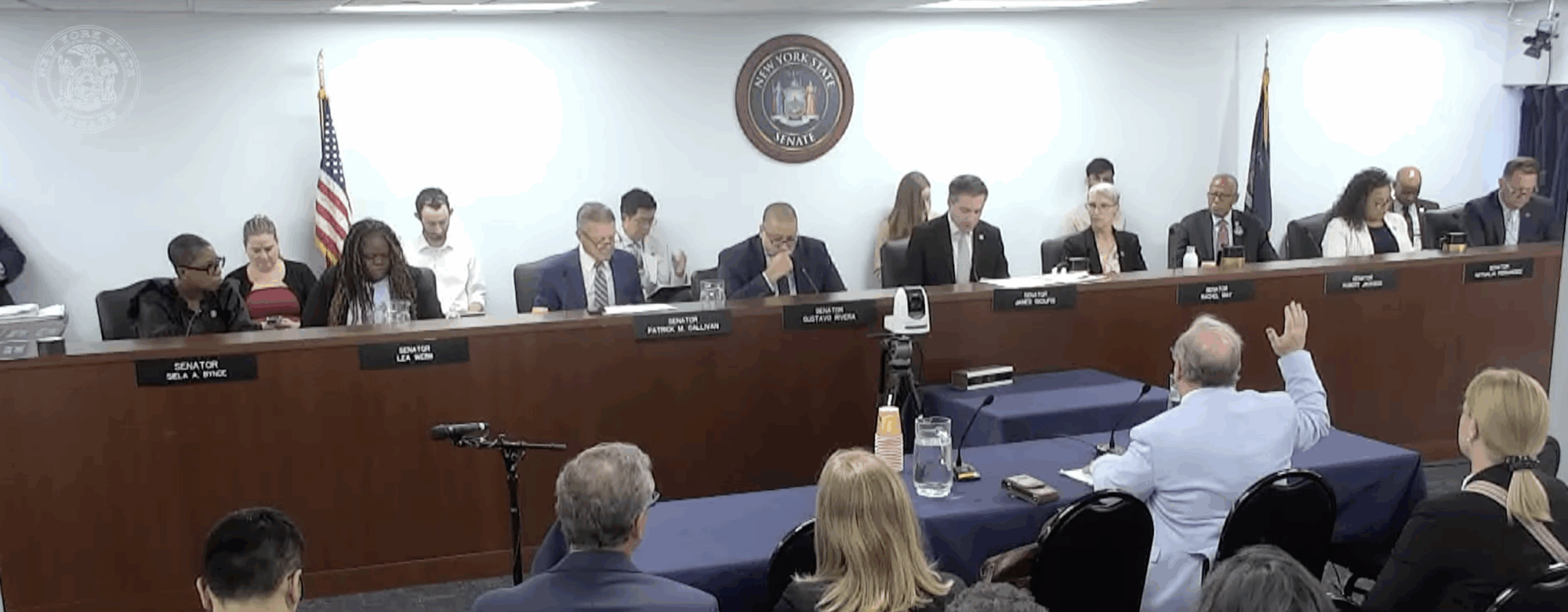
Earlier this year, the Empire Center published a trove of emails, obtained through a records request, documenting detailed talks between the state and PPL long before bidding opened – interactions that McDonald and a PPL official falsely denied in sworn testimony to the state Senate.
Despite these many red flags, the Hochul administration refused to change course, rejected all criticism and denied any wrongdoing. It was a slow-motion train wreck that neither she nor anyone else in Albany was willing or able to stop.
Ironically, Hochul has portrayed the overhaul as an effort to combat fraud in CDPAP – the abuses of which she once characterized as a “racket.”
The hundreds of small contractors under the old system heavily used TV and subway ads to drum up business, which drove rapid growth in enrollment and costs. Such marketing is prohibited in PPL’s contract, which helps to explain why enrollment in Medicaid managed long-term care has slowed to a near halt over the past year.
That real but modest achievement does not excuse fraud. Hochul could have achieved the same goal with a better-qualified company that won a fair bidding process and faithfully abided by the terms of its contract.
Instead, Hochul ended up with a mess – a major Medicaid contractor credibly accused of bilking taxpayers, and two of her top appointees accused of participating in the fraud instead of stopping it.
While the lawsuit presented evidence to back up its charges, Hochul has responded so far with bluster. Her spokesperson called the case “just another sad attempt by the Trump administration to weaponize the justice system” but did not refute any of the suit’s factual claims.
The governor’s office asserts that the contract has saved more than $1 billion without explaining how it arrived at that estimate.
Because this is a civil case rather than a criminal one, the Justice Department must only prove that a preponderance of the evidence supports their charges. They have already pointed to emails and other internal documents that appear to show PPL preparing to overcharge the state – and sharing those plans with lenders. Prosecutors will likely gain access to all of the company’s financial records, if they haven’t already.
As she seeks re-election in November, Hochul faces a choice: She can take her chances trying to defend this undeniably ugly set of facts in court – and on the campaign trail.
Or she can admit mistakes, clean house, order a new bidding process – and recommit to fighting fraud instead of condoning it.