- House and Senate leaders recently announced a “framework” for a budget deal
- There’s been no comprehensive budget bill passed since 2023
- This brief includes five priorities budget writers should focus on
Just over two weeks ago, House and Senate leaders announced they had a “framework” for a budget deal for the fiscal year beginning July 1. Lawmakers have not passed a comprehensive state budget since 2023.
Their announcement focused on their agreed-upon pay raises for state employees and teachers, funding for a proposed children’s hospital in Apex, and a slowdown in the pace of future rate reductions in the personal income tax.
Beyond that, however, their framework was very light on details.
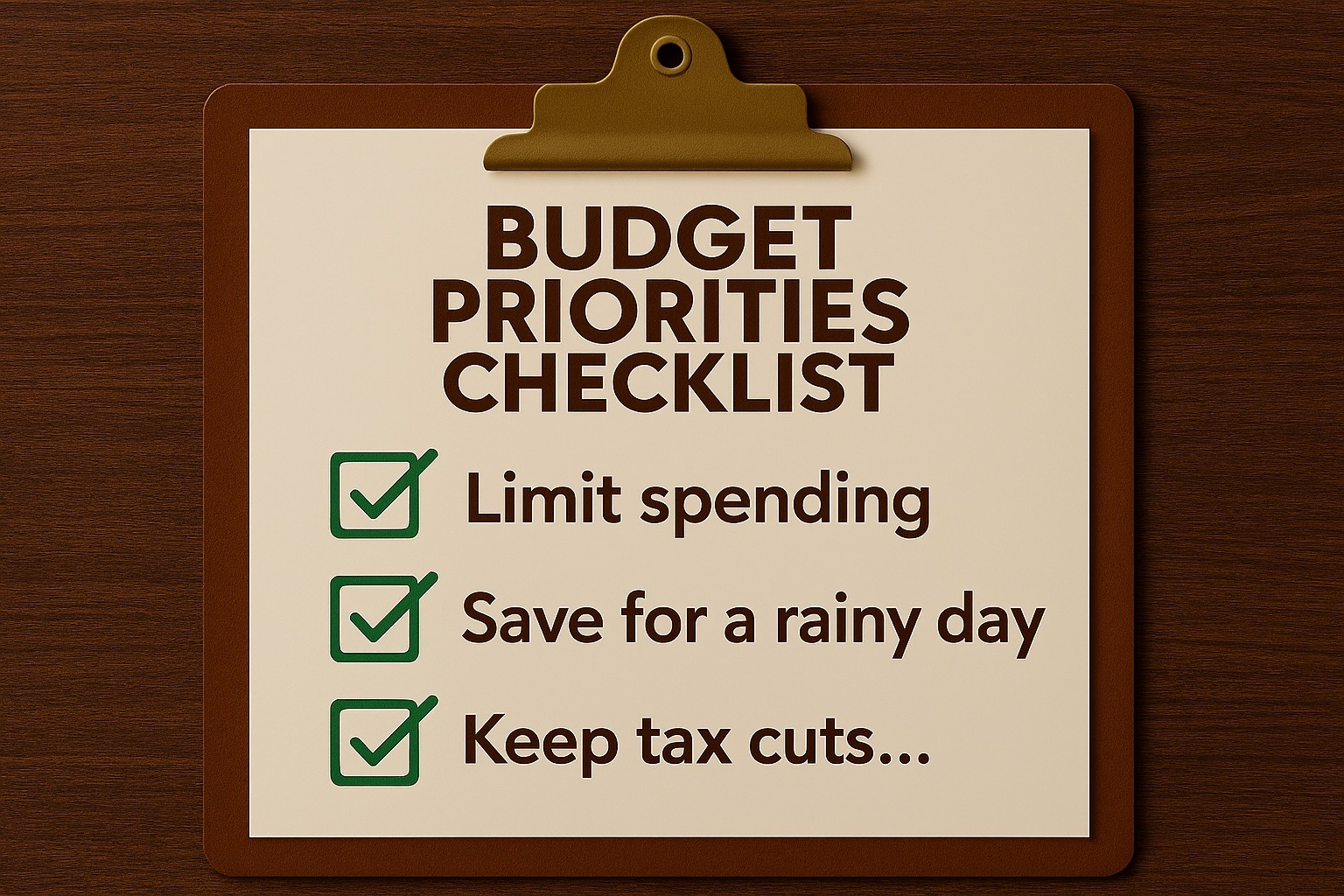
Crafting what may be the first comprehensive state budget bill passed in nearly three years, budget writers must focus on the highest priorities. Here are five key principles that should take center stage for the FY 2026–27 state budget:
- Keep total spending in check: One thing lacking from the budget framework announcement was an agreed-upon spending total. Gov. Josh Stein’s budget plan for the coming fiscal year includes $35.4 billion in spending. That would mark an astonishing 11.3 percent increase over the current year’s budgeted appropriations of $31.8 billion, and a 27 percent increase over the past four years alone. Legislative budget writers would do well to present a more constrained spending amount than Stein.
- Don’t play shell games with reserves: A disturbing pattern of attempting to hide the true amount of spending has emerged in recent years. In short, budget writers send money into special “reserve” funds and keep those amounts out of the General Fund total. Then, when that money is spent from the reserve, it gets itemized as a “receipt supported” expenditure and therefore still not counted in the General Fund total. In the FY 2023–24, budget writers used this shell game with more than $7 billion. At that time, there were a total of 30 active reserves, 20 of which had been created since 2020. Such opaque transactions make the state budget much less transparent and hide the true amount of state spending.
- Continue generously setting money aside for a rainy day: Good economic times don’t last forever. State legislators have done a solid job stocking the state’s Rainy Day Fund — the current Savings Reserve balance sits at more than $3.6 billion — and there’s another nearly $800 million in a “Stabilization and Inflation Reserve” fund. But now is not the time to stop setting money aside. Cracks are deepening beneath what appears to be a healthy economy, including rapidly rising inflation caused by the Iran War and weakness in the job market. To avoid panicking when the next economic downturn comes, the state should have enough money set aside to survive a drop in revenue while avoiding tax hikes or massive layoffs. A goal of closer to 20 percent of General Fund revenue should be in order for the Savings Reserve.
- Maintain tax rate reductions: While the previously announced budget framework included a slowdown of the personal income tax rate reductions, budget writers should hold fast against calls to keep slowing or to stop these reductions altogether. North Carolina has enjoyed tremendous economic success during the past dozen years of tax reform, but we risk falling behind other states if we stop now. Moreover, if and when the next economic downturn hits, North Carolina would be better positioned to weather that storm with a lighter tax burden on its workers and businesses.
- Claw back NCInnovation funds: On this measure, the legislature could actually align with Gov. Stein, who proposed taking back the $500 million first given to NCInnovation in 2023. Legislators made a mistake handing over half a billion taxpayer dollars to this organization tasked with providing funding for startup companies seeking to bring university research technology to market. This is decidedly not a free market approach to innovation and should be de-funded.
There are obviously many more issues and concerns regarding the state budget, but following these priorities will provide a genuine framework for a sustainable and forward-looking budget that North Carolinians need.