It doesn’t seem like a very big change. But it is.
In a just a few days, Kansans will be asked to abolish their Supreme Court Nominating Commission, a committee that ensures unelected lawyers determine who will sit on the highest court of Kansas.
Kansas is not alone in creating this body. Leaders across this country are nominating judges who skew from their constituents’ core values. It is not their fault. Instead of allowing governors or state legislatures to decide who will be placed on their state benches, many states have adopted “Missouri Plans” instead. These states use committees that create a list of judicial nominees when a court vacancy occurs. These lists are sent to the governor, who appoints someone from the list. Who staffs these committees? In some states, committees are partially composed of state bar members. These are lawyers who represent other lawyers. The Supreme Court Nominating Commission in Kansas, for example, is made up of nine members, five of which are determined by the local bar of Kansas.
Missouri Plans were born out of a reasonable fear of politically captured judiciaries. In the 1930s, Missouri citizens were fed up with notorious Democratic Party boss Tom Pendergast. Using his political power, Pendergast was able to choose the judges he wanted on the bench. Missouri voted to create a system that would prevent a “smoke-filled room” from having outsized control over the judiciary. Other states moved in lockstep, accepting the Missouri Plan as the modern solution to judicial independence.
But “smoke-filled rooms” are exactly what Missouri Plans create.
An independent judiciary is extremely important. We all want a judiciary that will fairly interpret and uphold the law. It is not a forgone conclusion, however, that a Missouri Plan is the best plan for an independent judiciary. Other forms of judicial selection (gubernatorial appointment, legislative appointment, and direct elections) work better at providing an independent judiciary. State judges in a Missouri Plan state, whose nominations are devoid of any meaningful input from the electorate whatsoever, can yield a jurisprudence that is also fundamentally out of sync with the people of the state.
Missouri Plans strip power from the legislative and executive branches to determine who will compose the judiciary. Under our federal Constitution, the President is entrusted with initiating the decision as to who shall take a judicial seat, but the Senate must consent. No one branch has outsized control.
Not so in Missouri Plan states; committees—not elected officials—determine who will be nominated. If an elected official does not like any of the nominees, too bad; they do not have direct control over the appointments.
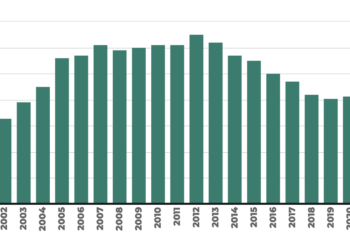
Missouri Plans create the false impression of electoral input. Many Missouri Plan-style systems have a retention vote after a judge is nominated. The public has an opportunity at the next general election to determine whether the appointed judge will stay on the bench. However, these elections are not competitive at all. In a count performed between 1964 and 2006, only 56 judges lost their retention election out of 6,306. Less than 1% of judges lost their retention election over 40 years.
Proponents of Missouri Plans often say that nomination committees help create a judiciary based on merit, not politics. Nomination committees, they say, are unattached to partisan politics and decide judicial candidates based on objective qualifications, creating an independent judiciary. But committees, in practice, are not free from partisan attachments or special interests; instead, they make a judiciary dependent on the favor of committee members and the local bar. The politics of receiving a coveted judicial nomination becomes a private affair rather than a public one. Judicial candidates think about pleasing these special interests to get an appointment. And throughout that selection process, nobody seems to ask elected leadership or the public who they would like to nominate.
In practice, proponents of Missouri Plans have created the very smoke-filled room voters rallied against in the past. Unelected groups of appointees and bar members are determining the judiciaries of their states, rather than institutions with representative legitimacy. On Aug. 4, Kansans will decide whether to keep or reform this system.