
Written by

Many of the great religious freedom cases follow a familiar pattern: an individual who, for reasons of faith, is unwilling to do something the government asks or who has a responsibility to do something the government will not allow. Jehovah’s Witness children who will not salute the flag, a postal worker who won’t work on Sunday, a Native American man who wants to use peyote as part of a religious ritual.
Recently, though, another type of religious freedom case, arising from disputes over donations and employment decisions, has received more attention. These types of cases are described as implicating the doctrine of “church autonomy.”
The basic idea is that government officials, including judges, cannot interfere with internal church decisions or evaluate church teachings. As one scholar described it, it is “a zone of protection for an entity’s internal governance that is derived from the organization’s religious character.” A simple way of thinking about it is that a government’s decisions cannot be based on a determination of the truth or falsity of a religious belief or practice.
The source of these principles is the two religion clauses of the First Amendment, the protection of free exercise of religion and the prohibition of government establishment of religion. When governments interfere with the decisions or teachings of religious organizations, they limit the organizations’ ability to live consistently with their beliefs, and they put the government in the role of establishing certain religious beliefs as right or wrong.
The most recent ruling implicating church autonomy was a decision last month in a case challenging the use of donations (and interest on investments) by The Church of Jesus Christ of Latter-day Saints. The U.S. Court of Appeals for the Tenth Circuit was able to avoid the question because the plaintiffs had failed to file their lawsuit in time. Other, similar cases have dealt with the question more directly.
Important recent Supreme Court decisions have also established that courts cannot second-guess discretion of religious organizations as to who will promulgate their teachings.
There are some complicated questions about the application of this principle. One of the most significant is at what point courts must invoke the principle and dismiss a lawsuit implicating church teachings or practices. There are strong arguments that this should happen early in the process. Defending against a lawsuit imposes costs and interferes with religious functions even where, ultimately, the lawsuit fails. A lawsuit over who should be the church’s minister, or whether church discipline was appropriately applied, or whether one faction in a doctrinal dispute is more faithful to church teachings, will inevitably embroil courts in matters of faith.
There are also limitations. A very thoughtful law journal article examines these. The author concludes that courts can use neutral legal principles when a religious action is “not a core internal governance function, nor a decision that requires review of an issue of belief or doctrine.” And, as a “backstop,” “church autonomy does not protect the direct cause of physical harm.” Even the most expansive test for protecting religious freedom allows for the government to impose burdens on religious practice when the state has a compelling reason to do so, and its policy is tailored to ensure as little interference with religious practice as possible.
The principle of church autonomy is critical to preserving space for religious organizations to do their work and to preventing government from taking on the role of arbiter of religious truth.

Insights: analysis, research, and informed commentary from Sutherland experts. For elected officials and public policy professionals.

- The U.S. Constitution ensures religious organizations have a protected space to perform their work without undue government interference.
- This principle, called “church autonomy,” precludes interference with such decisions as who will represent a church and how it makes decisions about membership and governance.
- This protection does not extend to wrongdoing such as abuse by clergy or other criminal violations.
Read More
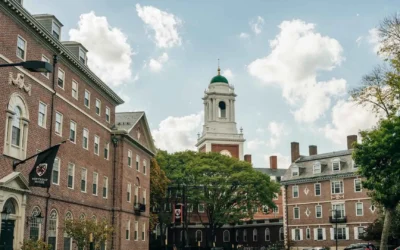
Keeping the government in its lane to protect religious freedom
The principle of church autonomy is critical to preserving space for religious organizations to do their work and to preventing government from taking on the role of arbiter of religious truth.

Utah Fits All Scholarship freed parents from financial constraints, enabling an “unparalleled educational experience”
The Utah Fits All Scholarship allowed a Utah parent to move past financial questions to educational ones and treat her children as individuals in their education.

America has a community problem. Here’s why it matters | Michael Tanner
On this episode of Defending Ideas, Michael Tanner, Senior Fellow at FREOPP, joins host Nic Dunn to explain why civil society is so important and why its decline should concern all Americans.
Connect with Sutherland Institute
Join Our Donor Network
Follow Us
The post Keeping the government in its lane to protect religious freedom appeared first on Sutherland Institute.