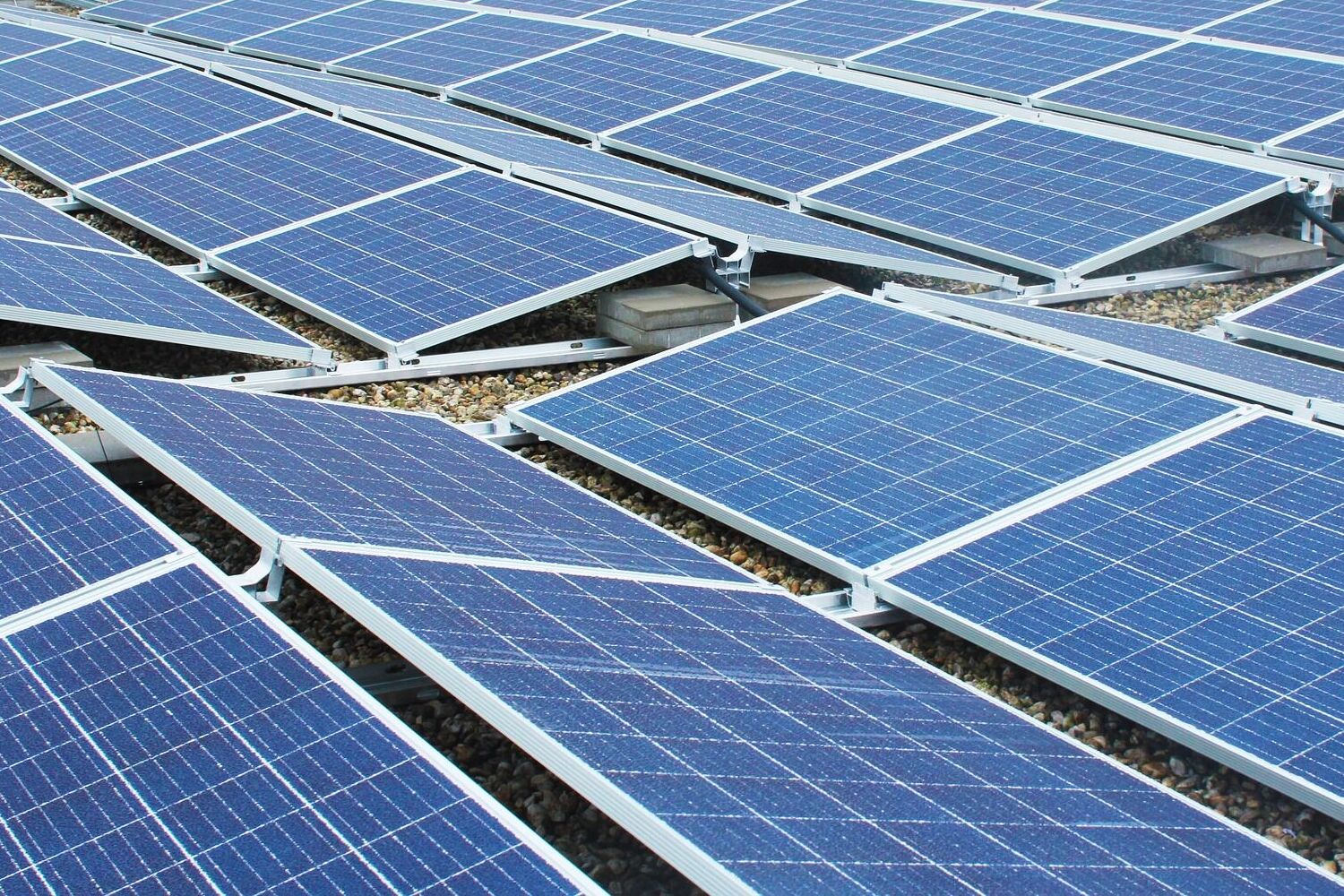
Two recently proposed power plants illustrate the stark difference in land use and efficiency in power generation.
On June 17, the North Carolina Court of Appeals upheld the denial of a special-use permit to a proposed solar facility by Pender County. It was the second time in two years that the permit denial was upheld by the appellate court.
The facility proposed by Coastal Pine Solar, LLC would have taken up 2,360 acres of timberland (about 3.7 square miles) and been rated at 200 megawatts (MW). That’s about 54 MW of nominal capacity per square mile.
The facility would have required a large amount of land for relatively little power, especially power that would be available only some of the time, less in the winter, even less during storms, and never in the late evenings through early mornings.
Meanwhile, Duke Energy Carolinas recently gained approval to build a large new natural gas combined-cycle facility in Anderson County, South Carolina. This natural gas plant will take up “nearly 200 acres” (about 0.3 square mile) and be rated at 1,365 MW. That’s at least 4,368 MW of nominal capacity per square mile.
This facility will feature a very minimal land footprint for all the power it generates. This power will also be dispatchable and reliable. Furthermore, the project will also serve, among others, customers of the North Carolina Electric Membership Corporation (NCEMC).
Among other things, the two proposed facilities illustrate the huge difference in efficiency between natural gas and solar facilities. The John Locke Foundation’s 2026–27 “North Carolina Policy Solutions” guidebook provided an extensive table comparing different electricity generating sources on several measures, including environmental ones, which included land use. Of interest here is that the Pender County solar farm would have required more land per MW than the chart showed, whereas the new natural gas facility will require less.
The following table combines part of the table from the policy guidebook with the site-specific information about the two facilities here:
Efficiency and land use: How much land do different electricity generating sources need to produce 1,000 MW?
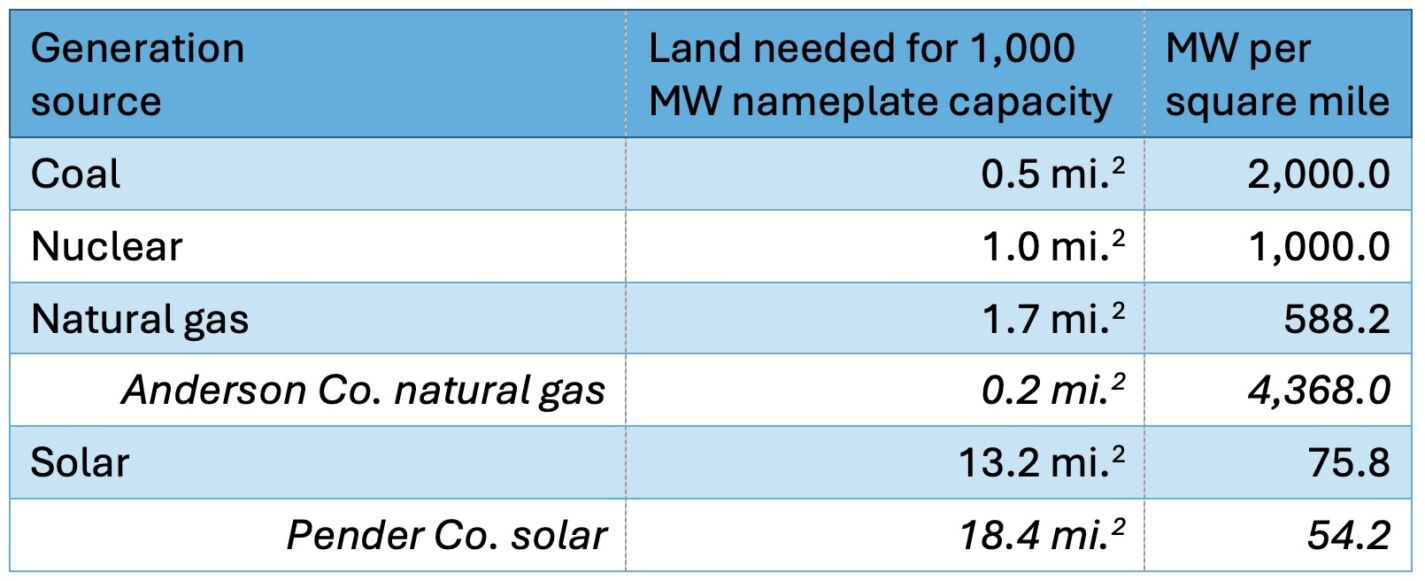
Source: “North Carolina Policy Solutions,” author’s calculations
Also, with respect to environmental concerns, here are other factors to consider about the proposed facilities:
- The Pender County solar facility would have required clear-cutting 2,360 acres of timber
- It would also have necessitated adding one-to-one backup generation (i.e., 200 MW), preferably from a natural gas combustion turbine plant, based on information from Duke
- The new natural gas plant will have a longer life span than similar plants and will, according to Duke, utilize state-of-the-art environmental control technologies to minimize emissions, greatly conserve water, and avoid the need to treat water chemically