America’s story needs to be retold, or it will be drowned out by the noise of these postmodern times.
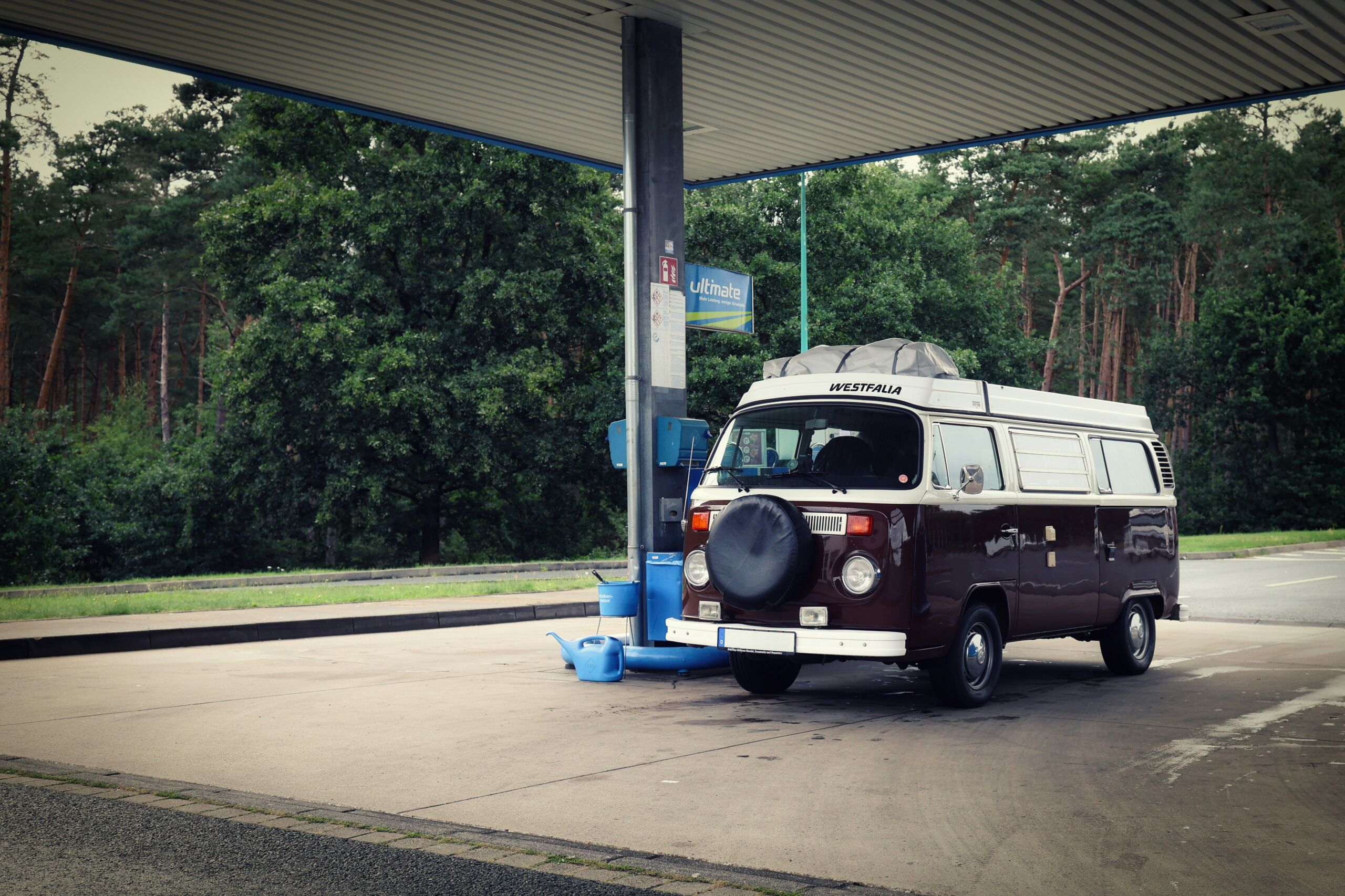
What I remember most about our nation’s big bicentennial celebration in 1976 was the bears in Cherokee National Forest. We awoke one morning to three or four of them calmly ransacking our campsite, as my parents, my sisters, and I watched from inside the Volkswagen camper we were driving across the country that summer.
That was half a century ago, and maybe we weren’t as aware of wildlife best practices. Or maybe we just weren’t expecting bears. But as one pawed its way into our styrofoam cooler, we watched with a Disney-dulled fascination — and a misplaced confidence in what that VW Westfalia could withstand, should even a moderately sized black bear find it interesting.
The bears soon moved on to other campsites without incident, but my sisters and I spent much of the rest of the trip spinning increasingly gruesome stories about how the Bear Encounter could have turned out if the bears had known about the peanut butter crackers in the back seat.
Yet with the bears came a revelation to my 12-year-old mind: America was still at least a little bit wild. And America being wild felt proper and good — not a tame lion.
That trip helped to form my view of the United States as something big, bold, and wonderful. My love for America can be traced back to the hot summer days we spent traversing her forests, fields, highways, and historical sites. Reagan hadn’t made his famous commercial yet, but it truly felt like morning in America.
But does that America still exist? I’m taking some time this summer to find out. In the classic, The Devil and Daniel Webster, we learned that if you go to Webster’s grave and call his name aloud, you’ll hear his deep voice ask, “Neighbor, how stands the union?”
Perhaps that’s what I’m asking today.
1976 vs. 2026
In the summer of 1976, just as now, we were a deeply divided nation. The fall of Saigon was still a fresh wound on the nation’s psyche, as was the Watergate scandal and its political fallout. Georgia Gov. Jimmy Carter was building up a massive lead in the presidential race (up 30 points after the Democratic National Convention in July). Inflation was a driving factor; the Ford administration was never able to bring inflation down, though Carter himself would bring about a new measure of economic misery: “stagflation.”
None of that mattered much to me, though. I was in it for the camping and the battlefields and the fireworks and the fanfare. I suppose I bought into the hype. In school, we studied the Founding Fathers, we painted the fire hydrants patriotic colors, and my family spent hours with a road atlas, planning possible routes.
But it didn’t seem like hype then. It felt as if we all, despite our divisions, had come to a consensus on one thing, at least: America is pretty great and worth celebrating.
We did what many families did at the time; we sought to commemorate the bicentennial in our own way. We drove from our home in northern Florida to Montreal (and back). The trip lasted six weeks, and that was only possible because my parents were teachers. But as teachers, they must have saved money for months to make it happen.
Our VW Westfalia camper was built in 1968, with a 1.6-liter engine that could work itself up to a whopping 50 horsepower. Our top speed was about 55 mph (downhill), quite in keeping with the new federal speed limit. But the truth was, we couldn’t speed if we wanted to. There was no air conditioner. VW didn’t offer AC even as an option for that model year. But that wasn’t uncommon; we simply kept the windows open and the radio on.
I brought as many books with me as I could. That summer, I was reading biographies of our founders and other figures from American history, and I didn’t stick to the ones written for children.
We had a camping box (built with the help of my dad’s friend, the shop teacher) and a Coleman tent. That was enough for all five of us. We had a rough itinerary, with drives of between 200 and 300 miles between sites. We visited the big ones: Mount Vernon and Washington, D.C., Gettysburg and Appomattox, the Liberty Bell and Niagara Falls. Watching the tall ships sail into New York Harbor left me with a lifelong love of sailing and ships.
Our trip began at the Open Pond campground in Conecuh National Forest near Andalusia, Alabama, only about 100 miles from home. We were well familiar with that campground, and that first night served as a shakedown cruise of sorts. Our usual camping habit was to get a few miles from home, then one of us would remember something really important, and we’d have to backtrack. By starting close to home, we ensured that whatever was left behind wouldn’t cost us more than a few hours.
Much later in life, I found a verse from Emily Dickinson that truly captures the feeling of the start of a trip: The sailor, she writes, knows “the divine intoxication of the first league out from land.” The poem is called “Exultation Is the Going,” and she gets it right. It’s that nearly impenetrable joy when the trip is all promise (so far) and no disappointments (yet). All of America was before us, and we had a road atlas — a thing I still take immense joy in, even as GPS renders them quaint. Exultation was in the going.
Were there disappointments? Of course. I didn’t know it at the time, but we weren’t a wealthy family. Pay for a high school band director in 1976 was $12,000 to $13,000 per year. That wasn’t bad (about $70,000 today), but there were five of us, and travel can be expensive. I don’t remember a single restaurant on the trip, though I remember the hot dogs, pork and beans, Bisquick pancakes, and endless peanut butter sandwiches we ate along the way.
Nor do I remember gift shops or souvenir stores. As we traveled north through the Appalachian Mountains, we saw the innumerable signs urging us to “See Rock City” and “See Ruby Falls.” When we asked, my dad would laugh knowingly; he wasn’t going to be fooled into stopping at any expensive tourist trap. I now suspect we were simply on a tight budget.
Yet there was one souvenir that did come home with me. After the very nearly fatal and almost completely disastrous Bear Encounter, my parents bought my sisters and me each a black bear plushie on a leash.
My sisters were delighted. For my part, I resented the cute red plastic leash. I felt it undermined the true degree of danger we faced. Sure, the bears in Cherokee National Forest were mostly interested in our food, but bears are bears.
They weren’t particularly expensive toys, but they didn’t have to be to put a dent in a family’s vacation budget. I knew what my parents meant with the purchase. This is important, they were saying. Remember this.
And I do. In a lot of ways, that trip formed me as a citizen.
Was the bicentennial celebration of 1976 “whitewashed,” as critics at the time claimed? I don’t believe so. The historical sites we visited didn’t shy away from any discussion of slavery. But it also wasn’t the only story they told, in the way The New York Times’ “1619 Project” demands.
In fact, the bestselling nonfiction books of 1976 included The Final Days (Bob Woodward and Carl Bernstein’s wrap-up of Watergate) at No. 1, and Roots by Alex Haley at No. 2, long before it became a miniseries.
So even in the bicentennial mania of 1976, our nation’s failings were front and center. But if there’s one thing a 12-year-old knows well, it’s that ability and action often take time to catch up to aspiration. The underlying truths remain: All men are created equal, and we have rights government can’t take away — not even in the name of equity.
We’re already hearing charges of “whitewashing” being leveled against America’s 250th celebration. (And for the record, I refuse to learn to spell semiquincentennial; bicentennial took me long enough.)
“This corrupt, dishonest White House is trying to use America’s 250th milestone as a stage to promote an alternate reality and Trump’s fake America,” California Democrat Congressman Jared Huffman claims. “The darker parts of our past are airbrushed out.”
Huffman also has a problem with one of the claims of the Freedom 250 “Events Toolkit,” which reminds Americans, “Our rights come not from government, but from God.” He apparently missed the “endowed by our Creator with certain inalienable rights” part in the Declaration of Independence.
The modern rejection of that principle — now common among Democrats — is not an indictment of an “outdated” document. Instead, it’s an indictment of our civics education. Ordered liberty requires “informed patriotism,” as Reagan reminded us.
Voices like these can’t drown out the truth. America was and is the freest and most prosperous nation in the history of the world. She is not perfect, but she is good.
I think the founders understood that, too. The Constitution’s curious phrasing of “in order to form a more perfect union” always seemed hopeful to me; America was not established with any illusion of being a perfect union. Instead, that “more perfect union” is presented as a goal to work toward for each generation, sometimes referred to as the “eternal effort.”
The goodness of America is directly tied to the greatness of America. It’s that goodness I find myself looking toward now, as I plan to revisit some of the bicentennial sites. Not retrace or repeat that trip — my own kids are grown, and none of us get summers off anymore. But I will reconnect with some of the touchstones that tell America’s story because it’s a story that needs to be retold, or it will be drowned out by the noise of these postmodern times.