- The U.S. Department of Labor’s new H-2A wage methodology has useful reforms, but a federal court finds it lacks adequate justification for key data, wage, and compensation assumptions
- Returning to the former, regional methodology would recreate serious problems by ignoring differences in local labor markets, worker skills, and nonwage compensation
- DOL should quickly develop a transparent, data-driven methodology that reflects actual agricultural labor markets and reduces costly uncertainty for H-2A employers
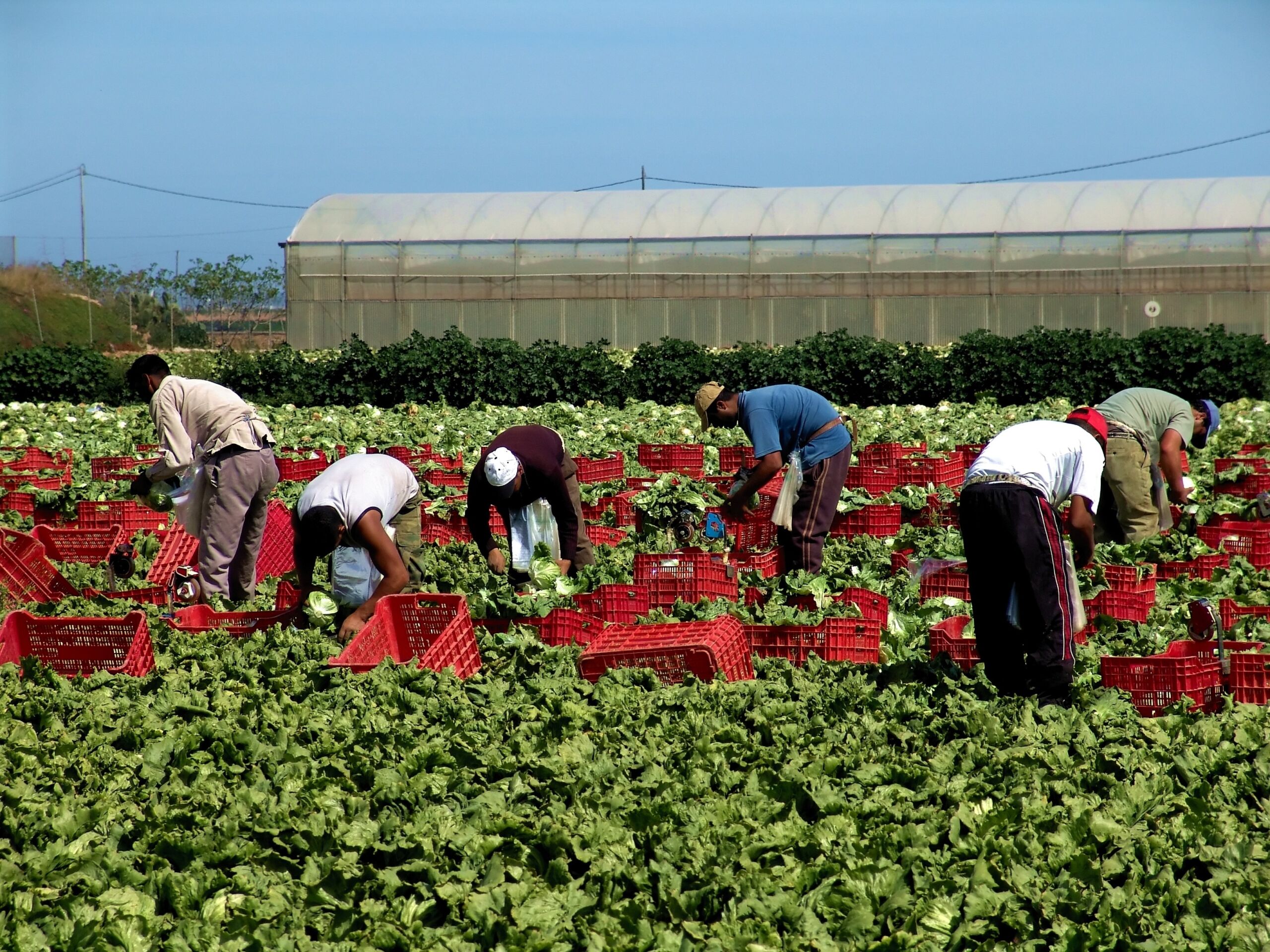
Agriculture depends heavily on immigrant labor, particularly for seasonal crops that cannot be easily mechanized. As I documented in my 2025 John Locke Foundation report, “Harvest on Hold,” North Carolina farmers certify more than 25,000 H-2A workers annually to fill jobs for which too few domestic workers are available.
The H-2A program allows farms to hire temporary foreign workers, but employers must pay a federally determined wage while also providing housing, transportation, and other benefits. How that wage is calculated matters. A rate set too low could harm American workers, while one set above local market conditions could reduce hiring, raise production costs, and push farms away from labor-intensive crops.
The federal Adverse Effect Wage Rate (AEWR) is supposed to prevent the H-2A program from lowering the wages of American farmworkers. That requires the Department of Labor (DOL) to estimate a counterfactual: What would the market wage be if employers did not have access to H-2A workers? In other words, what would the wage rate of domestic farm workers be if there wasn’t foreign competition?
It is not an easy question. Agricultural labor markets vary by state, crop, season, job, and skill level. The available datasets measure different groups of workers. Employers also provide nonwage compensation, most notably housing and transportation, that is not reflected in an hourly wage alone.
A federal court has now ruled that DOL’s latest attempt to account for those differences was not adequately supported. In United Farm Workers v. U.S. Department of Labor, the U.S. District Court for the Eastern District of California found four components of DOL’s 2025 H-2A wage rule arbitrary and capricious under the Administrative Procedure Act.
The court did not conclude that DOL must return to the previous methodology. Nor did it reject any of the methodological ideas such as skill-based wages, the use of new wage data, or a threshold for classifying jobs with multiple duties. It concluded that DOL had not adequately explained why its chosen variables, data, and assumptions produced a reasonable estimate of wages that would prevail without the H-2A program.
The 2025 rule divided agricultural jobs into two skill levels. Entry-level wages were set near the 17th percentile of the relevant occupational wage distribution, while experienced workers were placed at the 50th percentile. In principle, this was an improvement over treating workers with different skills as if they were economically identical. The court found, however, that DOL did not sufficiently explain why the 17th percentile was the correct benchmark. That was particularly important because the agency had historically used average wages and had previously argued that setting the AEWR below the mean could reduce wages for similarly situated American workers.
The court had a similar issue with DOL’s choice of data. The U.S. Department of Agriculture (USDA) discontinued the Farm Labor Survey that had traditionally been used to calculate the AEWR, so DOL shifted to the Bureau of Labor Statistics’ Occupational Employment and Wage Statistics survey (OEWS). This survey includes employees of farm labor contractors but generally does not survey workers hired directly by farms. If wages for contractors differ systematically from those for direct hires, then estimates based on OEWS may not accurately represent the relevant labor market.
The court did not prohibit DOL from using OEWS. It required the agency to examine this selection problem and consider adjustments or alternative data. That distinction is important. No wage dataset will perfectly capture the market DOL is trying to measure. For the court, the relevant concerns are whether the agency identifies the dataset’s limitations, tests the sensitivity of its estimates, and explains why the final methodology is preferable to available alternatives.
The court applied similar reasoning to the rule’s housing adjustment and its classification of jobs with mixed duties. DOL allowed employers to account for housing provided at no cost to H-2A workers, but it did not reconcile that adjustment with existing regulations requiring free housing nor fully account for American workers in corresponding employment who receive the same benefit. The hourly adjustment could also continue beyond 40 hours, potentially producing a total deduction greater than the housing value DOL intended to measure.
For jobs involving several duties, DOL applied the wage associated with duties performed more than 50 percent of the time. A classification threshold may be necessary, but the agency did not adequately explain why 50 percent was the appropriate cutoff or address concerns raised in its previous rulemakings.
These are methodological objections, not a rejection of AEWR reform. The court left the current rates in place and instructed DOL to produce a replacement promptly. DOL must now show how its data and assumptions relate to its statutory goal, and it must use public notice and comment for the skill levels, housing adjustment, and mixed duty rules.
The need for a stronger administrative record does not mean the previous AEWR methodology was economically sound. Under the previous methodology, North Carolina was grouped with Virginia even though wages, production costs, crops, and local labor conditions differ across and within the two states. North Carolina’s AEWR reached $16.16 per hour at the end of 2024. Employers also had to provide housing and transportation and pay recruitment, visa, and compliance costs. The mandated hourly wage therefore understated the total cost of hiring an H-2A worker.
The 2025 rule attempted to measure these differences more directly. It established North Carolina’s base rates of $12.78 for entry level workers and $16.39 for experienced workers, with a possible $1.69 adjustment for employer-provided housing. DOL may not have adequately justified those estimates, but returning to a regional average that ignores worker skill and nonwage compensation would replace one measurement problem with another.
The ruling also introduces a new economic cost. The court ordered DOL to notify employers that they may owe wage adjustments for work performed between that notice and the publication of a replacement methodology. The court has not yet ordered back pay, and it will not decide the issue until new rates exist. Still, each hour worked during this period may create a contingent liability equal to the difference between the current rate and a potentially higher future rate.
This uncertainty changes decisions today. Farmers choose crops, negotiate financing, and determine their labor needs before production begins. A farmer facing an unknown future wage adjustment may hire fewer workers, reduce acreage, switch away from labor-intensive crops, or hold more cash instead of investing in equipment. Even if back pay is never ordered, uncertainty has a cost.
The court’s discussion of farm profitability also shows why aggregate data must be used carefully. It cited an earlier USDA forecast placing 2025 net farm income at $179.8 billion as evidence that the industry could afford the previous wage rates. USDA later revised that estimate downward by roughly $20 billion. It now forecasts net farm income of $158.4 billion in 2026. Production expenses are expected to reach $492.8 billion, while farm debt is projected to increase 4.6 percent to $605.1 billion.
More importantly, national net farm income does not measure whether an individual H-2A employer can absorb a retroactive wage increase. Profitability varies substantially by commodity, farm size, region, and reliance on hired labor. USDA projects median farm household income from farming at negative $465 in 2026. It also expects average net cash income to fall 20 percent for poultry farm businesses and 2 percent for hog farms.
The farms most exposed to H-2A wage changes are not necessarily those driving national farm income. Labor-intensive crop producers can face rising wage costs even when livestock prices increase aggregate farm profits. Using total industry income to infer the ability of a particular group of farms to pay higher wages is an aggregation error.
DOL should use the remainder to build a methodology that reflects actual agricultural labor markets. It should incorporate data from direct-hire farms and labor contractors, estimate rates at a level that captures meaningful regional variation, clearly define skill categories, and include nonwage compensation without double-counting it. The agency should also publish enough information for outside researchers to reproduce its estimates and test alternative specifications.
The DOL is not wrong to change the methodology of the AEWR. Nevertheless, the agency needs to do its due diligence first and quickly to reduce the uncertainty labor-intensive farm owners are feeling.