Annoyance and resistance to the policies of King George III and the British Parliament did not just materialize after the April 1775 battles of Lexington and Concord in Massachusetts. In North Carolina in 1765, there had already been strong, active resistance to the Stamp Act, which helped result in its ultimate repeal in 1766.
We’ve also talked a lot this year about North Carolina’s Halifax Resolves and Mecklenburg Declaration, which came before the American Declaration of Independence. They’re seen as so important that their dates are on our state flag.
In 1774, several resolutions, or “resolves,” were passed in North Carolina.
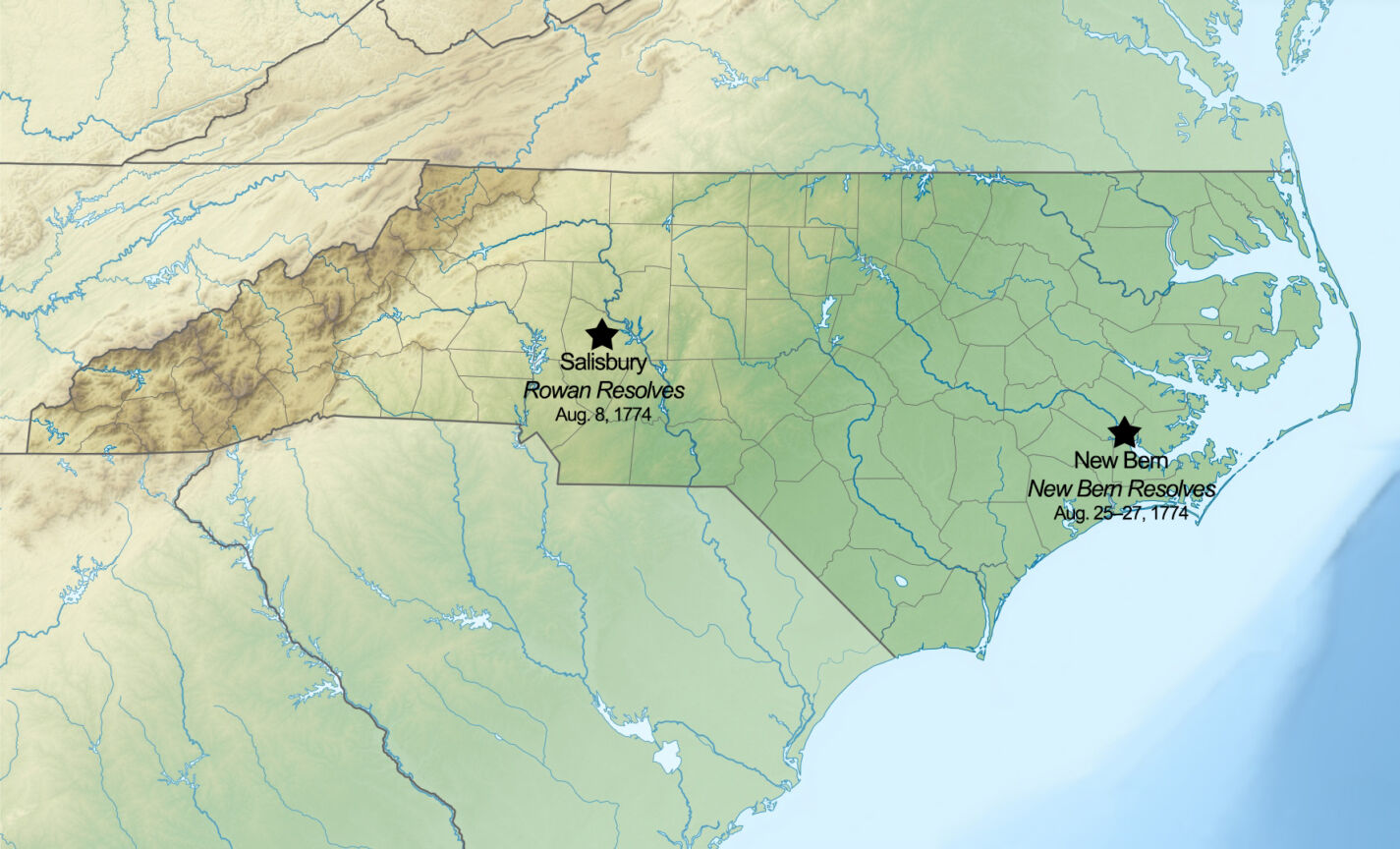
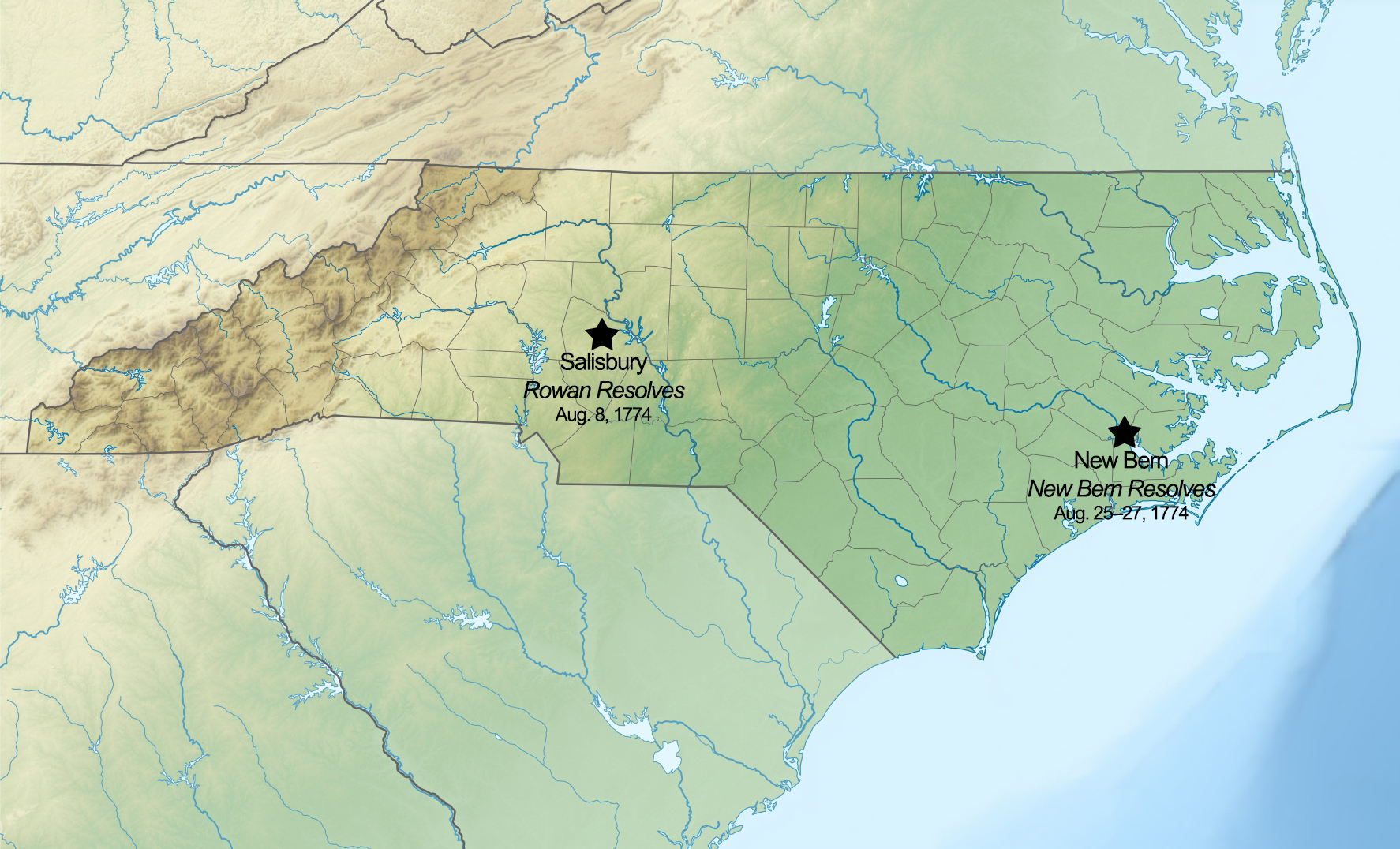
First, on Aug. 8, 1774, 26 representatives from all over Rowan County met to sign the Rowan Resolves. They met in Salisbury, a thriving community on the edge of North Carolina’s frontier, which was the county seat and a trading center for many trails, including the Great Wagon Road.
The resolutions addressed rising agitation in the colonies over Parliament’s “Intolerable Acts,” five laws passed by Parliament in the spring of 1774 to try to restore order after the Patriots’ Boston Tea Party protest over the tax on tea.
The first declarations protesting the Acts in North Carolina, the Rowan Resolves voiced opposition to taxation without representation and called for non-importation of British merchant goods.
Also before any revolutionary shots were fired in anger, Committees of Safety in many of the counties sent delegates to North Carolina’s First Provincial Congress, held a few weeks later on Aug. 25–27 in New Bern. There, 71 delegates adopted 28 resolutions that came to be known as the New Bern Resolves.
What is important for us to recognize about these early resolves is that they did not come close to crossing the line of talking about independence. Instead, they made a point of emphasizing the colony’s loyalty to the Crown while at the same time making clear that British colonists should not be taxed without their consent or the consent of their elected representatives.
Key to the resolutions was the assertion that local assemblies, not Parliament, should have the right to tax. The resolutions also declared that Parliament’s actions to punish colonies that disagreed were cruel and unlawful. The resolves not only addressed the concerns these representatives had for their own colony but also encouraged other colonies to unite against Parliament’s unfair actions and initiated the call for the boycotting of British goods and products in protest.
The New Bern Resolves will be celebrated at the North Carolina History Center at Tryon Palace from 9:30–11 a.m. this Saturday, Aug. 22. Join others celebrating our country’s 250th birthday with a fife and drum parade, reenactors, and the commemoration of the adoption of the Resolves. The event is free and a great way to continue the celebration of our independence!