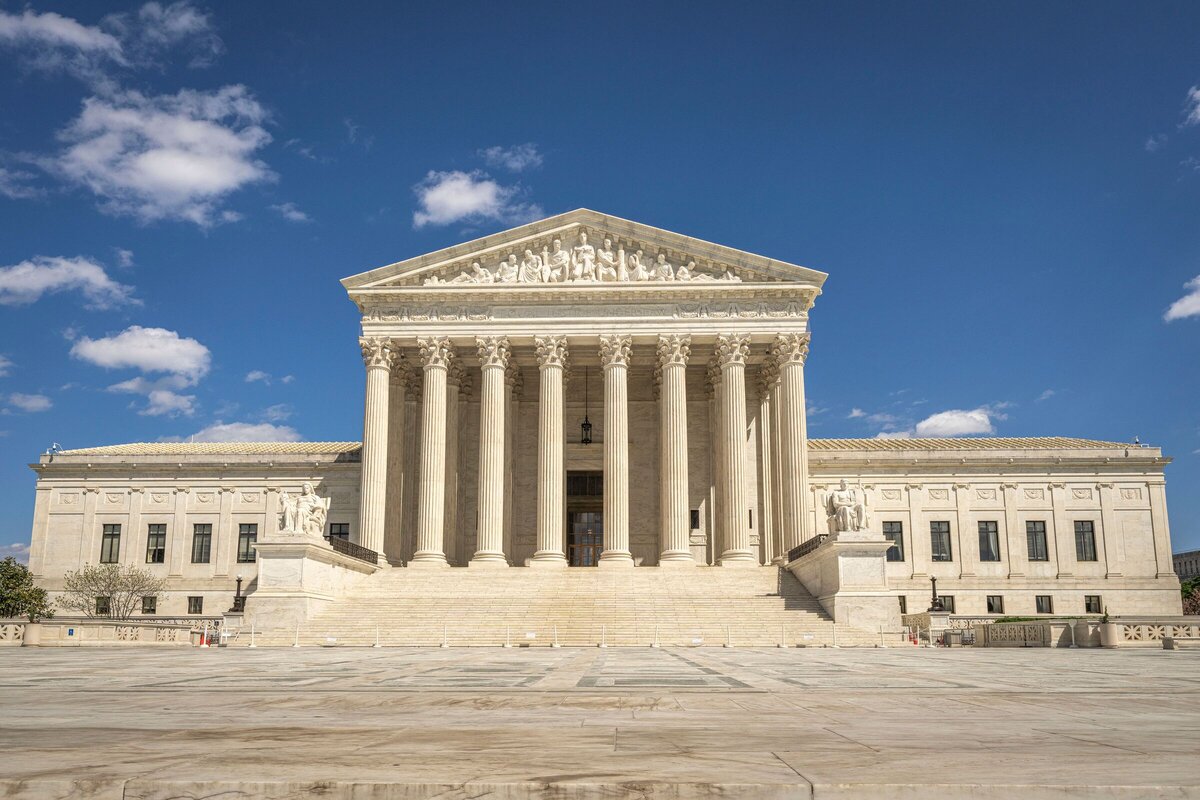
On June 29, 2026, the Supreme Court decided two cases that will have a major impact on independent federal agencies. In a 6-3 decision, Trump v. Slaughter (2026) struck down provisions of the Federal Trade Commission Act that said the president may only remove commissioners “for cause,” such as embezzling public funds. The court’s 5-4 decision in a second case, Trump v. Cook (2026), maintained the Federal Reserve Board of Governors’ shield from presidential reach. Taken together, these decisions suggest that the idea of an independent federal agency will disappear, at least in most cases.
The Slaughter decision overruled the precedent set by Humphrey’s Executor v. United States, a case that also dealt with FTC commissioners. Decided in 1935, Humphrey’s held that the president could not fire the heads of independent agencies at will — in this instance for political or policy differences. The unanimous opinion distinguished independent agency heads whose responsibilities are “quasi-legislative or quasi-judicial” from those exercising only executive power. When the court decided Humphrey’s, most independent agencies, such as the Federal Communications Commission or the Securities and Exchange Commission, were still in their infancy. For decades, the ruling has insulated regulatory agencies from presidential control.
This protected status led to the explosive growth of these agencies in the 20th century. In the decades after Humphrey’s, Congress created dozens more independent agencies, such as the National Labor Relations Board and the Environmental Protection Agency. There are now 58 independent agencies at the federal level, though their future is now uncertain.
As Justice Sonia Sotomayor noted in her dissent, Congress likely relied on the idea that agency heads were protected from at-will removal when it created many of these agencies. Sotomayor defended Humphrey’s using stare decisis, a judicial principle that courts should follow their past decisions when deciding similar cases. Congress, she wrote, “enact[ed] dozens of laws creating similar independent agencies premised on the validity of the FTC structure that this Court blessed in Humphrey’s.” Sotomayor argued that Congress would not have vested these agencies with quasi-legislative and quasi-judicial powers if their leaders were not shielded from executive removal. With the Slaughter decision, Sotomayor noted, “the Court creates an Executive Branch that Congress never dreamed of establishing.”
This objection highlights the root of the problem with independent agencies: They are antithetical to a traditional understanding of the separation of powers. The Framers of the Constitution recognized that “there can be no liberty where the legislative and executive powers are united in the same … body of magistrates.” This logic applies to other combinations of legislative, executive, and judicial powers. Creating agencies that exercise quasi-legislative and quasi-judicial powers runs contrary to the idea that each branch of government has a distinct role, and that one branch should not exercise the power of another.
The Framers of our Constitution granted some blending of powers between the political branches. For example, while the president may not make laws, he does have the power to veto those he thinks are poor policies, thus playing a small role in the legislative process. But it is critical to distinguish this light mixing of powers, enumerated in the Constitution, from the broad legislative and judicial powers that Congress has delegated to independent agencies over the past century. Regulatory agencies possess legislative rulemaking powers, which authorize them to regulate issues with vast economic and political implications. On top of this, many also have their own in-house court systems employing their own legal procedures, prosecutors, and even judges.
Theoretically, protecting agency heads from at-will removal by the president shields agencies from partisan influence. The court employed this reasoning in Trump v. Cook. It ruled that the president could not remove governors of the Federal Reserve except for cause. The majority opinion cited the Fed’s “unique historical status and role” as the central bank of the United States, a global economic power. The court left open the question of whether it would apply similar logic to any other agency.
As Sotomayor observed, it is not clear that Congress would have delegated such broad legislative and judicial powers to regulatory agencies if they were not immune to the partisan inclinations of the executive branch. This concern over concentration of power is one reason the Constitution vests these powers separately in the legislative and judicial branches, whose structures are meant to be less vulnerable to the whims of any one person or party at a time. Though the majority’s opinion in Slaughter does not address the issue of combining executive, judicial, and legislative powers within administrative agencies, it does help to ensure that those agencies are held accountable to elected officials, and thereby accountable to the American people.
Slaughter follows a line of recent Supreme Court cases that have tempered the independence of federal agencies. In 2022, West Virginia v. EPA limited the reach of these agencies by holding that they must receive explicit congressional authorization before regulating issues with major national impact. More recently, Loper Bright Enterprises v. Raimondo (2024) overturned precedent that required courts to defer to agency interpretations of ambiguous federal statutes.
Each of these decisions shifted power away from independent agencies and toward the legislative (West Virginia) and judicial branches (Loper Bright). By bringing independent agencies under closer supervision from the executive, the court’s recent decision brings us one step closer to reigning in regulatory agencies and restoring the delicate, constitutionally prescribed balance of power between the political branches.