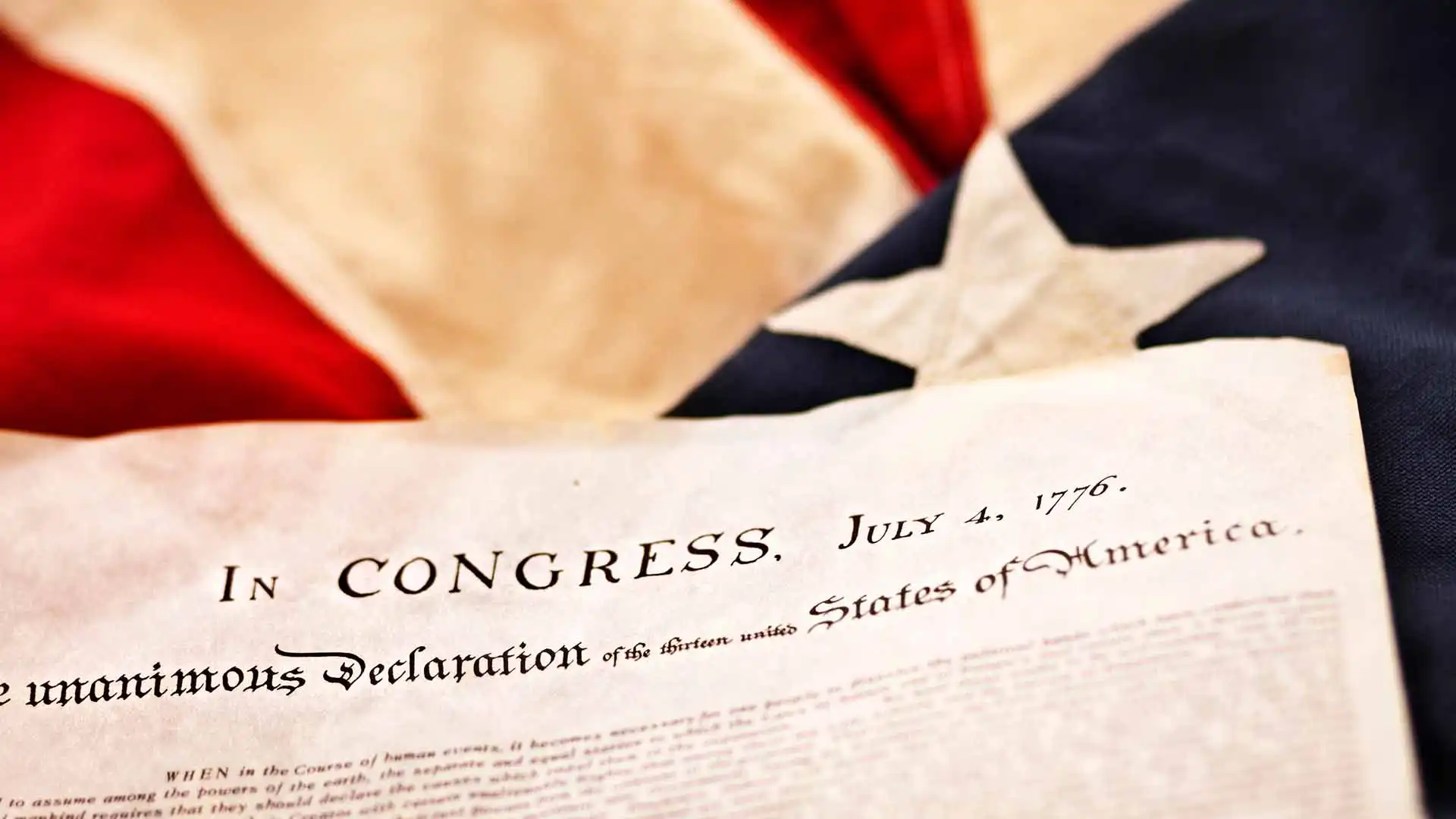

This year marks the 250th anniversary of the signing of the Declaration of Independence. But not all are finding it easy to celebrate this milestone without controversy, especially in education.
In March, the Utah State Board of Education passed a resolution commemorating the anniversary, but critics took issue with how it incorporated the history and role of religion in America’s independence. KSL highlighted how Utah teachers are “tip-toeing” through civics lessons and “walking on eggshells” as they discuss the nation’s Constitution. California teachers likewise feel they must “tread lightly” when celebrating the 250th anniversary, given all the competing narratives on America.
What should be a straightforward anniversary appears to be causing trouble.
Below, we dive into how the national and state governments are celebrating the anniversary and provide public policy recommendations on the topic.
How are policymakers approaching the 250th anniversary?
State and national leaders have found numerous ways to mark the occasion.
There are two federally established groups commemorating the anniversary: Freedom 250, created by the White House, and America250, established by Congress in 2016. Both host resources for learning about and educating others about America’s history. Among the resources is an invitation to prayer and rededication of the United States as one nation under God. Furthermore, the White House released a presidential proclamation about the anniversary and celebration.
Most states have likewise developed resources for the anniversary or advanced policies to support doing so. States are posting lesson plans, activities, contests, events, or information for teacher institutes. While some states offer seals on diplomas that show completion of civics content or skills, some states are offering seals just to commemorate the anniversary. (Louisiana and Ohio are among the latter).
In recent years, states have also been beefing up civics education, as it has become clear how little Americans know about their government or history. Utah has been tackling these issues for several years, including replacing the state’s civics education course just last year.
I recently wrote about some of this year’s legislation in Utah, including a bill that brings nondevotional aspects of religion into social studies, or legislation that requires state standards to “examine the fundamental role of religion in United States history and the primacy of religious liberty to American constitutional government.” The Utah State Board of Education likewise hosts educational resources on the 250th anniversary on its website, under the Parent Portal. It also announced an America250 Utah Essay and Art Contest for students in grades 5, 8, and 9-12 to answer the question “What does America mean to you?” in essay or art form.
Though these issues remain controversial for some, Utah policymakers are likely to continue working on them.
As state and national leaders lean into the opportunity to teach civics and American history during this year, they will likely find that education stakeholders may face challenges. Below are some policy recommendations to address common issues.
Recommendations
Focus on prioritizing primary source documents:
This year offers one of the best opportunities to teach civics, American history, and social studies, and students shouldn’t have to miss out on these subjects because the topics can be nuanced and controversial.
At the same time, practitioners’ fears are legitimate. Focusing on primary sources can help avoid the temptation to step into – unintentionally or intentionally – more controversial topics. Utah’s new laws promote doing just that. New legislation focuses on “prioritizing” the use of primary sources in civics education; rather than listing which ones must be used, it provides options.
Teachers should welcome this direction and look at organizations that offer simple explanations rather than editorial ones on these primary sources.
Create information about legal concepts and new state laws:
Practitioners and parents would both benefit from knowing more about recently passed legislation and legal issues rather than hearing about concerns in news stories. This is true for Utah and beyond.
For example, state education agencies could produce simple outlines of what new legislation requires in social studies or civics classrooms. One-pagers on legal issues, such as the parameters for teaching about religion in a historical context versus teaching religion, as well as other Establishment Clause or Free Exercise Clause issues related to public education, would be helpful.
Promote educational choices and providers:
One of the benefits of education choice is that it gives parents the freedom to explore how different schools or providers approach topics such as civics and history. This helps alleviate pressure to have a single system teach an issue in a way that pleases everybody.
Given the increase in education entrepreneurs and providers, no matter which school environment parents are currently choosing, they can find supplemental materials that teach topics such as civics and history in ways that meet the family’s needs and values. Providers should market clearly what they offer in terms of civics and history. Lawmakers can continue these trends by strengthening choices like open enrollment to a new district public school or programs that allow access to private school scholarships.
Sutherland Institute public policy intern Scott Hayes contributed research to this article.