John A. Charles, Jr.
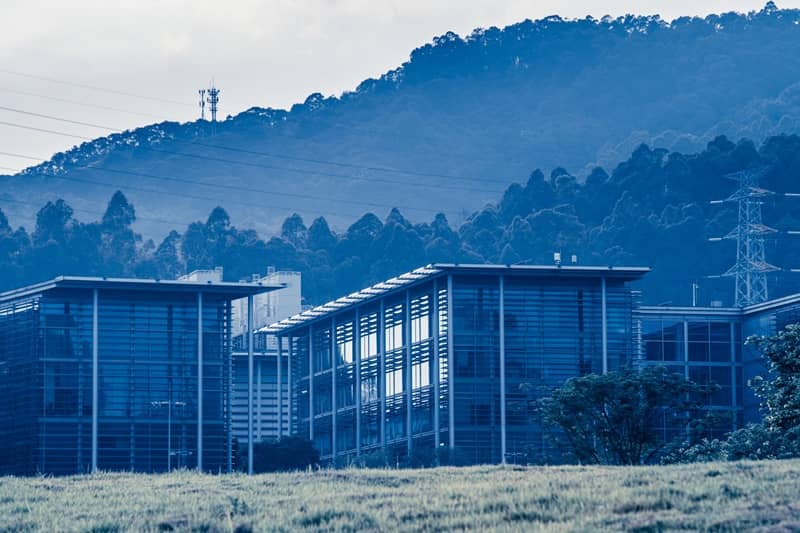
For decades Oregon officials have promoted the development of a digital economy, featuring such companies as Tektronix and Intel. Today over 4,000 technology and hardware companies make up the “Silicon Forest,” including 144 data center facilities, according to ECONorthwest report to the legislature’s interim committee this month.
Now after growing the Silicon Forest, the governor wants to cut it down. She supports a moratorium on new data center construction.
Eight months ago, Gov. Kotek was non-committal about the future of data centers. Recognizing growing public concerns, she convened a seven-person Oregon Data Center Advisory Committee to help Oregon develop a “thoughtful, forward-looking approach to data center development that supports economic opportunity while protecting Oregon’s air, land, water, energy system, communities, and public finances.”
The Committee released a report of its preliminary learnings on September 10. This kicked off a 45-day public comment period (until October 24, 2026). Many assumed the Governor would hold off on making any policy decisions about data centers until the committee finished its deliberations in December.
That timeline abruptly changed after DHM Research released the results of a public opinion poll taken between July 23 and July 28. The poll found that two-thirds of registered voters support a “temporary halt” on new AI data center construction.
Two days later—and before the poll’s August 4 release—the Governor ordered the Department of Administrative Services to terminate the state’s contract for the sale of 32 acres of state land at the Mill Creek Corporate Center in Salem. Acting ahead of the committee’s final findings alongside election-year political pressure, Kotek stopped the development of a $5.1 billion data center project—the kind of private investment elected officials once celebrated.
The project developer, Verrus, revised its application with the city of Salem to construct two buildings and a utility substation across roughly 100 acres of privately owned land, in a project referred to as Oakline at Mill Creek. The project is designed to support cloud computing, artificial intelligence, and enterprise services.
Kotek’s opposition hardened when she addressed an anti-data center rally of environmental activists at the state capitol on September 8. The rally was organized by three advocacy groups who called for a three-year moratorium on data centers.
At the rally, the Governor announced her support for a moratorium “until we make sure that any data center development is done on our terms.”
That same day, state Sen. Christine Drazan (R-Canby), Kotek’s Republican challenger for governor, reversed her prior stance and announced her own support for an immediate statewide moratorium on data centers even though Kotek’s office maintains that no such legal authority exists.
The opposition to data centers is ostensibly based on concerns related to energy consumption, electricity rates, water use, noise impacts, farmland preservation, air pollution, and tax abatements. A close examination of the facts shows that most of these issues can be addressed through normal regulatory channels. There is no need for a moratorium.
Data centers have few air or water emissions compared to other large industrial facilities. They generate tax and fee revenue for local communities while requiring little in the way of schools, roads, or other public services.
Water consumption is modest, and far less than an average golf course or irrigated farm uses. Hillsboro is home to the nation’s second largest data center cluster yet water use in those buildings represents only about 2% of total city consumption, according to the Hillsboro Water Department’s April news release.
Data centers do not represent a threat to farmland. All data centers combined occupy only 2,900 acres or 0.0046% of Oregon’s land area. Roughly 80% of that acreage is inside urban growth boundaries.
It’s true that data centers are energy-intensive, but that does not necessarily lead to higher electricity rates. In most cases it reduces residential rates due to increased grid utilization, spreading fixed costs over a larger base of power consumption.
A recent paper titled “Have Data Centers Raised Your Electric Bill?” quantifies this result. The authors conclude that “from 2019 to 2024 the average residential customer lived in a state where data center capacity grew 160%, which caused their rates to fall by 6%.”
In mid-August, the Indiana and Michigan Power Company announced a plan for one of the nation’s largest base rate reductions. The plan would reduce bills by $79 million annually, saving the average residential customer about $100 per year. The company says this is made possible by increased revenue paid by large customers including data centers.
There is a better way to think about the tech sector. Last year the Montana legislature adopted a Right to Compute law, the first in the nation. The law is based on a foundational principle: the freedom to use computational tools is an extension of liberties Montana citizens already possess.
Section 2 of the law states, “Any restrictions placed by the government on the ability to privately own or make use of computational resources for lawful purposes must be limited to those demonstrably necessary and narrowly tailored to fulfill a compelling government interest.”
In supporting testimony, Bryce Chinault from The Abundance Institute said, “The state does not control who may think, write, calculate, or invent, and it should not seize authority to limit lawful access to general-purpose computing based on the scale, intensity or novelty of its use.”
The Right to Compute law was enacted with bipartisan support, including a unanimous vote in the state Senate. At least three other states have considered similar legislation in 2026, including New Hampshire, South Carolina, and Ohio.
For over 50 years Oregon has relied on narrowly tailored regulations – not blanket prohibitions — to protect the public interest related to energy, pollution, water, and land use. The administrators of those laws already have the authority they need. A prohibition on data center development is unnecessary. It is unsupported by the evidence. And it would sacrifice Oregon’s future for nothing in return.
This is part one of a multi-part series. Future commentaries will discuss economic impacts, tax abatements, and the social capital of data centers.
John A. Charles, Jr. is President and CEO of Cascade Policy Institute, Oregon’s free market public policy research organization. He researches, writes, and presents testimony and analysis on state and local issues important to the freedom and opportunity of all Oregonians.