Written by
- The U.S. Supreme Court recently decided a case protecting the freedom of association for nonprofit organizations.
- The Court unanimously held that the First Amendment rights of a private organization are threatened when a government tries to force disclosure of its donors.
- Society is healthier when citizens can join in causes free of undue government interference.

Last week, the U.S. Supreme Court issued a decision about election districts in Louisiana that got a lot of attention. The same day, however, the Court also unanimously decided a very important case on the First Amendment freedom of association that is likely to have beneficial consequences for nonprofit organizations and the rights of all Americans.
The case involved First Choice Women’s Resource Centers, a “religious nonprofit organization that has provided counseling and resources to pregnant women in New Jersey.” The New Jersey attorney general’s “Reproductive Rights Strike Force” accused these types of organizations of fraud because they do not direct women to abortion providers. Despite a lack of complaints about this nonprofit, the attorney general issued a subpoena in an attempt to compel First Choice to provide the state with the “names, phone numbers, addresses, and places of employment of all” of its donors.
First Choice sought to prevent the enforcement of this demand in federal court, but the trial court (twice) and the U.S. Court of Appeals for the Third Circuit declined over a dissent that recognized freedom of association concerns with the subpoena.
The Supreme Court agreed to review this latter decision. The Court did not address whether First Choice was right in its arguments about the subpoena, but instead whether the organization could bring its challenge in the first place. First Choice claimed that mandatory disclosure of donor information would deter donors “from associating with it” and thus it deserved the chance to challenge that mandate. The Court agreed.
Writing for all of the justices, Justice Neil Gorsuch explained that the “First Amendment guarantees all Americans the rights to speak, worship, publish, assemble, and petition their government freely.” All of these rights include a corresponding right to associate with others in these activities. In this case, the state’s demand for donor information directly harmed that right. It discourages people from associating with the group, and “also encourage[s] groups and individuals to cease or modify protected First Amendment advocacy the government disfavors.”
The Court noted: “Groups ranging from the American Civil Liberties Union to the National Taxpayers Union Foundation to the Church of Jesus Christ of Latter-day Saints have filed briefs in this case explaining that, ‘[e]ven if a subpoena targeting First Amendment activity is never enforced in court, [it] will give its targets a very good reason to clam up [and] give the target organization’s members and supporters a very good reason to abandon the cause.’”
Among other arguments, the state said that its demand did not create harm for First Choice because it could promise to keep the disclosed information confidential. The Court was not impressed since there was no protection for that information currently in place, and disclosed information could become public through “a hack or leak.” Further, “[a]n official demand for private donor information is enough to discourage reasonable individuals from associating with a group. It is enough to discourage groups from expressing dissident views. A government that chooses to make private donor information public may make the damage worse.”
This case is another illustration of the reality that efforts of religious organizations and people of faith to secure their constitutional rights create precedents that increase the circumference of freedom for everyone.
It is also an important continuation of a series of decisions beginning with the Court’s protection of the NAACP’s membership lists in 1958. Our society is healthier when private organizations of all types are free to do their work without unnecessary government interference. That is something all the justices recognized and that all of us can agree on.

Insights: analysis, research, and informed commentary from Sutherland experts. For elected officials and public policy professionals.
- The U.S. Supreme Court recently decided a case protecting the freedom of association for nonprofit organizations.
- The Court unanimously held that the First Amendment rights of a private organization are threatened when a government tries to force disclosure of its donors.
- Society is healthier when citizens can join in causes free of undue government interference.
Read More

Teaching America’s 250th shouldn’t be controversial. Good public policy can help.
The 250th anniversary of the signing of the Declaration of Independence is a unique and valuable opportunity for civics education.
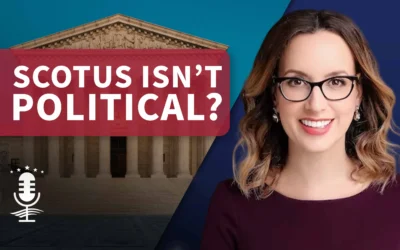
Is the Supreme Court as political as we think? | Sarah Isgur
The U.S. Supreme Court is often portrayed as just another political battleground. But that is a fundamental misunderstanding of its role.
Sutherland Institute releases AI data center research in new series on technology policy
As demand for AI and digital services grows, data centers are becoming increasingly important to economic competitiveness, national security, and everyday life. The report cautions against reflexive policymaking.
Connect with Sutherland Institute
Join Our Donor Network
Follow Us
The post The Supreme Court Stands Up for Donor Privacy appeared first on Sutherland Institute.