This article originally appeared in The Detroit News March 10, 2026.
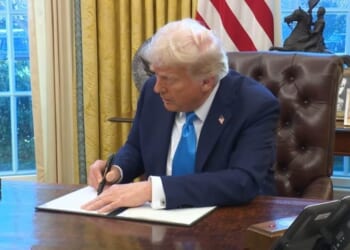
President Donald Trump and Gov. Gretchen Whitmer don’t agree on much. But when courts limited their emergency powers, they responded identically — they looked for another statute and kept going.
Trump declared two national emergencies in 2025: the flow of illegal drugs across the border and the hollowing out of American manufacturing. He relied on the International Emergency Economic Powers Act to impose tariffs on dozens of countries.
Several companies and 12 states sued. The U.S. Supreme Court, led by Chief Justice John Roberts, held that the IEEPA does not authorize a president to impose tariffs and struck down Trump’s emergency tariffs.
Trump’s response to the tariff ruling echoes Whitmer’s management of the COVID-19 pandemic. Both took aggressive action by relying on an emergency statute. Both were rebuked by the courts. Both responded with sharp criticism. Both pivoted, pursuing their goals by using different laws. These episodes should prompt lawmakers to think twice when delegating sweeping authority to the executive branch.
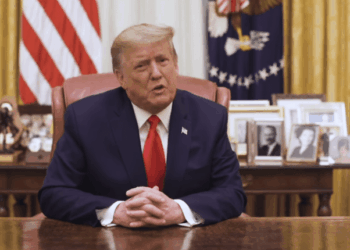
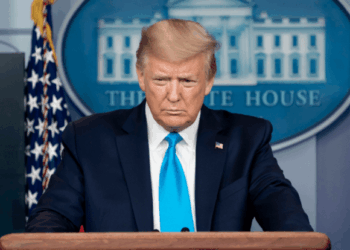
Trump dressed down the court, calling the ruling “deeply disappointing” and “an embarrassment.” Undeterred, Trump pivoted to other tariff laws to pursue his economic agenda.
Scott Lincicome analyzes trade policy for the Cato Institute, and he told me Trump will likely impose other tariffs. Congress has delegated numerous tariff decisions to the president, giving Trump many options even without the IEEPA.
It all sounds familiar, doesn’t it? The coronavirus was detected in Michigan in March 2020. Whitmer declared a state of emergency and then issued nearly 200 executive orders over several months. Little in society was spared her emergency pen. The governor regulated office buildings, grocery stores, restaurants, public schools, medical procedures and travel.
Everyone agreed the governor could initiate an emergency. The question was, who could end it? Whitmer said she could keep an emergency going indefinitely.
Three medical centers sued, with help from the Mackinac Center Legal Foundation. In a landmark decision on October 2, 2020, the Michigan Supreme Court ruled that Whitmer had acted without legislative approval and that her ongoing emergency was illegal. The court nullified a wide swath of her executive orders.
Whitmer condemned the state Supreme Court. “I vehemently disagree with the court’s interpretation of the Michigan Constitution,” she said.
Whitmer implied that checks and balances are irrelevant in a pandemic. “COVID-19 does not care about a court order. COVID-19 does not care about a legislative calendar,” she said.
Days later, the Michigan Department of Health and Human Services issued new COVID-19 orders, including mask mandates and limits on gatherings. A month later MDHHS closed high schools and colleges. Whitmer and her agencies were able to sidestep the court’s ruling by relying on other statutes. In fact, there are 30 laws that give the governor and other state officials emergency powers.
In an attempt to reclaim some of the authority they had delegated, Michigan lawmakers sent eight bills that limited emergency laws to Whitmer’s desk in 2022. She vetoed those bills, leaving the broad emergency framework intact.
Emergencies will happen, which is why emergency laws allow governors to react quickly. Policymakers must consider guardrails on emergency powers, such as time limits on emergency declarations or requiring legislative oversight. If a legislature delegates too much authority to the executive branch, it enables a governor to act unilaterally, which is what happened with Whitmer’s lockdowns.
Executive overreach is a problem. But so is legislative abdication.