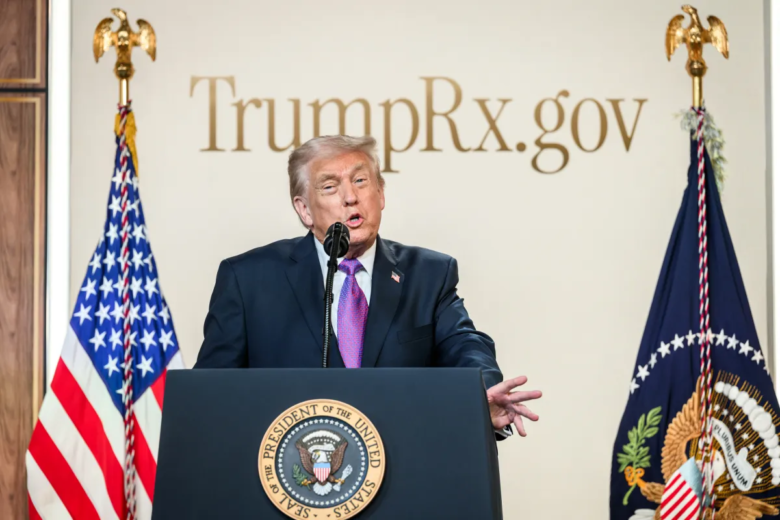
TrumpRx.gov is not just a remarkable achievement in President Trump’s efforts to make prescription drugs affordable; it has sparked a transformative chain reaction that stands to strengthen the nation’s economy and drive prosperity.
During a recent cabinet meeting, President Trump expressed frustration that mainstream media has largely ignored this pivotal initiative.
“People are calling up, and they’re buying drugs [at TrumpRx] for literally a fraction of the price,” he stated. “But the press doesn’t even want to write stories about it.”
This media negligence is regrettable because TrumpRx provides Americans with the ability to compare medications and purchase them at dramatically reduced prices—eliminating the costly insurance middlemen who have contributed to soaring drug prices for years.
The savings made possible through TrumpRx have been significant, particularly with the addition of 600 new drugs to the platform this month.
For example, Combigan, a medication for glaucoma, now costs just $10 compared to its previous price of $204. Mayzent, prescribed for multiple sclerosis, is down to $42 from an exorbitant $623. Similarly, a Humira pen, used to treat rheumatoid arthritis and Crohn’s disease, is priced at $950 instead of $6,922. And Zeposia, a treatment for ulcerative colitis, now costs $925, vastly reduced from its original price of $9,060.
These examples are just the tip of the iceberg when it comes to the benefits of TrumpRx.
Yet many Americans may not realize that TrumpRx is a cornerstone of a broader pharmaceutical strategy aimed at slashing drug prices while simultaneously revitalizing America’s domestic medical manufacturing sector.
Through negotiations facilitated by the Trump administration, pharmaceutical companies have committed to bringing their manufacturing operations back to the U.S., pledging an investment of hundreds of billions of dollars into domestic facilities.
This shift means more factories, an influx of well-paying manufacturing jobs, and a pharmaceutical supply chain less reliant on geopolitical rivals like China.
Eli Lilly plans to invest a staggering $27 billion in the U.S. and create 3,000 new jobs. Other industry leaders, including Gilead Sciences, Johnson & Johnson, Roche, Novartis, and Bristol Myers Squibb, announced significant investments in manufacturing, research, and development.
Moreover, companies like Novartis, AbbVie, Amgen, Regeneron Pharmaceuticals, and Abbott Laboratories are set to expand their manufacturing capabilities across the U.S., with facilities to rise in states such as New Jersey, Indiana, Illinois, New York, and California.
Pfizer has committed an astounding $70 billion aimed at enhancing U.S. research, development, and capital projects.
The COVID-19 pandemic laid bare the risks ingrained in U.S. reliance on foreign pharmaceuticals, as overseas supply disruptions created critical shortages of essential medications and medical supplies at the most inopportune time.
Several U.S. policymakers called for a decisive pivot towards domestic manufacturing, and President Trump answered that call.
The economic ripple effect of this shift could be enormous.
New pharmaceutical facilities necessitate a workforce that includes construction crews, engineers, suppliers, logistics professionals, and highly skilled manufacturing employees. When communities attract these projects, they typically experience increased housing demand, heightened business investments, and expansive economic growth.
Realtor.com forecasts that Eli Lilly’s investment in Pennsylvania’s Lehigh Valley will “reshape the region’s housing market.”
Sara Worley, Goochland County’s deputy administrator of community and economic development, sees Eli Lilly’s investment in Central Virginia as a tremendous opportunity.
“Each manufacturing job will support multiple positions in other related industries,” Worley told Virginiabusiness.com, referring to new supply chains and retail projects.
TrumpRx’s cost savings are so incredible that frequent Trump critic Mark Cuban recently endorsed the website.
More people are learning about TrumpRx and its many benefits, with over 15 million people having visited the website.
Of course, the mainstream media hasn’t done much to promote the site. Outlets that do mention TrumpRx often either spread misinformation about it or try to obstruct it outright. Thankfully, however, this is the 21st century, and alternative media channels are ensuring the word spreads.
As more Americans learn about the platform and the manufacturing investments surrounding it, TrumpRx could become one of the administration’s most politically potent affordability initiatives heading into the midterms.
The website is not only making America healthy again; it’s also working to make the economy great again.
Promises made. Promises kept.
Agree/Disagree with the author(s)? Let them know in the comments below and be heard by 10’s of thousands of CDN readers each day!