History’s winning formula is clear: Reject proportionality, embrace decisive force, and see the mullahs’ grip weaken.
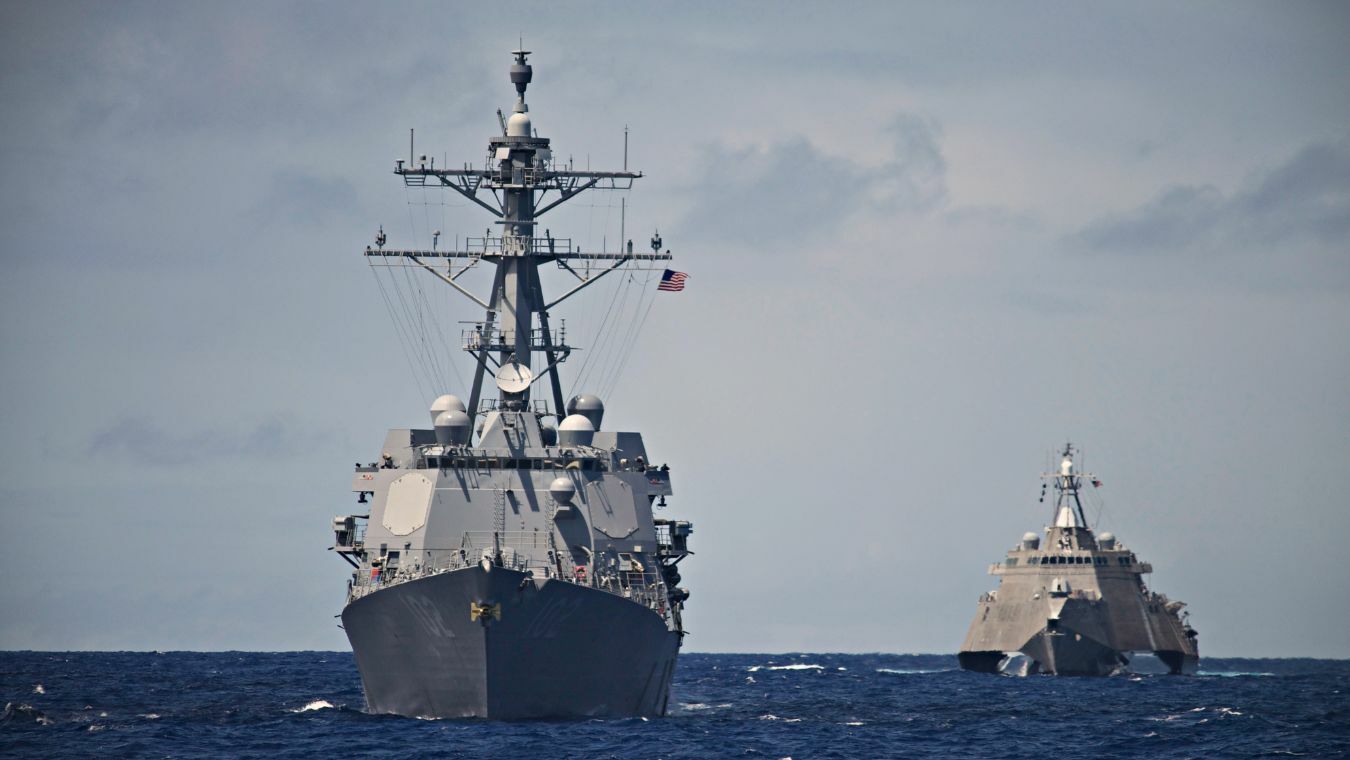
As the United States Navy enforces a full blockade of Iranian ports and conducts minesweeping operations in the Strait of Hormuz, the lessons of 1987 and 1988 are once again proving their worth. I know, because I participated in the Pentagon basement war games that shaped Operation Praying Mantis in 1988, which became America’s largest Navy surface engagement since World War II.
In March 1987, as Iran attacked shipping in the Persian Gulf during the Tanker War, Kuwait sought U.S. protection for its oil tankers. President Ronald Reagan ordered them reflagged under Operation Earnest Will.
Before the first convoy sailed, two-week-long war games tested responses to Iranian provocations. I served on the Green team as a young Reagan appointee, modeling a robust, military-centric reaction. The Blue team pursued a restrained, “proportional response” approach favored by the foreign policy “Blob.”
The outcomes were clear: The Green team’s decisive posture resulted in roughly 50 American dead, wounded, or captured. The Blue team’s tentative path allowed Iran to control escalation, producing some 1,500 American casualties.
When an Iranian mine nearly sank the USS Samuel B. Roberts in April 1988, the Reagan administration chose the Green team concept. Four days later, U.S. forces destroyed two Iranian oil platforms used for command and control, sank a frigate and gunboat, crippled another frigate, and eliminated armed speedboats. Iranian losses totaled 56 dead. American losses were limited to two Marines in a helicopter accident. The operation helped drive Iran to the peace table.
That history resonates powerfully today. After months of Iranian interference and claimed mining, the U.S. is applying overwhelming force to reopen the Strait — through which roughly 20 percent of global oil and LNG passes. This isn’t tit for tat. It is a decisive response that allows the U.S. to seize the initiative.
Proportional response is a dangerous trap. It cedes the initiative to the enemy. Iran’s death cult mullahs excel at calibrated gray-zone attacks through proxies, daring the West to reply in kind. The limited strikes of the past barely scratched Tehran, allowing it to escalate on its terms. The Blue team’s high-casualty scenario illustrated the peril: When the weaker side sets the tempo, costs mount for America.
Recent events confirm the pattern. U.S. and Israeli strikes under Operation Epic Fury demonstrated how overwhelming force keeps the enemy off balance and prevents a truly large, destructive Iranian response. The joint campaign — launched with precision against leadership, missile, naval, and industrial targets — dismantled Iran’s conventional capabilities in weeks, not months.
By maintaining relentless pressure, American and Israeli forces denied Iran the breathing room to coordinate a massive retaliation, forcing a ceasefire on terms favorable to the U.S. and its allies. Epic Fury validated the Green team principle: Hit hard, hit fast, and dictate the fight.
The current blockade and minesweeping operations extend that logic to the economic domain. Oil is the regime’s lifeblood, funding the IRGC, proxies, missiles, and nuclear ambitions. Even under sanctions, crude exports have sustained much of the government’s hard currency earnings. Every barrel originating in Iran that’s blocked by American warships starves the corrupt theocracy of revenue needed to pay loyalists, buy influence, and cling to power. The remnant regime — already battered by internal dissent and prior setbacks — cannot survive indefinitely on printed rial banknotes and propaganda. Shutting this spigot accelerates its collapse.
Critics warn of escalation and civilian costs. They overlook that decades of alternating appeasement and proportional half-measures have already escalated conflict on Iran’s schedule, at the price of American lives. Overwhelming force concludes it swiftly on American terms.
Praying Mantis neutralized a significant portion of Iran’s fleet in a day. Epic Fury crushed broader capabilities while limiting Tehran’s ability to strike back effectively. The ongoing naval operation will build on that success by targeting the regime’s financial oxygen.
War-gaming is serious business. Ignoring its lessons — as appeared to occur under policies favoring restraint against Iran and its proxies — is perilous. The Reagan administration took heed in 1988. The Trump administration is applying those same principles now, as seen by Epic Fury’s results. The outcome will be fewer American casualties, more secure energy lanes, and a weakened theocracy unable to sustain regional terror.
The Strait of Hormuz tests American resolve. History’s winning formula is clear: Reject proportionality, embrace decisive force, and see the mullahs’ grip weaken.