President Donald Trump’s new 2026 Counterterrorism Strategy makes one thing unmistakably clear: The threats facing the United States are no longer confined to distant battlefields overseas. They are here—at our border, inside our institutions, and increasingly imbedded within transnational networks operating across the homeland.
The strategy identifies three principal threats: “narcoterrorists and transnational gangs, legacy Islamist terrorists, and violent extremist movements operating domestically.”
No state is better positioned to support this national security agenda than Texas.
For years, Texas has demonstrated that states not only can lead on homeland defense, but that they possess both the constitutional authority and operational capability to do so when federal leadership falls short.
Operation Lone Star proved exactly that.
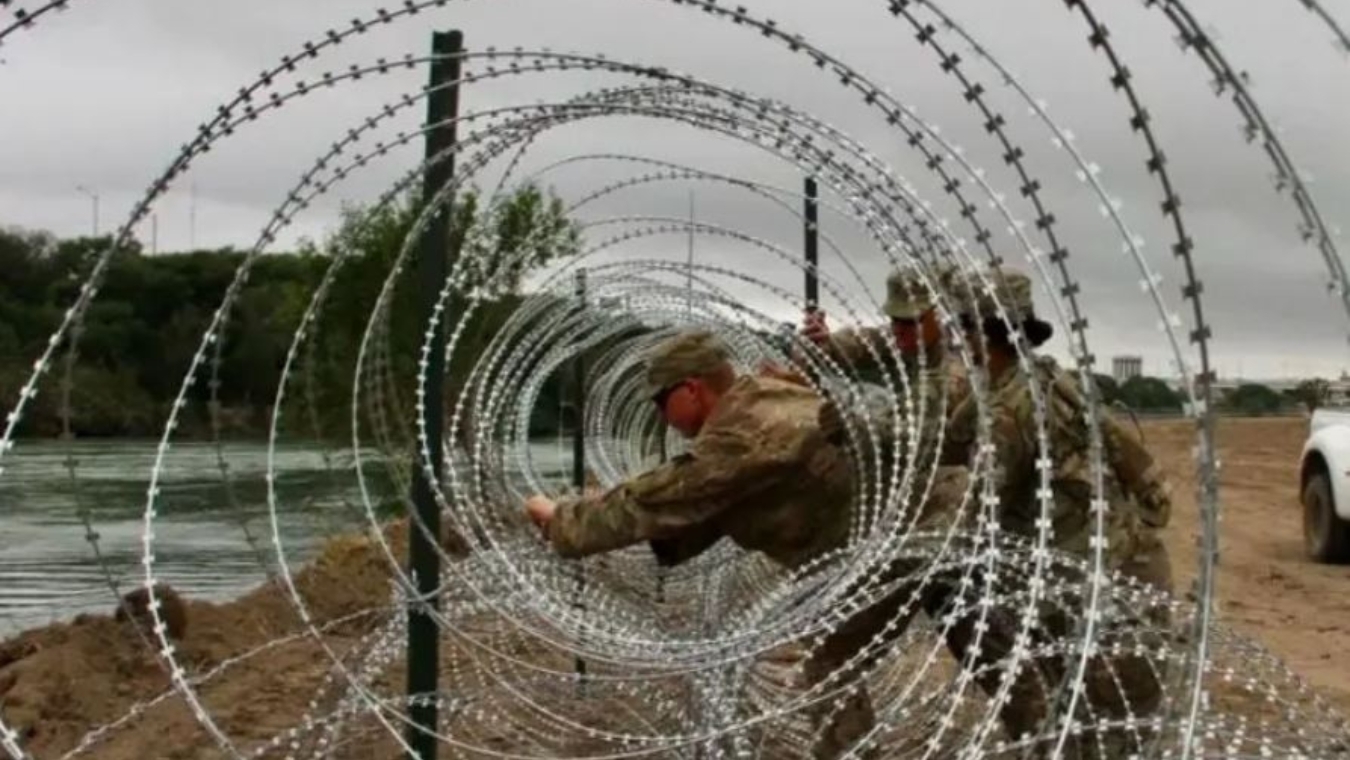
During the Biden administration’s border crisis, Texas stepped forward to defend its communities amid unprecedented cartel activity, mass illegal crossings, and expanding transnational criminal operations. While Washington debated, Texas acted. The state deployed personnel, resources, intelligence capabilities, and law enforcement coordination to address a crisis that had evolved far beyond immigration enforcement.
As former U.S. Border Patrol agent and Texas Public Policy Foundation Senior Fellow Ammon Blair wrote in his Texas Homeland Defense report:
“The necessity of a permanent, state-controlled homeland security framework is not only a response to contemporary security challenges but also a reaffirmation of foundational constitutional principles. Texas’s ability to safeguard its citizens against transnational threats requires a security apparatus that is both proactive and independent, capable of functioning within or beyond the scope of federal assistance.”
That framework is increasingly necessary because America’s adversaries are no longer relying solely on traditional military confrontation. Foreign hostile actors and extremist movements increasingly use soft power, ideological influence, economic entanglement, and institutional penetration to undermine American society from within.
Texas is not immune. In a recent investigation into foreign influence operations connected to higher education, TPPF’s Kate Bierly highlighted how Texas A&M University’s Qatar campus, financed through a partnership with the Qatari government, was not actually closing as publicly portrayed, but instead being absorbed into a new Qatari-controlled institution. The case serves as a reminder that hostile or adversarial foreign influence does not always arrive through espionage or terrorism; it often enters through partnerships, funding arrangements, and institutional relationships that can shape American interests from within.
At the same time, the convergence between cartel operations, foreign adversaries, and extremist networks continues to deepen.
Writing in Fox News, Blair warned:
“The southern border is no longer just an immigration or law-enforcement issue. It has become a strategic access point into the U.S. homeland, where transnational networks exploit gaps in ways resembling irregular warfare environments. Inside the country, this expands beyond crime into homeland defense and critical infrastructure concerns.”
That assessment should fundamentally reshape how policymakers view security in Texas. This is no longer simply a border debate; it is a homeland defense challenge, and Texas does not need to wait for Washington. We already possess tools that can be strengthened, expanded, and permanently institutionalized during the next legislative session.
That is why the Texas Public Policy Foundation is launching a comprehensive policy agenda focused on defending Texas institutions, infrastructure, and communities from hostile foreign influence and extremist subversion.
The agenda includes measures to strengthen critical infrastructure protections, expand anti-terrorism and organizational designation authorities, and eliminate hostile foreign influence within Texas educational institutions. It also strengthens penalties prohibiting plural, underage, and relative marriages while enhancing state-level homeland security coordination.
Just as importantly, Texas must continue developing permanent internal defense capabilities that can respond to modern asymmetric threats. These measures would help establish a comprehensive framework to protect Texas from subversion, lawlessness, foreign adversaries, terrorist organizations, and transnational criminal networks while safeguarding the state’s people, infrastructure, and economic stability.
The U.S. Constitution does not require states to remain passive while transnational threats exploit vulnerabilities inside their borders. Instead, we have both the authority and obligation to protect our citizens when national security threats impact public safety, infrastructure, and order.
For now, Texas has a willing partner in Washington. The Trump administration has correctly recognized that counterterrorism policy must address not only foreign battlefields, but also the vulnerabilities inside the American homeland. Washington’s priorities will always shift with election cycles, but the threats that Texas faces will remain.
That is why Texas must seize this moment — not merely to assist federal policy, but to permanently strengthen and institutionalize our own homeland defense capabilities for generations to come.
Texas has an opportunity not just to respond to modern threats, but to lead the nation in confronting them.