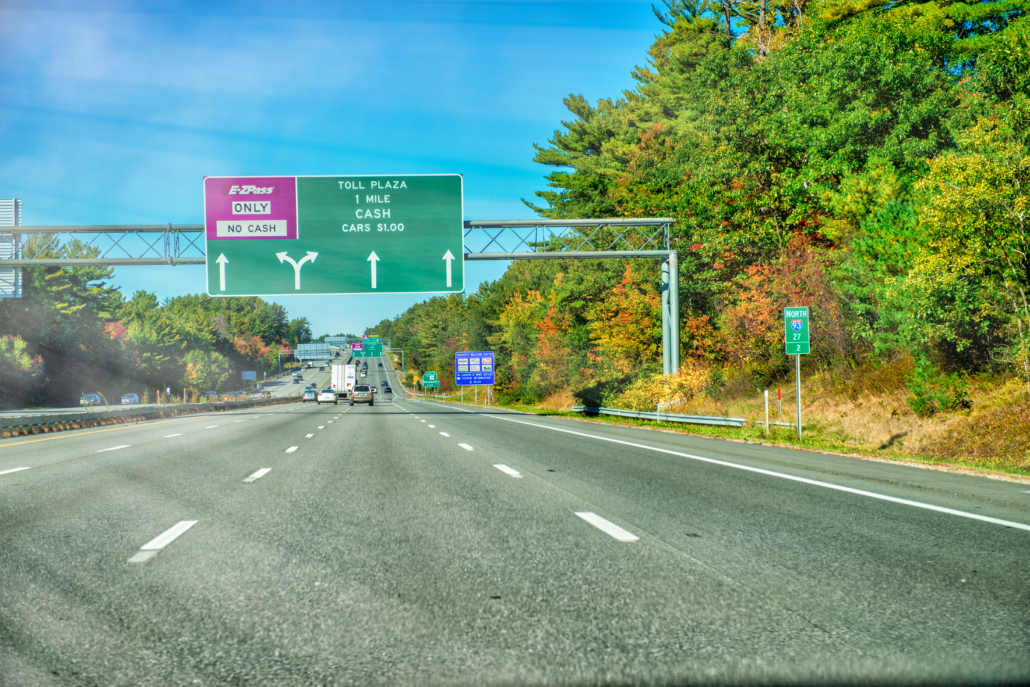
The New Hampshire Turnpike System facilitates tourism and commuting in the Granite State. The three toll roads slash travel times in key corridors, which improves quality of life and helps the state’s economy grow.
Turnpike users pay a small fee for the convenience of using these roads vs. more congested and slower local roads, essentially trading cash for time.
Time, however, gets its revenge. Over the years, inflation eats away at the value of the toll. New Hampshire’s tolls, low by regional standards, haven’t been increased since 2007.
The state charges different rates for different types of vehicles, but for a regular passenger car the E-ZPass rate ranges from a low of 53 cents in Dover to 70 cents in Hooksett and Bedford to $1.40 in Hampton.
Adjusted for inflation, the 53-cent rate would be 85 cents today, the 70-cent rate would be $1.12, and the $1.40 rate would be $2.24.
The flat rates over time would be fine if construction costs and employee compensation had remained the same as well, or if traffic volume increased steadily so that revenues always remained well ahead of costs.
But that is not the case.
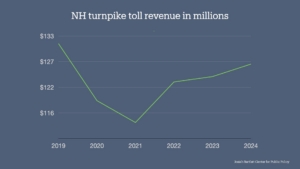
Turnpike revenues peaked in 2019.
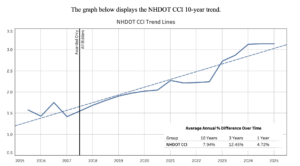
Meanwhile, road construction costs have skyrocketed. Below is the state Department of Transportation’s chart tracking its own highway construction cost inflation.
In 2022, the state removed the toll booths in Merrimack, which had been a burden on Merrimack commuters. That relief contributed a small hit to turnpike revenues after the large drop caused by the COVID-19 pandemic.
Senate Bill 627, approved on Thursday, would raise additional turnpike revenue by increasing fees for out-of-state drivers only. This is already common practice in several Northeastern states.
New York charges out-of-state drivers the higher cash rate (vs the E-ZPass rate).
Massachusetts charges significantly higher rates for out-of-state drivers, as does Maine. The Maine cash prices can be more than 400% higher than the in-state E-ZPass prices.
By charging out-of-state drivers the same low rate it charges in-state drivers, the New Hampshire Turnpike System is effectively subsidizing non-resident drivers.
Maine, Massachusetts and New York do not do this. The E-ZPass rate for a Maine resident to take the turnpike from York to Wells, a half-hour drive, is 95 cents. The rate for a New Hampshire driver is $4.
SB 627 would end this subsidy and raise tolls only on drivers who don’t have a New Hampshire-based E-ZPass.
Fears of a negative effect on tourism seem overblown considering that SB 627 would put out-of-state tolls in line with, and often lower than, rates drivers are already accustomed to paying throughout the Northeast.
It seems unlikely that a Massachusetts vacationer would choose the Berkshires over the Lakes Region because of a $2 Hooksett toll when the resident rate from Boston to Springfield is $5.
A far greater threat to New Hampshire tourism would be the deterioration of state turnpikes.
The toll increases in SB 627 are large in percentage terms, but that’s because our tolls have not increased in 19 years. The final toll rate would remain highly competitive within the Northeast. Out-of-state drivers are accustomed to paying similar or much higher rates even to drive within their own states.
Toll increases that reduce tourism and damage the economy should be avoided. The increases proposed here are highly unlikely to have either outcome. Instead, they would help reduce the effects of two decades’ worth of inflation and end the state’s toll subsidy for out-of-state drivers.