For the last two legislative sessions, certification and attrition have dominated the teacher pipeline discussion, but if legislators wish to ensure a sufficient supply of effective teachers in Texas classrooms, they must reform the root of the problem, university schools of education.
To say that the teaching profession has been in upheaval for the better part of a decade is an understatement. COVID-19 brought unparalleled disruption to public schooling, and the stress and dissatisfaction of teachers was reflected in the rate at which they left the teaching profession. Texas schools also experienced a breakdown in discipline, resulting in multiple assaults and serious injuries.
These conditions culminated in yet another catastrophe, the teacher certification crisis. In 2021, about 4% of teachers were uncertified, but, by 2025, nearly 12% of all teachers were uncertified.
The Texas Legislature tackled both of these problems in the 2025 session, providing more options and stricter standards for school discipline, and giving schools a deadline to phase out uncertified teachers.
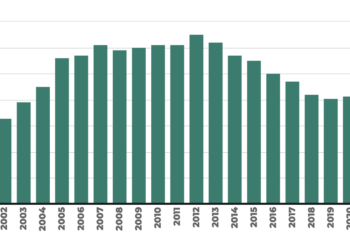
This upheaval, though, has obscured the true crisis facing the Texas teaching profession. Since 2015, the number of newly certified teachers has declined by 30%. The number of new teachers coming from university preparation programs has dropped by 36% over that time. That’s more than 3,000 missing university-trained teachers a year.
The lack of enthusiasm for the teaching profession is easy to explain. Teachers face a lack of support from administration while standards for order and student achievement race to the bottom. Teachers spend 12 hours a week preparing instructional materials for their classes while their superintendents decry the loss of autonomy from using the state-supplied open-education resources.
The ISDs don’t deserve all the credit, though. The university preparation programs themselves have set up teachers to fail by jettisoning effective training for ideology and abstract theory.
Schools of education are obsessed with special populations. If you attend Texas State University and wish to receive a teaching certificate for early childhood through 6th grade, your options are a specialization in bilingual education or special education, and up to a quarter of your classes will concern “diversity.” The course descriptions, as well as reports by recent graduates, suggest that these classes are less about training teachers on how to help students overcome their disadvantages and more about why these disadvantages are the result of an intolerant society.
This is a running theme in many school of education courses. Their goal is not to train student-teachers how to be effective teachers but to convert them into ideological foot soldiers. Consider these courses from schools of education in Texas universities:
- Texas State University – “Education and Equity in a Diverse Society”
- “will examine elementary education from a sociocultural, sociopolitical, and sociohistorical lens to reveal the need for equity in the current American schooling system.”
- University of North Texas – “Teaching as Advocacy for Equity”
- “Focuses on structures and educational inequality, as they relate to race, class, and gender…and teaching as a form of intervention in these processes.”
- University of Texas at Austin – All-Level Special Education Bachelor’s program
- “become an advocate;” “adopt the values of social-emotional learning and infuse it into your curriculum;” and “learn about the importance of creating inclusive classrooms.”
Teacher training should revolve around effective instruction techniques, not adherence to political slogans. This is an overlooked aspect of the decline of the teacher pipeline. Anyone who is to the right of Mao or even just not very political is walking into a hostile environment in the current day school of education. One recent University of Texas at Austin graduate described the program as a “dark place” where they and other students had to walk on eggshells to avoid provoking both professors and fellow students.
The Texas Legislature has limited direct control over university programs, but it can influence what they teach by changing the requirements for an educator preparation program (EPP) that awards certification. The Legislature should make these changes to Chapter 21 of the Education Code:
- Require that EPPs cover relevant topics mandated by the statute, such as the Constitution and the history of communist atrocities.
- Require the EPPs provide in the classroom experience beginning the first semester of the program.
- Require that EPPs instruct students how to use Bluebonnet curriculum and require that participating schools use Bluebonnet for the student-teacher practicum.
- Require instruction in science of learning principles such as working memory, cognitive load, prior knowledge activation, and metacognition.
These requirements will ensure that students enrolled in educator preparation programs will have contact with these vital topics and hopefully crowd out some of the dreck.