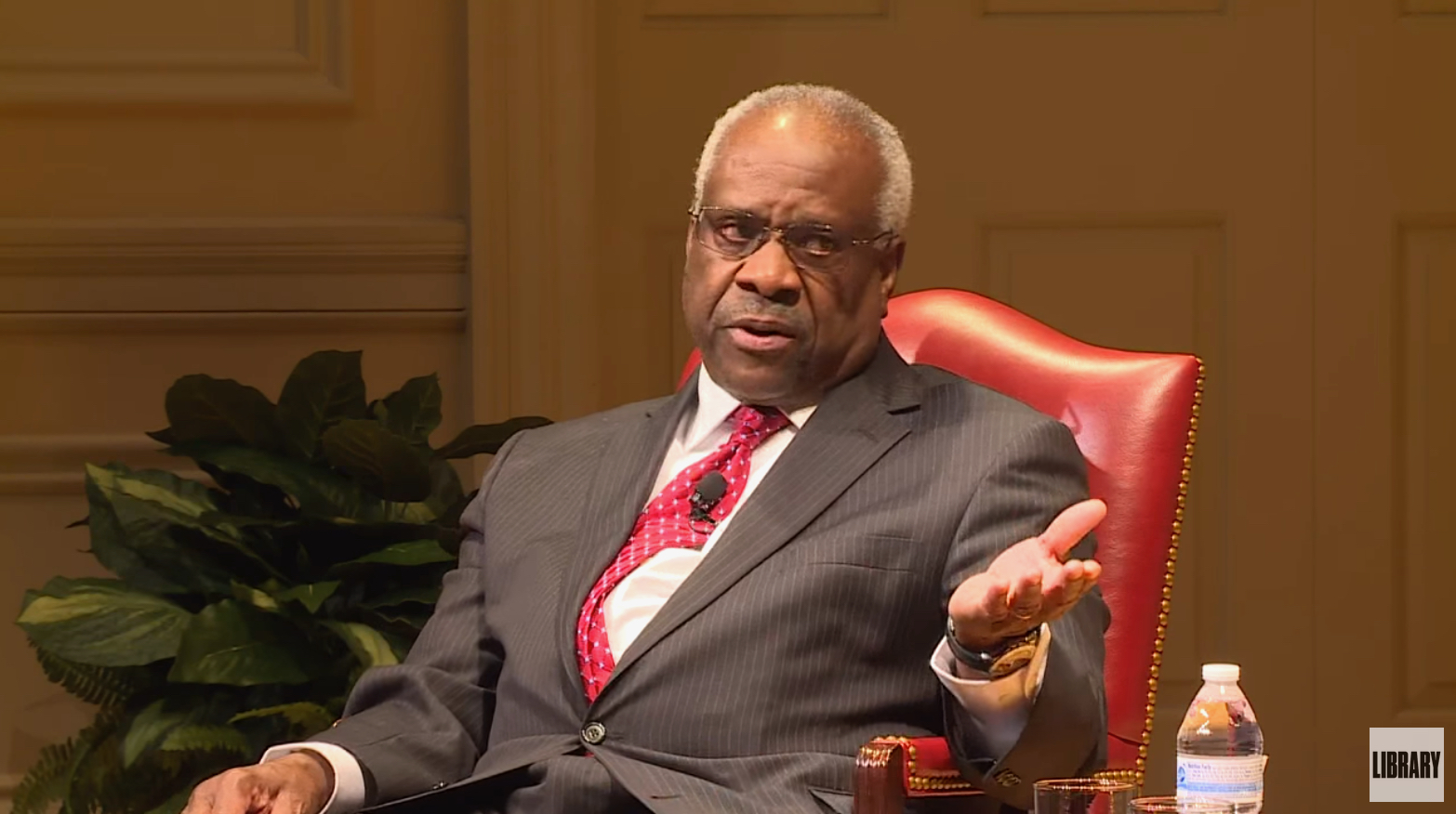
Yuval Levin assesses US Supreme Court Justice Clarence Thomas’ recent Texas speech honoring America’s milestone birthday.
Thomas criticizes the counter-constitutional ideas of some of the original progressives, particularly as embodied by Woodrow Wilson. He’s right about those, and I think his critics (who can’t really deny what he says about Wilson) are wrong to see that critique as simply on attack on the contemporary left. The people who call themselves progressives now are actually much less coherent in their views than Wilson was. They probably don’t have a worked out constitutional (or counter-constitutional) vision at all, and so it isn’t really clear if they’re wrong in the way that Woodrow Wilson was or not, and Justice Thomas doesn’t really speak to that question one way or another. He criticizes opponents of the fundamental premises of the American political tradition. There are certainly some such opponents on today’s left, but there are also more than there used to be on the right, and I take Thomas to be answering all of them.
But above all, he addresses himself to people who accept those premises of the American tradition. To those who agree that we are all created equal but fail to see what demands that makes on them, he argues that we should never underestimate how demanding our national ethos always is, and should never imagine that it doesn’t require our defense of it.
And to those who agree that we are all created equal but insist that the American founders and the government they constructed did not really share that commitment in practice, Thomas insists that they are wrong to see the tension between principle and practice as a debilitating hypocrisy. On the contrary, he says, that tension turned out to be an inextinguishable wellspring of political energy for positive change. …
… This is really the theme of his lecture: the necessity of courage moved by devotion. And it is at the core of what he implores Americans to remember in this 250th year of our nation’s life.