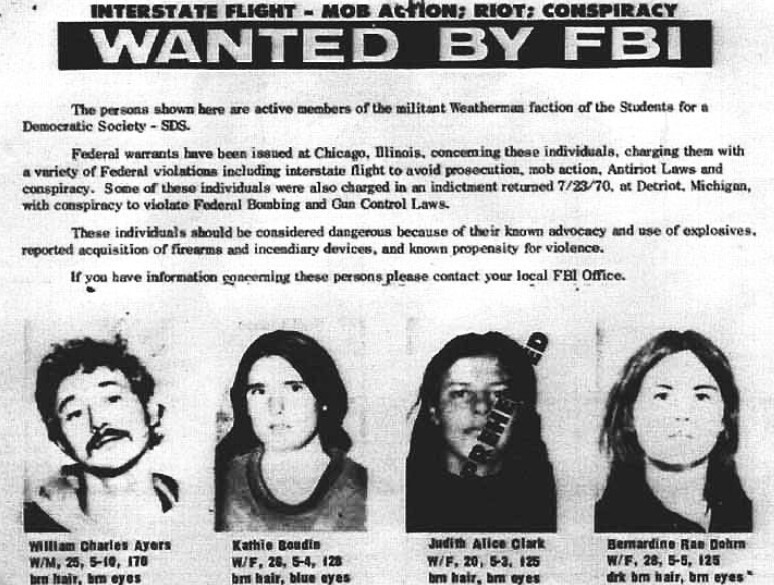
Cover photo: FBI photo of Bill Ayers during his time as a leader of the Weather Underground. Ayers, who participated in bombings targeting government buildings, later became a prominent education professor and Vice President of Curriculum Studies for the American Educational Research Association (AERA).
Modern education schools have abandoned the pursuit of truth, producing mediocrity and politicization instead. Certified teachers show no meaningful difference in student outcomes compared to uncertified teachers, proving that the century-long experiment has failed.
Key points:
- For most of Western history, education aimed to pursue truth, goodness, and beauty through the liberal arts, forming independent thinkers and citizens capable of self-governance in a free republic.
- Modern education schools have adopted a philosophy fundamentally incompatible with the true purpose of education and, therefore, must be abolished.
- Modern education schools prioritize politicization, critical theory, and DEI over rigor. They feature low admission standards, weak GRE scores, and rampant grade inflation.
- The credential is worthless. After 150 studies spanning 50 years, there is no persuasive evidence that certified teachers outperform uncertified ones. The master’s degree in education—the field’s central product—has no measurable effect on student achievement.
- Tellingly, the universities have always known. The first to sound the alarm were the administrators who institutionalized these schools in the first place—a self-indictment the field has spent a century ignoring.
“[Harvard’s school of education is] a kitten that ought to be drowned.” —A. Lawrence Lowell, on Harvard’s Graduate School of Education (1933)
Executive Summary
The purpose of education has been clear for most of Western history: the pursuit of the good, the true, and the beautiful. From Socrates and Plato through the classical liberal arts tradition, education was designed to cultivate independent thinkers, morally capable citizens, and public-spirited leaders equipped for self-governance in a free republic. This mission found institutional expression in a rigorous core curriculum of the arts and sciences, centered on the Great Books and the intellectual foundations of the American constitutional order. A teacher’s primary role was that of subject-matter expert and intellectual guide, building students’ content knowledge as the essential foundation for strong reading, problem-solving, and civic virtue (NCTQ, 2023).
Schools of education are university-based institutions that prepare K-12 teachers, principals, and superintendents. They evolved from 19th-century “normal schools,” which were practical, two-year programs that reviewed elementary subject matter and basic teaching technique, into full graduate schools within research universities by the early 20th century. To gain academic legitimacy, they reframed teaching as a “science of education,” but Progressive Era reformers such as John Dewey shifted the focus from mastery of established knowledge to child-centered “experiences,” social reform, and the rejection of traditional methods as elitist. Later waves of critical pedagogy, rooted in neo-Marxist cultural theory (e.g., Gramsci, the Frankfurt School, Paulo Freire), redefined classrooms as sites of political liberation rather than neutral instruction. “Critical theory” supplanted critical thinking, DEI frameworks replaced merit and equal opportunity, and pedagogy divorced from content knowledge became the dominant paradigm.
Modern education schools are not merely flawed but are fundamentally incompatible with education’s true purpose. They promote mediocrity, politicization, and research divorced from classroom practice. Admission standards remain notoriously low: education majors consistently post the lowest GRE scores of any major field, with mean scores of approximately 148 Verbal and 147 Quantitative (ETS data as reported in BestColleges, 2025).
Although grade inflation is rampant across all sectors of American higher education (45-50% of all college grades nationwide today are A’s, up from 15% in the early 60s), education schools are guilty of the worst inflation—the percentage of A’s awarded in education schools nationwide is 70%. At Harvard, for example, the flat letter grade of A reached 60% of all undergraduate grades by 2025 (Harvard Magazine, 2026).
The most conclusive evidence of failure is that the central product of education schools—a state certification and master’s degree in education—has no measurable positive effect on student achievement. After reviewing roughly 150 studies spanning 50 years, the Abell Foundation’s landmark 2001 report Teacher Certification Reconsidered concluded there is “no persuasive evidence” that certified teachers outperform uncertified ones in the vast majority of subjects and grade levels, with the sole consistent exception being secondary mathematics content knowledge (Walsh, 2001). A major New York City study using detailed student-level data reached the same conclusion: traditionally certified teachers performed no differently from uncertified teachers or those entering through alternative pathways (Kane et al., 2008).
The century-long experiment of education schools has utterly failed. Education schools must be dismantled entirely to restore education’s true purpose. There is no viable path to internal reform; the institutions are built on premises antithetical to truth-seeking and intellectual rigor. The solution is a return to the pre-university model that produced a highly literate American public in the 19th century: rigorous subject-matter bachelor’s degrees (e.g., history, literature, biology, mathematics) followed by focused, apprenticeship-style practicums under master teachers. Content mastery and demonstrated teaching ability, not ideological credentials, should determine hiring. Failure to act will compound the damage already inflicted on generations of students. Continued erosion of reading and math proficiency and civic literacy is the predictable outcome of an ideological monopoly that has prioritized activism over achievement. Dismantling the schools of education is the necessary first step toward an education system worthy of a free society.
University leaders have long recognized the problem: in 1921, Harvard President A. Lawrence Lowell famously described his own Graduate School of Education as “a kitten that ought to be drowned” (Cremin, 1978).
Defining the Purpose of Education
“Our schools of education are appalling.” – Rita Kramer, Ed School Follies, 1991, after visiting 14 ed schools across the country
Before evaluating the performance of modern education schools, it is necessary to first ask, “What is the purpose of education?” Success metrics cannot be discussed until success is clearly understood. For Aristotle, to understand something fully means knowing its four causes: the material, the formal, the efficient, and the final. The final cause is the most important because it answers the ultimate question of why something exists, which gives meaning to understanding all other causes. The purpose of education must be defined before institutions responsible for training teachers, principals, and superintendents can be evaluated.
For most of Western history, the final cause of education was clearly defined. Beginning with Socrates, the purpose of education was the pursuit of the knowledge of the good, the true, and the beautiful, designed to produce independent thinkers, public-spirited leaders, and a citizenry morally capable of exercising self-governance (Plato, trans. 1992, 376c–403c; 503b–521c). At the institutional level, this took form in liberal education, offered through a required core curriculum in the arts and sciences with a focus on the Great Books. Allan Bloom (1987) argued in The Closing of the American Mind that this curriculum was essential for the “nurtured soul” because it connected students to enduring questions about truth, virtue, and human flourishing. The classical tradition understood education as essential not only to the formation of the individual soul, but also to the preservation of a free political order. In a democratic republic, education is—in addition to preparation for employment—the training ground for citizens and leaders (McDonnell, 2000). The stability of a free society depends upon a shared understanding of and a commitment to its moral, political, and philosophical foundations. A high-quality American education, therefore, introduces students to the intellectual antecedents of the United States Constitution and the debates surrounding it.
Delivering this kind of education requires capable teachers. A teacher is first and foremost a subject-matter expert. As the National Council on Teacher Quality (NCTQ) explains, “building students’ content knowledge—knowledge about the natural and human world—is a critical linchpin” for developing strong readers and problem solvers (NCTQ, 2023). In other words, strong reading comprehension and problem-solving depend on a foundation of content knowledge. The teacher serves as an intellectual guide, leading students toward truth through reason.
However, this understanding of education is rejected by modern education theorists. Today’s education theorists would likely be no less confused by Socrates’ description of liberal education than if they were reading his words in the original Attic Greek. Instead of pursuing truth and cultivating the soul, today’s education theorists often argue that learning should be driven by “authentic, real‑world experiences” and personal meaning, suggesting that traditional methods such as memorization are outdated, which enabled “the adopting of failed techniques such as whole language to teach reading” (Maranto, 2024). They assume academic rigor is elitist and therefore assert that schools should emphasize social justice (Maranto, 2020). Modern education schools have adopted a philosophy fundamentally incompatible with the true purpose of education and, therefore, must be abolished.
While the case for abolition is, as will be shown, strong, abolition alone is not the answer. Even with education schools happily departed, if the ed schools’ maladies—moral relativism, historicism, and left-wing ideology—persist throughout the college degree offerings, little will have been accomplished. Therefore, while abolition is the indispensable first step, it is not a panacea. More work must be done.
Anatomy of a Failure: Historical Origins and Evolution of Education Schools
“Anyone interested in the schooling of our children should be aware of the ideological indoctrinations that our prospective teachers are required to undergo” – E.D. Hirsch
Teacher preparation in the United States began outside of universities. During the 19th century, the rapid expansion of the common school system created a demand for trained teachers. Common schools were public elementary schools intended to educate the general public. To meet this need, states established normal schools, whose purpose was to prepare teachers for the common schools. Normal schools were training centers. Their curriculum focused exclusively on mastering the subjects taught in elementary schools. As Lawrence A. Cremin (1965) states, “the early normal schools were essentially technical schools; their purpose was to review the common-school subjects and to provide some instruction in the art of teaching them.” These programs were typically two years long. This model successfully met the needs of the 19th-century education system. Teachers received instruction in the same body of knowledge they were expected to teach, and pedagogy was something they learned on the fly in the classroom. During this time, the population was highly literate despite being largely rural and diverse. According to Jay Schalin, schools during this period shared a common mission: “The goals of elementary education were the same everywhere in the country—to prepare children for participation in a democracy and free market economy as rapidly as possible. Instilling discipline and character were paramount…there was great reverence for the past, especially the classical Greek and Roman periods” (Schalin, 2019).
Beginning in the late 19th century, teacher training programs began migrating into universities. Between 1860 and 1910, departments of pedagogy evolved into schools of education within major universities. Instead of only preparing elementary teachers, they began training secondary teachers, administrators, and superintendents. To justify their place within research universities, education programs underwent a “fundamental shift in conception: from the ‘art of teaching’ to the ‘science of education’” (Cremin, 1965). They had an ambiguous role inside the university. David Labaree (2004) later described schools of education as “the low-status, service-oriented, soft underbelly of the modern university,” pulled between competing goals of preparing teachers and conducting research.
The early 20th-century Progressive Era dramatically reshaped the intellectual direction of schools of education. Progressive social reformers such as John Dewey, whose educational philosophy later converged with and influenced neo-Marxist critical pedagogy (1916), from the Teachers College at Columbia University, viewed education as a mechanism for social reform. Traditional methods such as memorization, recitation, and a rigorous study of classical subjects were viewed as “elitist.” Dewey promoted child-centered education, which focused on students’ interests to guide their education. Dewey argues that education should emerge from lived experiences rather than from a predetermined body of knowledge (Dewey, 1938). E. D. Hirsch contends that the institutionalization of progressive ideas in schools of education fundamentally altered the purpose of schooling. Hirsch argues that American education declined when educators began prioritizing learning processes over factual knowledge. He wrote, “The doctrine that it is more important to learn how to learn than to learn specific facts is a primary cause of the decline in American education” (Hirsch, 1996). Hirsch further criticizes the progressive embrace of child-centered learning as a “Romantic fallacy,” or the belief that intellectual development unfolds naturally if children simply explore their interests. He argues that this approach deprives students of the shared knowledge necessary for literacy and civic participation (Hirsch, 1996).
As schools of education grew during the Progressive Era, their focus shifted primarily to pedagogy instead of subject-matter knowledge. According to Hirsch (1996), emphasizing skills such as “critical thinking” without grounding them in shared knowledge leaves teachers unable to effectively build students’ literacy and understanding of the world.
The Politicization and Radicalization of Education Schools
“Schools should take an active part in directing social change, and share in the construction of a new social order.” — John Dewey, The Later Works (1937)
Following World War I, traditional Marxist predictions of proletarian revolution faltered in the West, prompting a shift toward cultural rather than purely economic strategies for societal transformation. Thinkers such as Antonio Gramsci and Georg Lukács argued that Western cultural resilience prevented the expected uprising. Gramsci’s concept of cultural hegemony posited that ruling classes maintain power through control of language, education, and cultural institutions rather than solely through force. To subvert this, revolutionaries needed to infiltrate and reshape these institutions from within—a strategy later termed the “long march through the institutions.” These ideas found fertile ground in the Frankfurt School, a neo-Marxist group originally based in Germany. After fleeing the Nazis, key figures relocated to the United States, notably to Columbia University. Under Max Horkheimer, the Frankfurt School pivoted from classical economic Marxism to a sweeping critique of Western culture and capitalism, which Horkheimer viewed as inherently productive of social suffering. The working class, they concluded, would not revolt spontaneously; instead, cultural transformation through education and other institutions became the path forward.
This intellectual lineage directly informed the rise of critical pedagogy, which reframed education as a tool for political and social liberation rather than neutral instruction. The foundational text is Paulo Freire’s Pedagogy of the Oppressed (1970). Freire rejected the “banking model” of education, in which teachers deposit knowledge into students, thereby reproducing oppressive power structures and discouraging genuine inquiry into society. In its place, he advocated for “problem-posing” education, in which teachers and students collaboratively interrogate reality, name oppression, and act to transform it. Freire’s work is treated by critical pedagogues as a philosophical blueprint for conscientization (i.e., critical consciousness). Later theorists (such as Peter McLaren) integrated postmodern elements, portraying education as a site for deconstructing dominant narratives and empowering students to challenge power hierarchies. The teacher’s role shifted from knowledge transmitter to facilitator of political awareness and activism. Within schools of education, critical pedagogy rapidly shaped teacher-preparation curricula. Prospective educators were trained to view classrooms primarily as arenas for social critique and liberation rather than academic skill-building. This marked a decisive turn toward ideological capture: teacher training increasingly prioritized political consciousness over content mastery or evidence-based methods.
A crucial distinction must be drawn between critical thinking and critical theory. Critical thinking is the disciplined, evidence-based process of evaluating claims, identifying logical fallacies, and pursuing truth through reason and empirical scrutiny, which are skills essential to any legitimate education. Critical theory, by contrast, originates in the neo-Marxist tradition of the Frankfurt School and demands analysis of all social phenomena through the lens of power, domination, and oppression. It does not seek objective truth but societal transformation, framing society in binary terms of oppressor versus oppressed. From this foundation, derivative frameworks such as critical race theory and gender theory emerged. The two concepts stand in direct opposition: one equips students to question ideas rigorously in service of truth; the other equips them to dismantle institutions in service of an ideological agenda. Schools of education that conflate or substitute the latter for the former have abandoned their core academic mission. This ideological foundation paved the way for the near-total dominance of Diversity, Equity, and Inclusion (DEI) frameworks in schools of education. DEI rhetoric hijacks three ostensibly positive terms and redefines them in ways that undermine merit, freedom, and genuine inclusion. “Diversity,” in practice, often functions as an anti-merit imperative, leading institutions to discourage or ban language such as “meritocracy,” “color-blind,” “best qualified,” and “good fit” in hiring and admissions materials. “Equity” is redefined as engineered equal outcomes rather than equal opportunity—an approach antithetical to the American constitutional tradition. As James Madison recognized in Federalist No. 10 (1787), free individuals with differing talents, opinions, and efforts will naturally produce unequal results; forcing equal outcomes requires coercive state power incompatible with liberty.
“Inclusion,” meanwhile, extends only to those who affirm DEI orthodoxies, thereby rendering dissenters unwelcome.
These DEI ideologies are antithetical to the constitutional order and corrosive to the future of American children. Teachers trained under this regime carry its assumptions into K-12 classrooms, producing generations less equipped for rigorous learning and more primed for ideological conflict. The question is whether this is the educational inheritance we wish to pass on to the next generation. DEI’s practical manifestations in schools of education are concrete and damaging. One prominent vector is the incorporation of materials like the 1619 Project into social studies teacher preparation, consequently reframing American history through a lens of perpetual racial oppression. A more systemic failure appears in reading instruction. Scientific consensus, established over decades, holds that children must be taught explicit phonics—systematic connections between sounds and letters—to decode text effectively. Yet many schools of education continue to prioritize “balanced literacy” or whole-language approaches that ignore this evidence. As documented in a major investigative report, faculty “have ignored the scientific knowledge that informs reading acquisition,” leaving pre-service teachers unprepared (Hanford, 2018). A 2016 review by the NCTQ of teacher-preparation syllabi nationwide found that only 39% covered the core components of effective reading instruction (NCTQ, 2016).
Why University Education Schools Fall Short
“The ed school looks less like a school of medicine than a school of cosmetology.” – David Labaree
The presence of the school of education on the modern university campus has long been a source of academic friction. Tellingly, the universities have always known. The first to sound the alarm were the administrators who institutionalized these schools in the first place—a self-indictment the field has spent a century ignoring. To the rest of the faculty, these departments are often viewed as academically weak and narrowly vocational, functioning more as an embarrassment than a peer institution. As David Labaree (2004, p. 25) famously noted, to the traditional academic, “the ed school looks less like a school of medicine than a school of cosmetology.” This reputation is rooted in a fundamental divergence in standards. Historically, education has been widely regarded as the “easiest major on campus,” a stigma reinforced by the fact that grades in these courses are significantly higher than the university average (Labaree, 2004). According to Labaree, “low standards and high grades have been a way for ed schools to attract and retain students who might otherwise be intimidated by more rigorous academic programs.” By conflating the act of “caring” for students with the “validation” of their work regardless of its quality, education schools have institutionalized a form of academic leniency that undermines their own credibility.
The data continually prove the above point. University education departments consistently award higher grades than all other academic departments. As economist Cory Koedel documented, “Education majors score considerably lower than students in other academic departments on college entrance exams,” yet they receive overwhelmingly positive evaluations despite mediocre outcomes from the K-12 students they eventually teach (Heartland Institute, 2011). National GRE data confirm the pattern: education ranks among the lowest-scoring fields on both verbal and quantitative sections, with recent ETS figures showing mean scores of approximately 148–150 Verbal and 147–148 Quantitative—well below STEM fields (often 158–160+ Quantitative) and many humanities disciplines (BestColleges, 2025). Prospective master’s students in education, therefore, enter graduate training with demonstrably weaker academic preparation than their peers in virtually any other field.
The result is a pipeline of teachers who were never held to real standards in the first place. However, the most compelling reason to consider the closure of these schools is that their philosophy of “validation over rigor” has now escaped the confines of the education department and infected the university at large. Universities have all become education schools. This “ed-schoolification” of higher education is most visible in the data from our most elite institutions. Harvard University serves as an alarming case study in this decline. Solid A’s comprised 24% of final grades in 2005; by 2015, that figure rose to 40.3%; and by Spring 2025, it reached a staggering 60.2% (Harvard College Office of Undergraduate Education, 2025). When non-letter grades are excluded, nearly two-thirds of all marks awarded at Harvard are now A’s.
Research Divorced from Practice
The American Educational Research Association (AERA), which represents approximately 25,000 members and dictates the “latest research” for classroom implementation, has largely traded cognitive science for social activism. A program content analysis of AERA’s annual meetings from 2021 to 2025 reveals that the dominant theme is not literacy or instructional efficacy, but “Equity, Justice, and Inclusion” (AERA, 2025). The research featured at the world’s largest educational gathering is now dominated by critical theory and identity politics rather than the mechanics of how a child’s brain learns to decode text.
This shift in priority is personified by the leadership the AERA chooses to elevate. In a move that signals the “radicalization” of the field, the AERA appointed Bill Ayers as Vice President of Curriculum (AERA, n.d.). Ayers, a founder of the militant Weather Underground who famously escaped federal charges for domestic terrorism, once remarked of his past, “Guilty as hell, free as a bird. America is a great country.” Ayers, who was formerly entrusted with overseeing the curriculum for the nation’s future teachers, explains why “equity” has supplanted excellence as the primary goal of the education school.
Surveying the Evidence
The most damning indictment of schools of education is that their central product—a degree or master’s in education (along with state certification)—has no measurable impact on student achievement. “There is no evidence that a master’s degree in education (the degree held by most teachers) makes them more effective teachers or increases student achievement,” writes Sandra Stotsky. “A teacher with a master’s degree in a subject area may be more effective than a teacher with only a baccalaureate in that subject, but most teachers’ master’s degrees are in education, not in a subject area” (Stotsky, 2011).
The above conclusion is not fringe. In 2001 (with follow-up analyses extending into 2002), the Abell Foundation published Teacher Certification Reconsidered: Stumbling for Quality by Kate Walsh. After reviewing roughly 150 studies spanning 50 years, Walsh reached a shocking finding: there is no persuasive evidence that certified teachers, those who have completed the full education-school regimen, produce greater student achievement than uncertified teachers. The report explicitly notes that the only consistent positive link appears in secondary mathematics, where subject-matter content knowledge (not education coursework) makes a difference. In every other subject and grade level, the ed-school credential adds nothing. A New York City study reinforces this point. As reported by the Hoover Institution,
A new study published in the winter issue of Education Next finds virtually no difference in the average impact on student achievement between traditionally certified teachers in New York City and those who entered teaching without certification, through Teach for America (TFA) or through the city’s Teaching Fellows programs…. (Kane et al., 2008)
The research, using detailed student-level data, found that in math, uncertified teachers and Teaching Fellows performed no differently from certified teachers, while TFA corps members slightly outperformed them (by about 0.02 standard deviations). In reading, differences were minimal or slightly negative for alternatives. Certification status, in short, says almost nothing about teacher effectiveness. Administrators can ignore this lack of rigor because schools of education operate as high-margin, low-overhead businesses. It is a guaranteed revenue engine. They require minimal laboratory equipment, fewer expensive research facilities, and lower-cost faculty recruitment than medical, engineering, or even traditional STEM graduate programs.
By maintaining low entry standards and high grade inflation, universities have created an academic path of least resistance that attracts massive enrollment. The intellectual gap between education majors and their peers is a matter of public record. Nationally, students entering schools of education consistently post lower SAT and GRE scores than those entering STEM or philosophy programs. Elite universities openly operate a “two-tier” system: hyper-competitive undergraduate admissions for reputation-building programs, while graduate education programs use rolling admissions, make the GRE optional, and accept GPAs as low as 2.5.
Graduate Schools of Education
The most lucrative arm is the graduate school of education. As GradPilot documented in 2025, more than 608,000 international students were enrolled in U.S. master’s programs that year, generating profits of $55,000 to $70,000 per student after costs (Thacker, 2025). Programs at Columbia, the University of Southern California, NYU, and similar institutions have acceptance rates above 80% while charging tuition of $80,000–$200,000. These degrees often serve as “credentialing mills” for administrators seeking salary bumps rather than intellectual growth. Teachers receive automatic pay increases for having a master’s degree, regardless of whether it improves their instruction. Presidents George H.W. Bush, George W. Bush, Barack Obama, and Joe Biden all sent their children to private schools that routinely employ uncertified teachers who never attended a school of education. The same pattern holds for Al Gore, John Kerry, John McCain, and Bill Clinton. Elite private schools such as Sidwell Friends, Dalton, Phillips Exeter, and their peers hire on the basis of subject-matter expertise and proven ability, not state certification or ed-school coursework. When the most powerful advocates of public schooling refuse to subject their own children to the system’s “qualified” teachers, the credential has been exposed as theater.
The Path Forward: Back to the Future
“For over fifty years, American schools have operated on the assumption that challenging children is bad for them, teachers do not need to know the subjects they teach, that the learning ‘process’ should be emphasized over the facts taught within it. This establishment ideology is a tragedy of good intentions gone awry.” – E.D. Hirsch, “The Schools We Need and Why We Don’t Have Them” (1996)
After more than 120 years, the experiment of embedding teacher preparation within university schools of education must be declared a failure. What began as a well-intended effort to professionalize teaching has instead produced institutions whose core philosophy is rooted in progressive child-centered romanticism, critical theory, and DEI orthodoxy. It stands in direct contradiction to the purpose of education: the pursuit of truth, the cultivation of virtue, and the formation of citizens capable of sustaining a free republic. This misalignment has harmed millions of students, especially the disadvantaged. As Robert Maranto (2025) has documented, the ideological capture of teacher training has widened opportunity gaps rather than closing them, leaving the most vulnerable children behind.
There is no viable path to reform these institutions from within. A machine built on flawed premises cannot be repaired by tweaking its parts. Schools of education should be abolished entirely. Their monopoly on teacher certification and administrator training has outlived any usefulness and now functions as a self-perpetuating credentialing mill that inflates costs, lowers standards, and propagates ideology.
Teacher preparation must return to the pre-university model. Prospective educators should earn a rigorous bachelor’s degree in the actual subject they intend to teach (e.g., history, biology, mathematics, literature) rather than in “education.” Content mastery must come first; only then should candidates enter a focused, apprenticeship-style practicum under experienced classroom teachers. Pedagogy, to the extent needed, should be learned on the job through guided practice, not abstract theory.
School leaders, whether in public, charter, or private settings, should be free to hire based on demonstrated subject expertise, teaching ability, and character. Alternative pathways, residencies, and direct school-based training programs have already shown that they can produce effective teachers without the overhead of ed-school bureaucracy. For example, Tennessee’s Job-Embedded Practitioner Licensure Program allows local school districts to hire individuals with a bachelor’s degree as the teacher of record while they complete licensure requirements through on-the-job mentoring and targeted coursework, thereby shifting preparation closer to actual classroom practice and district needs (Tennessee Department of Education, n.d.; University of Tennessee Knoxville, 2025).
If we fail to act, the consequences will compound. We can expect continued declines in reading and math proficiency, especially among disadvantaged students who are already harmed by weak phonics instruction. Civic literacy will erode further, leaving the next generation less able to defend the principles of liberty and self-government.
Conclusion
Modern schools of education stand in direct contradiction to the true purpose of education: the pursuit of truth, the cultivation of independent thinkers, and the formation of citizens capable of sustaining a free republic. Instead of advancing knowledge and virtue, they have delivered mediocrity, politicization, and a century-long divorce between theory and effective practice. A century-long experiment has utterly failed. Education schools must be dismantled entirely to restore education’s noble purpose. Universities can no longer afford to shelter institutions that have grown from Lowell’s “kitten that ought to be drowned” into a full-grown ideological lion devouring academic standards and teacher quality. The future of American education, and with it, the future of the nation, depends on decisive action. University leaders must summon the courage to abolish their schools of education. Only by removing this barrier can we return teacher preparation to rigorous subject mastery and practical apprenticeship, thereby equipping the next generation with the knowledge, character, and critical faculties essential to a free society.
While the case for abolition is, as has been shown, strong, abolition alone is not the answer. Even with education schools happily departed, if the ed schools’ maladies—moral relativism, historicism, and left-wing ideology—persist across all college degree offerings, little will have been accomplished. Therefore, while abolition is the indispensable first step, it is not a panacea. More work must be done.
References
American Educational Research Association. (n.d.). Annual meeting theme videos. Retrieved May 29, 2026, from https://www.aera.net/Newsroom/AERA-Video-Gallery/Annual-Meeting-Theme-Videos
Bloom, A. (1987). The closing of the American mind: How higher education has failed democracy and impoverished the souls of today’s students. Simon & Schuster.
Cremin, L. A. (1965). The transformation of the school: Progressivism in American education, 1876–1957. Vintage Books.
Cremin, L. A. (1978). American education: The metropolitan experience, 1876–1980. Harper & Row.
Dewey, J. (1916). Democracy and education: An introduction to the philosophy of education. Macmillan.
Hanford, E. (2018, September 10). Hard words: Why aren’t kids being taught to read? APM Reports. https://www.apmreports.org/episode/2018/09/10/hard-words-why-american-kids-arent-being-taught-to-read
Kane, T. J., Rockoff, J. E., & Staiger, D. O. (2008). What does certification tell us about teacher effectiveness? Evidence from New York City. Economics of Education Review, 27(6), 615–631. https://doi.org/10.1016/j.econedurev.2007.05.005
Madison, J. (1787, November 22). Federalist No. 10. In The Federalist Papers. https://avalon.law.yale.edu/18th_century/fed10.asp
Maranto, R., & Wai, J. (2020). Why intelligence is missing from American education policy and practice, and what can be done about it. Journal of Intelligence, 8(1), Article 2. https://doi.org/10.3390/jintelligence8010002
Maranto, R. (2024, October 15). Ed. schools face a choice: Reform or fade away. Education Week. https://www.edweek.org/teaching-learning/opinion-ed-schools-face-a-choice-reform-or-fade-away/2024/10
Mitchell, L. (2026, February 13). The true cost of grade inflation at Harvard. Harvard Magazine. https://www.harvardmagazine.com/university-news/harvard-grade-inflation-faculty-marks
Nam, J. (2025). Average GRE scores: Full statistics. BestColleges. https://www.bestcolleges.com/research/average-gre-scores-full-statistics/
National Council on Teacher Quality (NCTQ). (2023). Building content knowledge. https://teacherquality.nctq.org/review/standard/Building-Content-Knowledge
National Council on Teacher Quality. (2025a, March 10). Shocker! New evidence that teachers are more effective when they know their subject. https://www.nctq.org/research-insights/shocker-new-evidence-that-teachers-are-more-effective-when-they-know-their-subject/
National Council on Teacher Quality. (2025, May 19). The importance of content knowledge for elementary teachers. https://www.nctq.org/research-insights/the-importance-of-content-knowledge-for-elementary-teachers/
McDonnell, L. M., Timpane, P. M., & Benjamin, R. (Eds.). (2000). Rediscovering the democratic purposes of education. University Press of Kansas. https://campusstore.miamioh.edu/rediscovering-democratic-purposes/bk/9780700610273
Plato. (1992). Republic (G. M. A. Grube, Trans.). Hackett Publishing. (Original work published ca. 380 BCE)
Salamone, R. C. (2000, March 22). Education for democratic citizenship. Education Week. https://www.edweek.org/leadership/opinion-education-for-democratic-citizenship/2000/02
Schalin, J. (2019). The rise and fall of normal schools in American teacher education. The James G. Martin Center for Academic Renewal. https://www.jamesgmartin.center/wp-content/uploads/2019/02/The-Rise-and-Fall-of-Normal-Schools-in-American-Teacher-Education.pdf
Stotsky, S. (2011). An empty curriculum: The need to reform teacher licensing regulations and tests. Rowman & Littlefield. https://www.bloomsbury.com/us/empty-curriculum-9781475815672/
Tennessee Department of Education. (n.d.). Job-embedded vs. teacher apprentice pathways. Retrieved May 29, 2026, from https://www.tn.gov/content/dam/tn/education/grow-your-own/TDOE-GYO-Info-Sheets_Job-Embedded-vs-Teacher-Apprentice-Pathways.pdf
University of Tennessee Knoxville. (2025). Job-embedded practitioner licensure program. Office of Professional Licensure. https://cehhs.utk.edu/opl/education-licensure-programs/job-embedded-practitioner-licensure-program/
Walsh, K. (2001). Teacher certification reconsidered: Stumbling for quality. The Abell Foundation. https://abell.org/publication/teacher-certification-reconsidered/
Western Governors University. (2020, June 8). Experiential learning theory: What it is & why it’s important. https://www.wgu.edu/blog/experiential-learning-theory2006.html