“Have you ever been to the U.S.-Mexico Border?”
“No.”
One word.
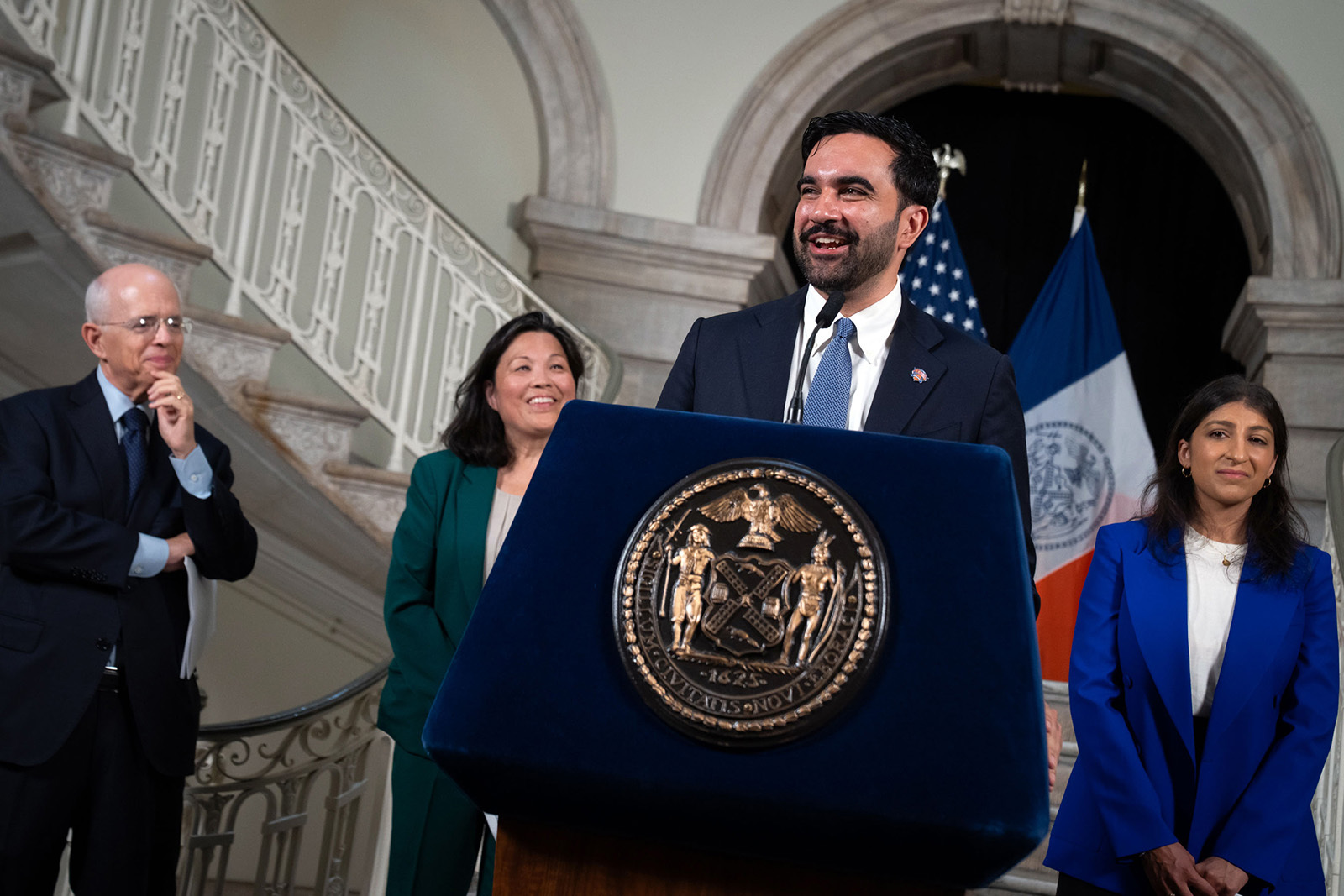
That may have been the most revealing moment of New York City Mayor Zohran Mamdani’s recent interview with the New York Times.
During the exchange, Mamdani defended New York City’s sanctuary policies. Since taking office, he has reinforced that position by signing an executive order reaffirming the city’s sanctuary laws.
The issue is not whether Mamdani has physically visited the border. It’s whether he understands why towns that experienced the border crisis firsthand reached a very different conclusion.
The answer can be found not only along the border, but in the areas that have spent years living with its consequences.
One of those communities is Goliad County in South Texas.
Home to about 7,000 residents, it is located roughly 160 miles from the U.S.-Mexico border.
Testifying before the U.S. Senate Judiciary Committee last year, Goliad County Sheriff Roy Boyd described how the crisis transformed the rural South Texas community he serves.
His office went from averaging 77 arrests a year during the five years before 2021 to averaging 413 a year between 2021 and 2024. Deputies uncovered 16 cartel stash sites, while pursuits involving suspected human smugglers became a regular occurrence. As Boyd described it, “the presence of cartel activity in rural areas led many residents to fear being alone on their property at night, as citizens could often hear activity and voices in remote areas of the county after dark.”
Those numbers expose what Mamdani’s one-word answer overlooks. Communities well beyond the Rio Grande were confronting the consequences of cartel activity and illegal immigration firsthand.
Former Border Patrol agent and Texas Public Policy Foundation Senior Fellow Ammon Blair argues cartels are “hybrid threats” whose activities extend far beyond smuggling. As Blair puts it, “Cartels don’t just smuggle. They destabilize.”
As Sheriff Boyd has explained, cartels function like “contractors and subcontractors,” operating as “a network of people moving immigrants and drugs from the border to the state’s largest inland cities.”
Those realities also changed how Texas approached border security. Back in 2021, when illegal border crossings were surging during the Biden administration, Goliad County became one of the first inland counties to declare a local disaster.
During a meeting with Gov. Greg Abbott, Boyd suggested giving “local law enforcement grants with few strings attached so that they could pay for overtime, hire new officers, and purchase equipment like fresh patrol units.”
Those grants became part of Operation Lone Star, Texas’ border security initiative.
The results have been significant. According to Abbott’s office, Operation Lone Star has resulted in more than 535,700 apprehensions and referrals, over 57,400 criminal arrests, and more than 47,500 felony charges. In addition, Texas law enforcement intercepted more than 779 million lethal doses of fentanyl.
Those statewide figures do not include the continued work of the Operation Lone Star Task Force, which remains focused on disrupting cartel activity, human smuggling, and other criminal operations throughout Texas.
Boyd launched the Operation Lone Star Task Force, allowing local agencies to share deputies, resources, and intelligence across jurisdictional lines in investigations targeting human smuggling, cartel activity, and organized crime.
Texas was not the only place to feel the consequences of the border crisis. New York City faced many of the downstream effects, prompting then-Mayor Eric Adams to warn that the crisis would “destroy New York City.” Yet Mamdani continues to defend the city’s sanctuary policies.
The lessons from places like Goliad extend far beyond the Lone Star State. Criminal organizations do not recognize state boundaries, and the networks that move people across the border also traffic drugs, weapons, and money into communities throughout the country. They can exploit vulnerabilities along the northern border and at ports of entry as well. The further those networks reach, the more Americans who once viewed border security as someone else’s issue will discover it affects their own communities.
Communities like Goliad learned that the border crisis does not stop at the border.
Mamdani may be proud of New York City’s sanctuary stance.
His one-word answer “No” did more than show where he has not been. It revealed what he refuses to see.
It is easy to defend sanctuary policies from behind a podium at New York City Hall. It is much harder to defend them to the communities that have already confronted the reality he seems to ignore.