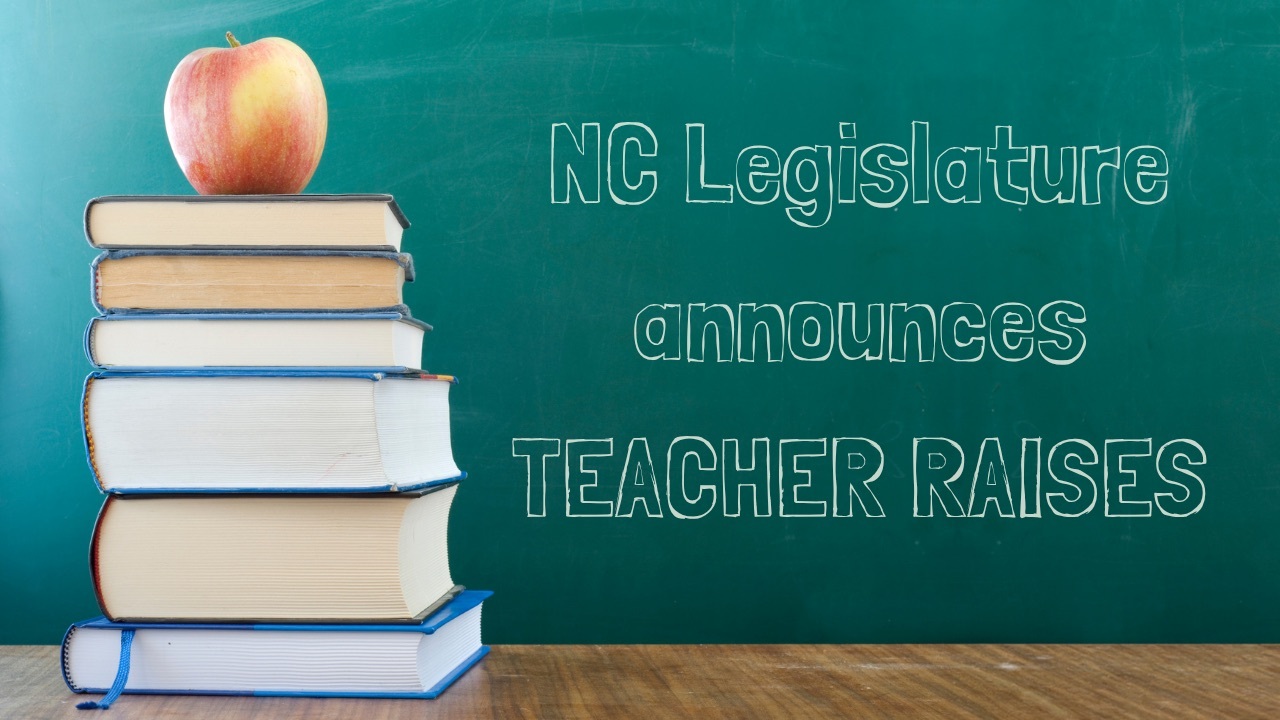
After months of negotiations, House and Senate leaders claim to have reached a budget compromise that includes an average 8% teacher pay raise — one of the largest proposed increases in recent years. Current teachers would also receive bonuses ranging from $500 to $1,000.
This teacher pay raise would supposedly bring starting teacher salaries to “No. 1 in the Southeast.” The proposal would reportedly make starting teacher salaries $48,000, at a minimum, before local supplements. The minimum starting teacher’s salary in North Carolina is currently $41,000.
In January, the Carolina Journal Poll asked likely North Carolina voters their opinions on teacher pay. A majority of voters (51.3%) said that higher teacher pay is essential regardless of student outcomes. Around a third of voters (34.5%) said that teacher pay should be tied to student outcomes, 7.6% said that student achievement should take priority over teacher pay, and 1.6% said that teacher pay should remain unchanged.
The deadline for North Carolina’s biennial budget passed nearly eight months ago. Why did it take so long for legislators to come to a budget compromise? Thanks to a law the General Assembly passed in 2016, North Carolina government does not shut down during a budget impasse. The state simply continues spending at the previous year’s levels until a new budget is passed. This benefits North Carolinians, as they do not experience gaps in government services, but it makes reaching a budget compromise less politically urgent.
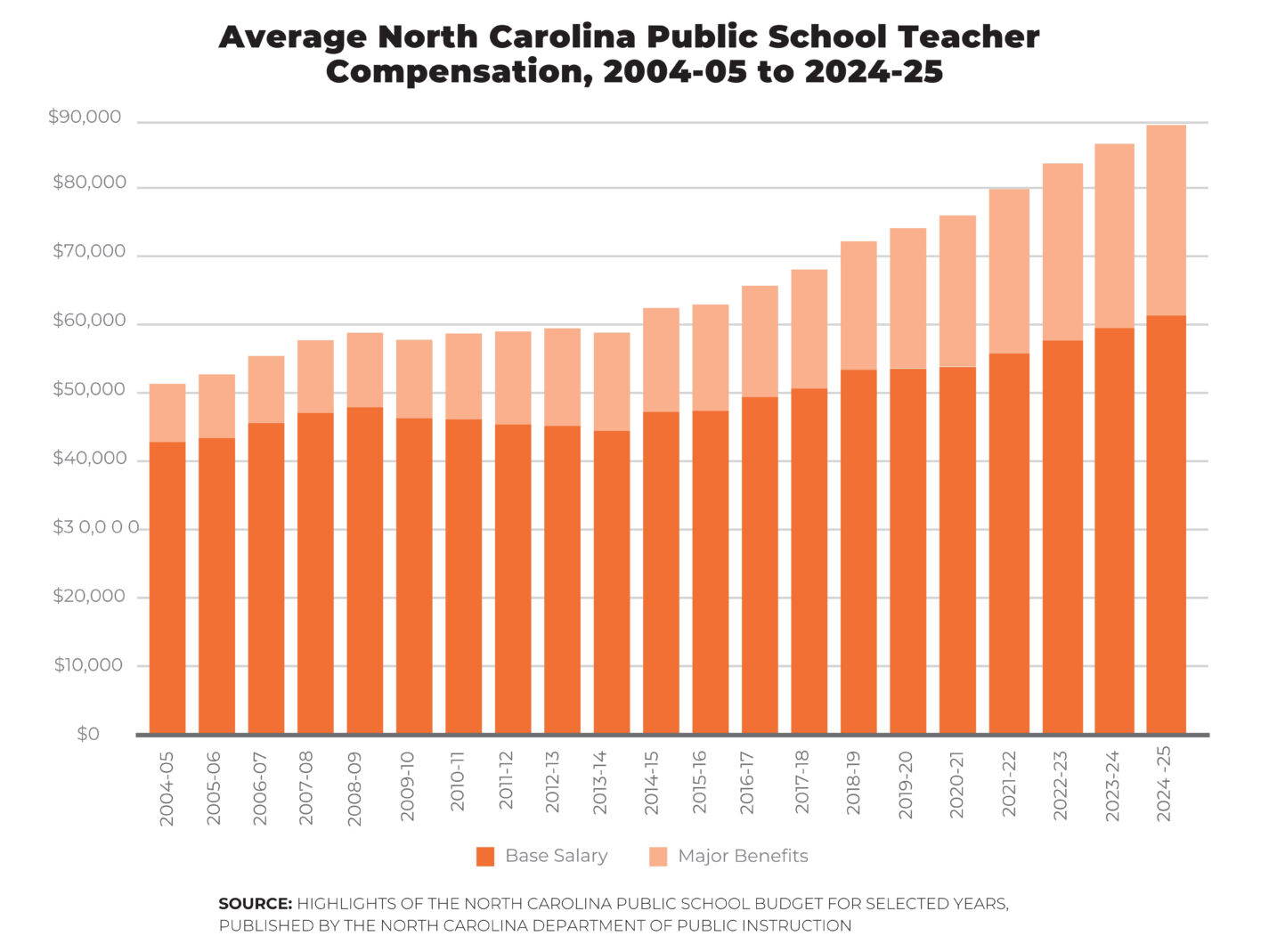
The average salary of a public school teacher in North Carolina is $61,449, and when benefits such as retirement and health insurance are factored in, the average total compensation of an NC teacher is around $89,000.
While these are positive steps in helping improve teacher salaries, Dr. Bob Luebke, Director of the Center for Effective Education at the John Locke Foundation says a more substantive step would be for lawmakers to remove the teacher salary schedule. When I spoke to him, he said, “The fact is, the teacher salary schedule ties pay to two factors which have little to do with student outcomes: teacher experience and teacher credentials.” He continued, “Teachers should be paid for the value they add to the classroom. The current salary schedule prohibits that and limits what teachers can make.
Yes, it’s good to raise teacher pay. It’s even better if the lawmakers would address the root of the problem.”
For more information about education, check out Locke’s 2026-2027 Policy Guide.