Today is the 251st anniversary of the Mecklenburg Declaration of Independence. The document was joyously celebrated last year in Charlotte with heightened pageantry on its 250th birthday, and this year we continue to celebrate those patriots who stood tall in 1775 on the road to the Declaration of Independence.
Supposedly, upon hearing of the battles of Lexington and Concord in Massachusetts a month prior, a group of men in Charlottetown (today’s Charlotte) met on May 20, 1775, on the local courthouse steps and signed a document that declared them to be “free and independent” of British authority.
Almost a year ahead of the Halifax Resolves, signed on April 12, 1776, by 83 delegates from across the colony, the “Meck Dec” as it is known would have been one of the earliest proclamations of independence in any of the colonies.
If it really happened that way.
The problem is, there is no document in existence to prove that the story is really true. As a result, the Meck Dec has been a source both of historical scrutiny and pride.
Some people think the story is more legend and that it became part of the historical record in the early 1800s as part of our “civil religion,” as Rousseau would have called it, when stories like it were being told and retold to shape the history of our state — sometimes without evidence.
In the telling of the story, James Jack, a tavern owner in Charlottetown, carried the document to Philadelphia by horseback to deliver it to the Second Continental Congress.
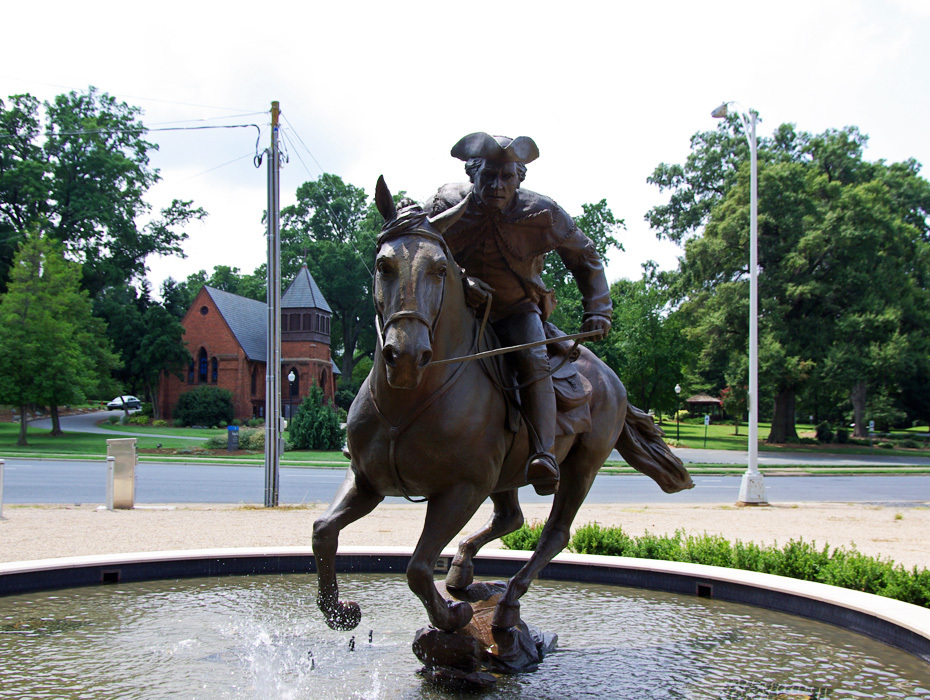
Source: UNC, Documenting the American South
As the story goes, the members there were still hoping to reconcile with the British Crown and didn’t think much of Jack’s delivery, since they were not yet ready for any such declaration.
Then, the document was apparently destroyed in a fire some years later, and we’re left with only legend. In 1819, U.S. Sen. Nathaniel Macon presented a document to the Raleigh Register that was thought to recreate the text of the declaration based on the memories of people who were around at the time.
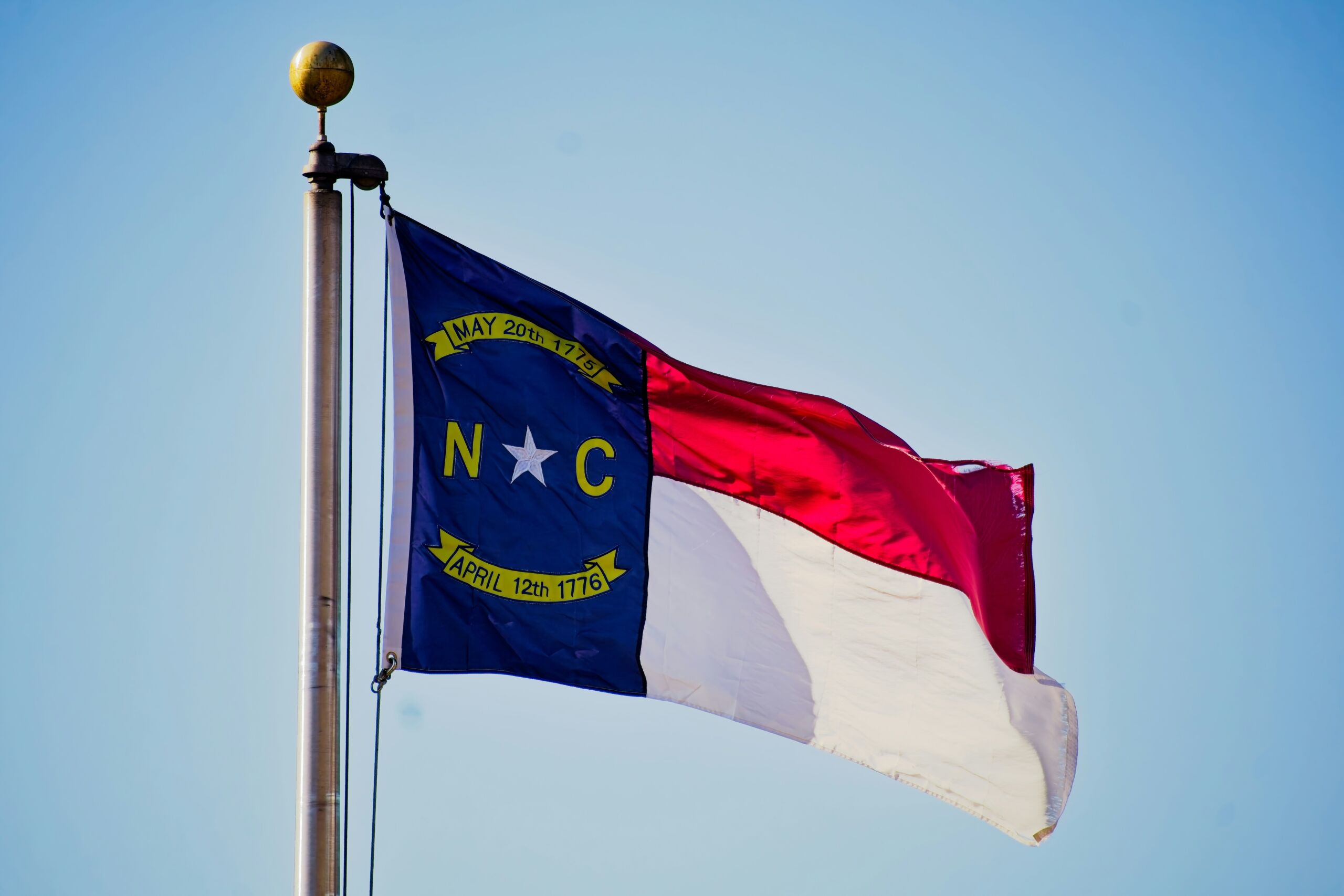
That document stirred up a controversy when John Adams accused Thomas Jefferson of plagiarizing from the document — if said document were true. Jefferson exploded and claimed that the Meck Dec was a hoax. To save face, a North Carolina legislative committee did a deep examination of the question and came down on the side of believing the story to be true — which is why we are talking about this today and probably why it’s on the state flag.
What is substantiated is that a group of Mecklenburg County leaders met on May 31, 1775, and produced a document called the Mecklenburg Resolves.
These Resolves proclaimed that “all Laws … derived from the Authority of the King or Parliament, are annulled and vacated,” and that the Provincial government “under the Direction of the Great Continental Congress, is invested with all legislative and executive Powers … and that no other Legislative or Executive does or can exist, at this time, in any of these Colonies.”
Several counties across the colony drafted similar resolves that strongly state their grievances against the Crown’s policies but fell short of actually declaring independence. There were resolves from Tryon County, Cross Creek, and more.
The similar nature of the resolves from these counties makes the existence of the Mecklenburg Resolves more plausible, yet controversy persists since like the Mecklenburg Declaration, no actual document exists of the Resolves, either. In 1838, historian Peter Force discovered a list of resolutions that were apparently adopted in Mecklenburg County on May 31, 1775. These differed quite a bit from the supposed wording of the Declaration of May 20. In 1847, the South Carolina Gazette published the full text of the Resolves and gave its adoption date as May 31, 1775, with no mention of the Meck Dec.
Some say that the Mecklenburg Resolves grew to be the Meck Dec in zealous patriots’ memories. The truth is lost to history.
Another point to make in all this is that whatever was written in Mecklenburg County did not represent the sentiments of the entire colony, unlike the Halifax Resolves a year later. Instead, the document would have represented the heartfelt sentiments of the small contingent of patriots in one county fuming in the backcountry against a King to whom they no longer pledged allegiance.
Regardless of the controversy, there is plenty of smoke to this story that shows that patriots in Mecklenburg County were willing to stand up to the most powerful empire on earth and boldly air their grievances in the last 10 days of May 1775. Even if we can’t prove accurately that the May 20 document existed, we should still honor these patriots for their courage and bravery in standing up and ultimately playing a role in the freedoms we now enjoy. The North Carolina History Project, an initiative of the John Locke Foundation, offers activity sheets about the Mecklenburg Declaration for students. They are available at northcarolinahistory.org/curriculum.