On May 5, I wrote how the North Carolina Code of Judicial Conduct (CJC), as enforced by the Judicial Standards Commission, overly restricts the speech of judges and judicial candidates. That not only limits their free speech rights, but also denies voters the right to hear information they need to evaluate judicial candidates.
I proposed a standard to find the “right balance between judicial candidates’ freedom to speak about public issues (and thus provide voters with useful information) and the risk of prejudicing judges on cases that may come before them.”
[A] candidate for judicial office may state his or her general views on legal or political issues, but may not take positions on particular laws or cases on the campaign trail and then sit in judgment of them in court.
A Supreme Court Justice proposed judicial speech reform
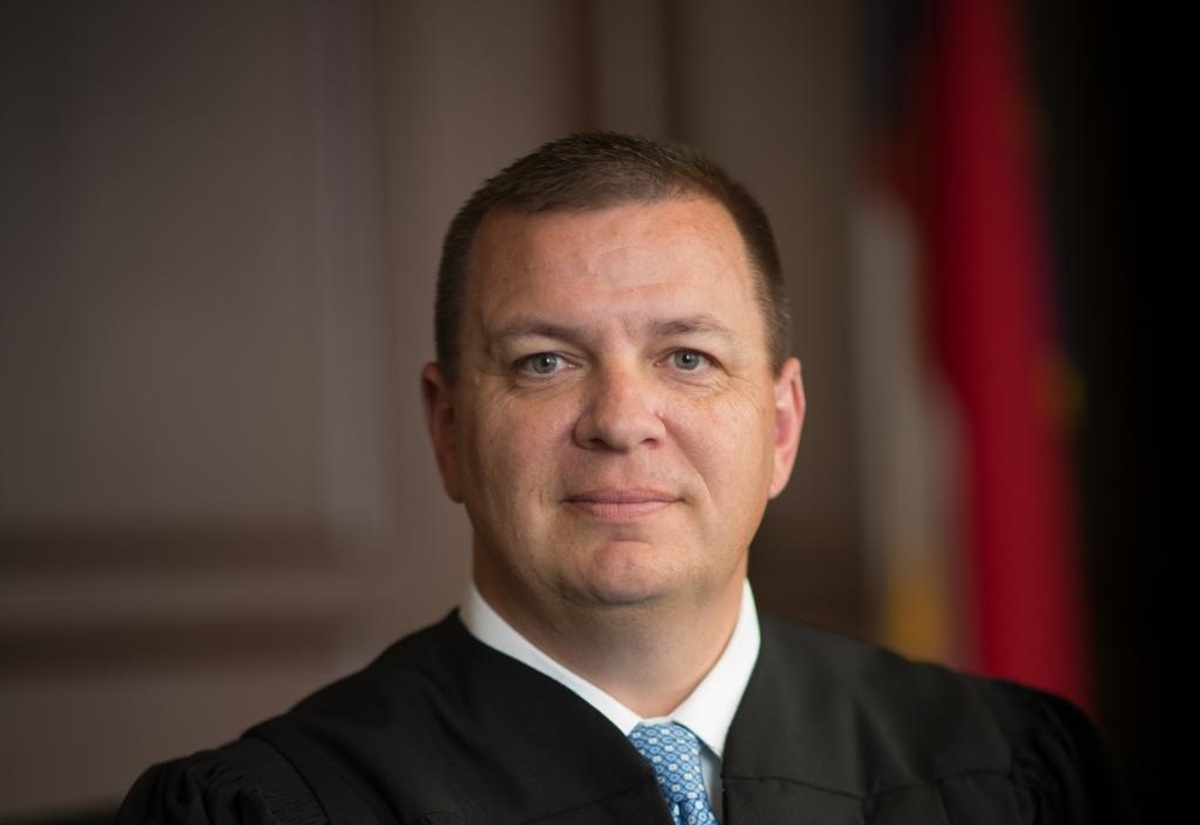
North Carolina Supreme Court Justice Phil Berger Jr. proposed a change to the CJC in an email to his colleagues and others in December 2025.
Berger recently shared the content of that email, which I am publishing here.
He noted that the United States Supreme Court had struck down a similar Minnesota judicial code in 2002 (Republican Party of Minnesota v. White). Justice Antonin Scalia wrote in the majority decision, “it is simply not the function of government to select which issues are worth discussing or debating.”
Berger proposed amending Canon 7B of the CJC regarding judges’ political conduct. Here is the full text of that proposed amendment:
(7) The Judicial Standards Commission’s authority shall not extend to the regulation of oversight of constitutionally protected speech. Consistent with Republican Party of Minnesota v. White, 536 U.S. 765 (2002), it is not the duty of the Commission to “select which issues are worth discussing or debating” as it relates to political speech. Minnesota v. White, 536 U.S. at 782.
However, no sitting judge or justice, or candidate for judge or justice, may make, communicate, or otherwise disseminate extrajudicial statements that contain or include:
a. Confidential information obtained in the course of his or her official duties;
b. Public comment on the merits of a matter pending in any court. Consistent with Canon 3A(6), the prohibition on public comment on the merits does not extend to public statements made in the course of the judge’s official duties, to explanations of court procedures or case posture for public information, or to scholarly presentations made for the purpose of legal education. But under no circumstances are public comments concerning how he or she would decide, rule, or otherwise resolve a particular issue or pending case permissible; or
c. Knowingly false statements concerning the qualifications or integrity of a judge, justice, or candidate for judge or justice.
Berger gave me permission to publish the contents of the email. In it, he wrote, “Please note that this correspondence is not intended to be confidential,” so there was no expectation of privacy. Here is the full email:
If implemented, Justice Berger’s proposal would protect the free speech rights of judges and judicial candidates while also protecting the due process rights of people who may later have a case before them. It would be a welcome reform.