- Teachers would receive a pay raise of 8 percent on average, while most state employees would receive raises of 3 percent
- The Opportunity Scholarship program generates tens of millions in savings for public education
- The proposal includes more than 700 earmarks to local governments and organizations
At long last, a budget proposal has been presented by the North Carolina General Assembly. Ours was the only state to go the entire fiscal year of 2025–26 without a comprehensive budget bill, with spending continued at prior year levels.
Making this budget proposal yet more unusual, the legislature bypassed the long-standing legislative tradition of one chamber first submitting a budget proposal, the other chamber following with its own plan, and then both chambers selecting certain members to form a “conference committee” to iron out the differences between the two proposals.
This traditional process allowed legislators and the public time to review the different proposals, evaluate the strengths and weaknesses of each, and have input into crafting a final plan.
Instead, we were presented with one budget bill that is expected to speed through both chambers with very little discussion or debate and be sent to Gov. Josh Stein in a matter of days. Differences between the chambers were largely hashed out in private.
Coming in at 643 pages, the budget bill includes a lot of policy changes that should be proposed in separate bills. A budget is supposed to be focused on revenue and spending changes, not turned into an omnibus bill affecting a wide swath of policy proposals with no direct budgetary impacts.
The budget plan would spend a total of $34.37 billion, sort of (more on that later). Compared with current year budgeted appropriations of $31.92 billion, the proposal would increase spending by 7.7 percent. Comparatively, Gov. Josh Stein’s budget proposal of $35.44 billion would have resulted in an increase of 11.0 percent.
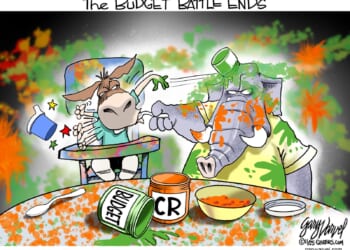
It is important to note, however, that the legislative budget would set aside roughly $3 billion of discretionary funding into special “reserves,” a shell game that obscures the true amount of spending.
Following is a list of notable items included in the budget proposal, followed by two items notable by their absence from the budget.
Pay raises for teachers and other state employees
- Give teachers a pay raise of 8 percent on average , plus bonuses based on years of service, at a total cost of $598 million this year.
- Raise salaries for beginning teachers to $48,000 (not counting local supplements).
- Give assistant principals a pay increase of 6.3 percent on average.
- Correctional officers would receive a pay increase of 15.4 percent on average.
- Provide most other state employees a 3 percent pay increase, and also give many bonuses based on their salaries.
- Include no cost of living increase in pension payments for state government retirees, instead the budget provides a one-time payment equal to 2.5 percent of their annual payment.
Opportunity Scholarship program
- Reinvest the $35.8 million in savings generated by the Opportunity Scholarship program over the last two years. These savings come about from scholarship awards being less than the average state per-pupil allocation for traditional public school students. The funds would be reinvested in one-time bonuses for school nutrition and custodial personnel, middle-school literacy professional development, and K–8 math curriculum work through the North Carolina Collaboratory. The acknowledgement of such savings flies in the face of critics who claim that school choice programs drain funds from public schools.
- Signal legislative intent to continue this practice of redirecting savings resulting from Opportunity Scholarship students transferring from a public school.
- Require administration of standardized tests, along with disclosure requirements, for private schools enrolling students receiving Opportunity Scholarships.
- Increase funding to the Personal Education Student Accounts for Children with Disabilities program by $17.5 million in order to clear that program’s waitlist. The increase would bring total funding for the program to $94 million.
- Establish a public school open enrollment study by the NC Collaboratory to look into how Local Education Agencies (LEAs, also known as school districts) can allow students to attend any school in the LEA. The report would be due April 15, 2027. Open enrollment, which allows students to move to another public school in their home district or even another district that has capacity to enroll them, is the next frontier in school choice for North Carolina.
- Provide $300,000 for a working group at the UNC Collaboratory to study a 3 year transition to weighted student funding model. Current funding formulas are highly complex and reform is long overdue.
Hurricane relief and rainy day funds
- Dedicate $706 million to additional Hurricane Helene relief funding.
- Set aside more than $450 million for the state’s Rainy Day Fund (the Savings Reserve) in addition to the $12.9 million required by statute, which would bring the fund’s total up to just over $4.2 billion.
- Slate another $1.3 billion into the Inflation and Stabilization Reserve Fund, which would bring the fund’s total to more than $2 billion. Like the Rainy Day Fund, this money is critical for helping North Carolina handle future economic downturns without resorting to tax increases for revenue.
Tax changes
- Repeal the sales tax exemption on electricity for data centers, estimated to generate $21 million in revenue this year. Remaining in the tax code, however, are nearly 180 specific sales tax exemptions, totaling more than $7 billion.
- Remove the current revenue triggers in place to allow scheduled personal income tax rate reductions, which would guarantee the rate drops to 2.99 percent by 2032. Additional rate reductions of a quarter of a percentage point apiece are scheduled to take place dependent upon newly established revenue triggers being met, with the final destination of 2.49 percent by 2040. By comparison, Gov. Josh Stein’s budget proposal would have made tax changes resulting in a net tax increase of nearly $500 million this year alone.
- Increase the sports wagering tax rate from 18 to 23 percent, which would bring in an estimated $22.4 million in the coming year.
- Establish a tax on prediction markets equal to 6 percent of net trading fee revenue apportioned to North Carolina. This change would bring in a projected $1 million in the coming year.
Health care
- Fund the increasing cost of the state’s Medicaid program with an appropriation of more than $1 billion, which is the state’s share of a total increase in Medicaid expenditures of $2.7 billion. This appropriation would be helped by a transfer of $200 million from Medicaid Contingency Reserve Fund.
- Provide funding to maintain North Carolina’s participation in the Supplemental Nutrition Assistance Program (SNAP). More than $5 million in combined recurring and nonrecurring funds would be appropriated for administration this year, which is needed to improve the state’s payment error rate. Per the federal One Big Beautiful Bill Act, if the error rate is not improved, the federal government will require the state to begin paying a share of the program’s cost.
- Repeal the state’s archaic certificate of need (CON) laws for inpatient rehabilitation services, facilities, and beds. This would be a small but positive step in the right direction for expanding the supply of medical care, thus improving access and lowering costs. Legislators should consider full CON repeal in the near future.
Corporate Welfare
- Allocate $133.9 million to fund the JetZero project, which has already announced delays, at Piedmont Triad International Airport.
- Appropriate $30 million for an aircraft facility construction at the North Carolina Global TransPark Authority.
- Expand the size of potential handouts in the Film and Entertainment Grant Fund.
- Allocate $400,000 to the Department of Commerce to contract with an organization to conduct a study of the economic impact of motorsports in the state.
- Provide $1.2 million in recurring funds for awards for microbudget film productions through the Film and Entertainment Grant Fund.
- Pave the way — via specific language changing Job Maintenance and Capital Development fund qualifications — for a corporate welfare giveaway to a potential pharmaceutical manufacturing corporation.
- Eliminate the $5 million recurring appropriation for the Esports Industry Grant Fund.
A $3 billion shell game
- Move $3 billion in discretionary reserve funding into special reserves, such as the Regional Economic Development Reserve and Stabilization Inflation Reserve, “above the line,” which means that those funds would not be counted in the General Fund spending total of $34.37 billion. Instead, the money would be directed into the reserve funds, some of which would then be used to finance various funding activities that are counted as “receipt supported” expenditures and technically not new spending. This is a deceitful shell game that has proliferated in the last handful of years, obscuring the actual amount of spending in the budget proposal.
- Include 727 line items labeled “special appropriations” that would direct state tax dollars to local governments and charities. These targeted earmarks should be funded by local taxpayers, if they are funded by government at all. Earmarks would range from local Boys & Girls Clubs to athletic fields to direct grants to local governments, some with no purpose specified. Roughly $350 million would be directed to these special appropriations, most of it funded from “receipts” from two special reserve funds, so the spending would not show up in the General Fund’s bottom line.
Two noteworthy items not in the budget
- Funding for a major league baseball stadium: At the last minute, and riding the high off the Carolina Hurricanes’ Stanley Cup victory, lawmakers discussed the prospect of funding for a new baseball stadium in Raleigh in order to attract a major league franchise. The funding likely would have been a combination of hundreds of millions of state taxpayer dollars and the implementation of new local taxes. Reportedly, Senate leadership was in favor, with House leadership opposed. Fortunately, this measure was left out of the budget bill, but the issue may crop back up at a later date. Taxpayer dollars should not be used as the plaything of billionaire sports franchise owners.
- NCInnovation: Despite much discussion of clawing back the $500 million in taxpayer dollars given to NCInnovation, the organization is not mentioned in the budget and therefore still keeps the half a billion dollars awarded it in the 2023 budget.